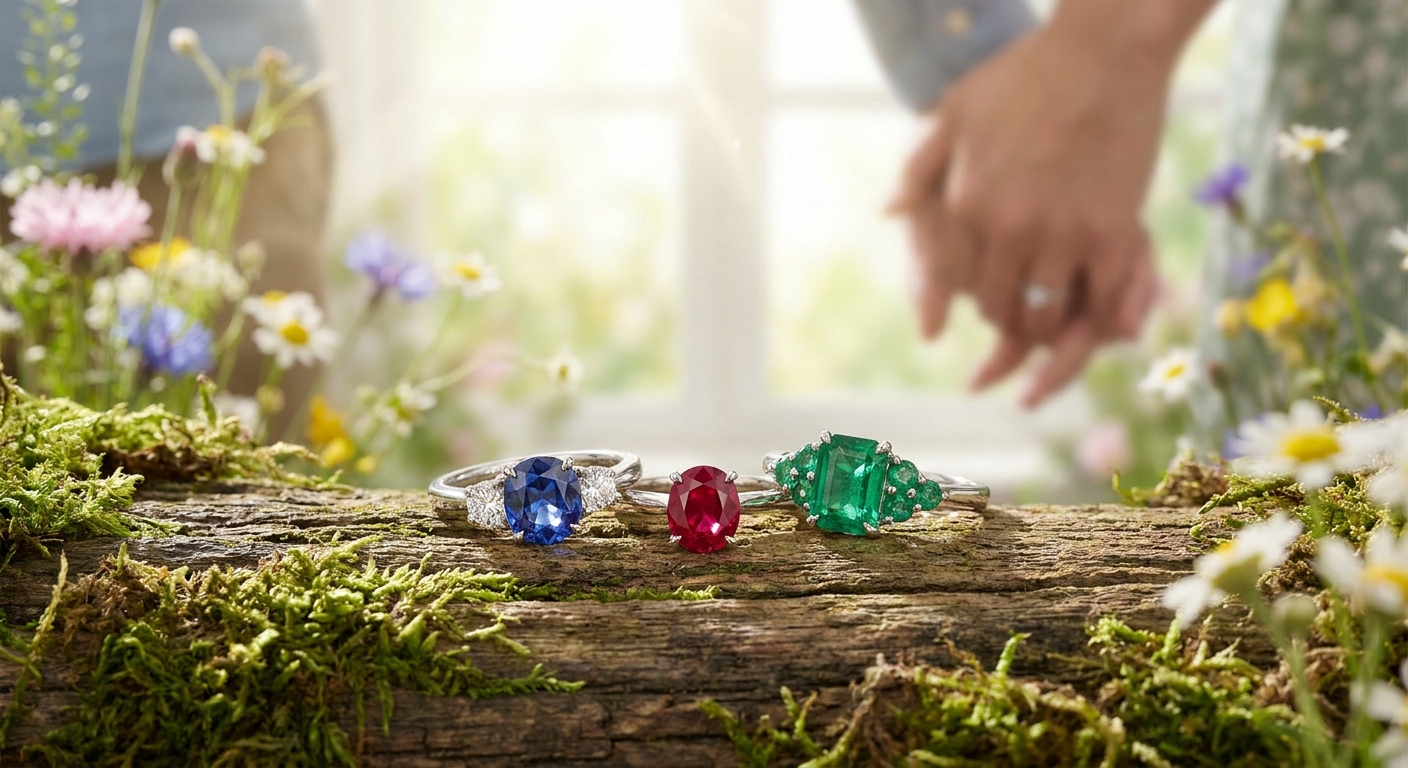
Gemstone engagement rings swap the traditional diamond for sapphire, emerald, ruby, or a mixed-stone stack, and picking the right stone for a colorful proposal in 2026 comes down to matching hardness and setting to how the ring actually gets worn, not just matching color to a mood board.
- Sapphire wins for everyday gemstone engagement rings at Mohs 9 hardness - buy it.
- Emerald is the wildcard among gemstone engagement rings but needs a protective bezel - consider it.
- Skip opal and untreated glass-filled ruby under $1,000; both chip or fade within a year of daily wear.
- Element 79 in Cherry Creek, Denver builds custom gemstone engagement rings around Artëmer, Petra Class, and Orly Marcel settings.
Why this matters
Colored stones moved from niche to mainstream fast. Sapphire and emerald center stones now show up across 2026 engagement season lookbooks alongside diamonds, and the reason isn't just aesthetics - it's that a well-chosen gemstone engagement ring can cost less per carat than a comparable diamond while delivering more visible color and personality.
The catch: not every gemstone survives daily wear the same way. A sapphire on a hand that gardens, types, and washes dishes all day behaves nothing like an emerald on the same hand. Buyers who skip the durability conversation end up with a ring that needs repair inside 18 months. Element 79 works through that tradeoff with couples shopping designer bridal pieces in Denver, and the pattern holds regardless of where you buy.
Who this is for
This guide is for couples who've already decided against a plain diamond solitaire and want a proposal ring that reads as personal - style-conscious buyers, second-engagement shoppers replacing a traditional stone, and anyone drawn to artisan bridal designers like Spinelli Kilcollin or Petra Class over mass-market chains. If you want maximum resale value and zero maintenance thought, a diamond is still the simpler answer. If you want a ring nobody else at the wedding is wearing, keep reading.
What to look for in gemstone engagement rings for a colorful proposal
Hardness on the Mohs scale
Mohs hardness tells you how a stone survives 2026's daily wear - typing, gym bags, garden gloves. Sapphire and ruby sit at 9, just below diamond's 10, which makes them the two colored stones that can genuinely handle daily wear without a protective setting. Anything below 7.5 needs either a bezel setting or a second-occasion role, not an everyday one.
Color saturation and treatment disclosure
Most sapphires and rubies on the market are heat-treated to improve color and clarity - that's standard practice, not a red flag, but it should be disclosed in writing. Untreated stones cost significantly more per carat and rarely make sense unless you're specifically chasing investment-grade rarity rather than a wearable proposal ring.
Setting protection for softer stones
Emerald sits at 7.5-8 on the Mohs scale but carries natural inclusions that make it prone to chipping at the edges. A bezel or halo setting that protects the girdle matters more for emerald than for any other popular colored stone - a simple four-prong solitaire setting is the wrong call here.
Metal pairing for colored stones
Warm-toned gemstones like morganite and padparadscha sapphire read differently against yellow gold versus platinum. Cooler stones - blue sapphire, tsavorite - hold their saturation better against white metals. Match the metal to the stone's undertone before finalizing a custom design, not after.
Resizing and future stacking
If a colored center stone is going into a ring that'll later collect stacked bands, ask about the shank profile now. A rounded or domed shank resizes cleanly later; a flat-edge shank with pave detail often can't be resized without disturbing the stone setting.
Top picks by gemstone
Sapphire - the safe pick. Mohs 9 hardness, available in blue, pink, yellow, and padparadscha (peachy-pink) tones, and it holds up to daily wear better than any colored stone besides ruby. A 1-carat sapphire center stone in a protective halo is the most common request among couples choosing a designer engagement ring for a modern bride instead of a diamond. Buy.
Emerald - the wildcard. Deep green saturation reads as unmistakably different from every other engagement ring at the table, but its 7.5-8 Mohs hardness and natural inclusions mean it needs a bezel setting and periodic professional cleaning. Best suited to buyers who understand the maintenance tradeoff going in. Consider.
Ruby - the bold statement. Same 9 Mohs hardness as sapphire, deeper red saturation, and genuinely rare above 2 carats in natural, lightly treated stones. Costs climb fast past 1.5 carats for untreated material. Right call for a buyer who wants sapphire's durability with more visual weight. Consider.
Morganite - the budget-friendly alternative. Soft pink-peach tone at 7.5-8 Mohs hardness, priced well below sapphire and emerald per carat, and pairs beautifully with rose gold. Fine for a second ring or a lower-wear lifestyle, but it scratches more visibly than sapphire over a 2026-to-2030 stretch of daily wear. Consider.
Mixed-gem custom stack - the personalized route. Combining a colored center stone with diamond or gemstone accent bands is where artisan designers like Orly Marcel and Spinelli Kilcollin do their strongest work, and it's the direction a growing share of custom bridal consultations take. Buy, if budget allows the custom build.
Design your own gemstone engagement ring
Book a private consultation with Element 79 in Cherry Creek, Denver.
What to avoid
- Opal center stones for daily wear. Opal sits at 5.5-6.5 Mohs hardness and can crack from dry air or a single hard knock - stunning as an accent stone, risky as the ring you wear every day of 2026.
- Glass-filled or heavily treated ruby under $1,000 per carat. These stones look saturated in photos but the fill material can degrade with jewelry cleaner and ultrasonic cleaning.
- Untreated emerald sold without a lab disclosure. If a seller can't produce written treatment disclosure, walk away regardless of how good the color looks under store lighting.
Verdict comparison
| Gemstone | Mohs Hardness | Best For | Verdict |
|---|---|---|---|
| Sapphire | 9 | Daily wear, classic-with-a-twist | Buy |
| Ruby | 9 | Bold color, durability without compromise | Consider |
| Emerald | 7.5-8 | Statement look, willing to protect the setting | Consider |
| Morganite | 7.5-8 | Budget-conscious, softer daily use | Consider |
| Opal | 5.5-6.5 | Accent stone only, not a center stone | Skip |
FAQ
What's the best gemstone for an engagement ring in 2026?
Sapphire is the best gemstone engagement ring option for daily wear in 2026 because it sits at Mohs 9 hardness, just below diamond. Ruby matches that durability with a bolder red tone.
Are gemstone engagement rings less durable than diamonds?
Sapphire and ruby (Mohs 9) come close to diamond's Mohs 10 and hold up to daily wear well. Softer stones like emerald, morganite, and opal need a protective setting or lighter use.
Is emerald a good stone for an engagement ring?
Emerald works as an engagement ring center stone if it sits in a bezel or protective setting, since its 7.5-8 Mohs hardness and natural inclusions make it prone to chipping. It's a strong pick for buyers who want a distinct look and accept the extra care.
How much do gemstone engagement rings cost compared to diamonds?
Colored gemstone center stones generally cost less per carat than a comparable diamond, though rare untreated sapphire or ruby above 2 carats can climb past diamond pricing. Custom bridal builds add labor cost on top of the stone price.
Can you resize a gemstone engagement ring later?
Most gemstone engagement rings resize the same way diamond rings do, provided the shank has a rounded profile rather than a flat pave edge. Confirm the shank style with the designer before the ring is set.
What's the difference between treated and untreated sapphire?
Heat-treated sapphire has improved color and clarity through standard industry processing and costs less per carat than untreated stone. Untreated sapphire is rarer and priced higher, but treatment status should always be disclosed in writing.
Do colored gemstones work well in a stacked ring look?
Yes - a colored center stone paired with diamond or gemstone accent bands is a common custom bridal request in 2026, especially from designers who build stacking-friendly shank profiles from the start.
One last thing
The detail most couples miss: sapphire's Mohs 9 rating means it can actually scratch a softer metal band over years of contact, not just the other way around - platinum and 14k white gold hold up better against a sapphire or ruby center stone than softer 18k yellow gold does.