Choosing a designer engagement ring means balancing craftsmanship, budget, and a specific person's taste in 2026, when "designer" spans everything from hand-forged studio pieces to conglomerate-owned labels. This guide walks through the exact steps and gives you a way to check your work before you buy.
- Set a budget range before you look at a single ring in 2026 — designer pieces vary widely by brand and metal.
- Artisan labels like Artëmer, Orly Marcel, Spinelli Kilcollin, and Petra Class each read differently on the hand — study the shapes, not just the name.
- Get a professional ring size in person; guessing costs you a resize and a delay.
- Book an appointment before you commit — designer pieces photograph differently than they wear.
Why this matters
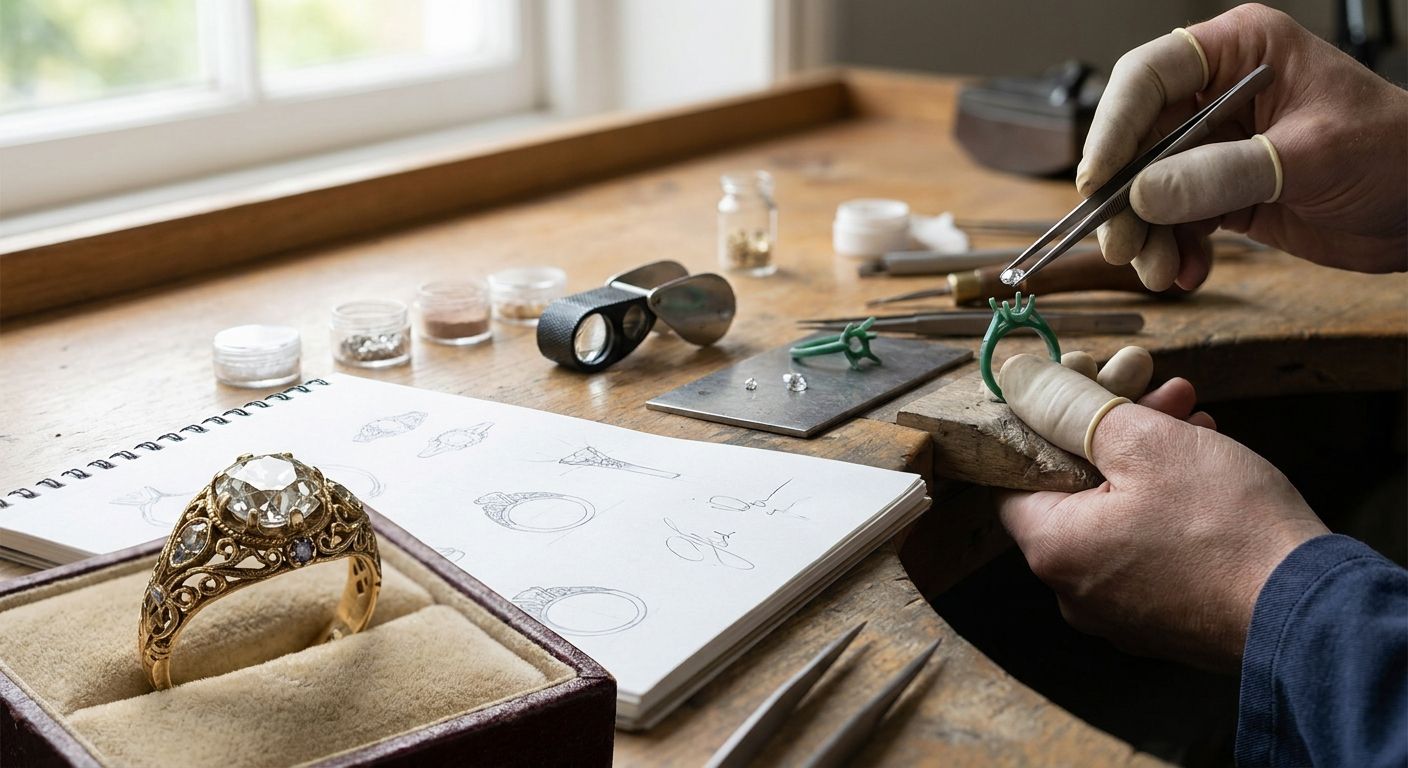
A mass-market ring and a designer piece solve different problems. Mass-market rings optimize for a specific carat-and-cut formula at the lowest possible price point. Designer rings optimize for a point of view — sculptural bands, mixed metals, unexpected stone placement — which means the "right" choice depends entirely on the person wearing it, not a universal ranking.
That's the trap. Shoppers spend hours comparing specs that don't apply to how designer jewelry is actually made or worn, then feel stuck when nothing they've researched matches what their partner actually likes. How you choose a designer engagement ring in 2026 starts with narrowing what "designer" means for this specific person, not sorting by price.
Element 79, a jewelry boutique in Cherry Creek, Denver, works through this exact decision with couples every week — the process below reflects what actually gets a ring bought, not just browsed.
What you'll need
- A firm budget range (not a single number — a floor and a ceiling)
- 3-5 saved photos of rings your partner has reacted to, from Pinterest, Instagram, or screenshots
- Their ring size, or a plan to get it discreetly
- 30-60 minutes for a private appointment, in person or virtual
- A short list of designer brands to compare — start with names like Artëmer, Orly Marcel, Spinelli Kilcollin, and Petra Class if contemporary, sculptural work fits their style
The steps
1. Set your budget range first
Deciding the budget before you shop prevents the single biggest source of buyer's remorse: falling for a ring above your ceiling and rationalizing it. Designer pieces don't follow a fixed per-carat formula the way mass-market rings do — the same carat weight can cost dramatically more or less depending on the metalwork and the maker's process.
Write down a floor and a ceiling, not one number. A range gives you room to compare a simpler design at the top of your budget against a more elaborate one at the bottom, instead of anchoring on the first ring you see.
Common mistake: shopping without a ceiling and letting a salesperson's suggestions set your range for you.
2. Learn the core setting styles
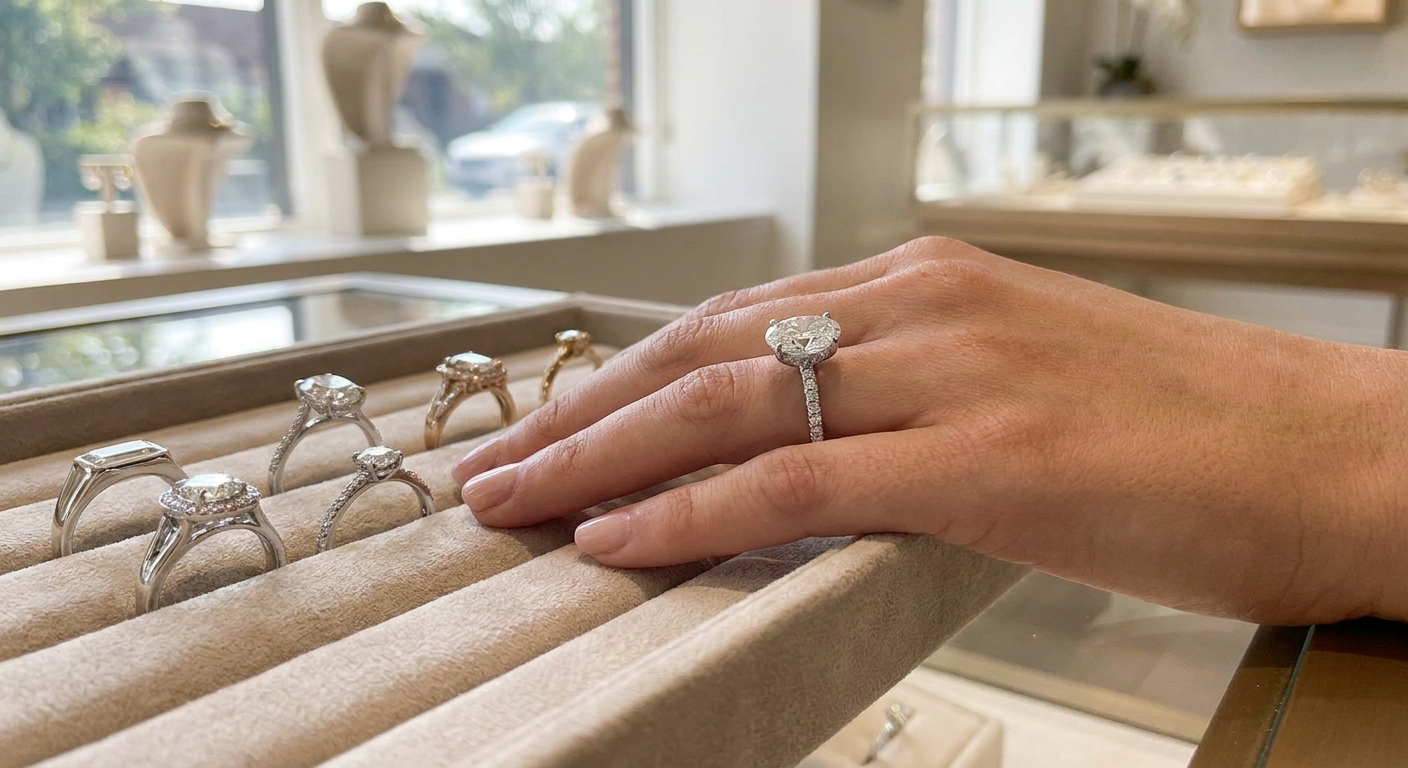
Designer engagement rings in 2026 tend to fall into a handful of families: solitaire, halo, three-stone, and stacked or sculptural bands that skip a traditional center stone entirely. Knowing these categories fast-tracks every conversation you have after this, whether you're browsing online or sitting down at an appointment.
Sculptural and stacked designs — the kind associated with labels like Spinelli Kilcollin — read as modern and architectural rather than classic. Solitaires and three-stone settings lean traditional no matter which designer makes them. Match the family to what your partner already wears day-to-day, not to what's trending.
Common mistake: choosing a setting style based on what looks good in a product photo rather than how it sits against a hand that's typing, cooking, or gesturing all day.
3. Choose the metal that fits their lifestyle
Metal choice affects both how the ring looks and how much upkeep it needs, so it deserves its own decision rather than an afterthought to the stone. Yellow gold, white gold, rose gold, and platinum each wear differently over years of daily use, and designer pieces often mix metals in ways mass-market rings rarely do.
Check what metals dominate her existing jewelry box. Someone who already gravitates toward mixed metals — a mix of yellow and white on the same hand — is signaling an eclectic style that a single-metal traditional band won't match. This is one of the fastest tells for gauging whether a contemporary or a classic designer piece fits better.
Common mistake: assuming white gold and platinum look identical — platinum holds up longer daily but costs more, and the difference matters over a 2026-and-beyond timeline of everyday wear.
4. Pick a stone shape and quality tier
Stone shape drives most of a ring's personality, more than carat weight does. Oval, emerald-cut, and pear shapes read as more distinctive and modern; round brilliant reads as safest and most traditional. Designer settings are often built around a specific shape, so this decision and the setting decision happen together, not separately.
Quality tier matters more than size for a ring that's going to be worn every day for decades. A well-cut, well-graded smaller stone photographs and wears better than a larger stone with poor proportions.
Common mistake: prioritizing carat weight over cut quality, which leaves you with a stone that looks duller than a smaller, better-cut one.
5. Match the ring to their personal style signals
Pull the saved photos from your prerequisites list and look for a pattern, not a single ring. Do the pieces share a mixed-metal theme, an asymmetrical design, or a specific stone shape repeated across several saves? That pattern is a more reliable signal than any single ring they've liked.
Ask friends or family who've shopped with her what she's said about jewelry in passing — even offhand comments about a friend's ring reveal preferences people rarely state directly.
Common mistake: over-indexing on one Pinterest board pin instead of the pattern across several.
6. Get the sizing right
Ring size is the one variable you cannot estimate accurately by guessing, and it's the top reason engagement rings get returned or resized within the first month. A too-loose ring risks getting lost; a too-tight one won't go on at all for the proposal moment.
Borrow a ring she already wears on the correct finger and bring it to a jeweler for sizing, or enlist a friend to get a discreet reading. Getting professional sizing before you buy in 2026 beats guessing every time — designer settings are harder and more expensive to resize than mass-market bands.
Common mistake: sizing off a ring worn on the wrong hand or the wrong finger, which throws the measurement off by a full size or more.
7. Verify authenticity and craftsmanship documentation
Designer jewelry should come with documentation — a certificate for the stone, and ideally provenance on the maker. This protects the ring's resale and insurance value and confirms you're paying for what you think you're buying.
Ask directly what documentation accompanies the piece before you commit to a purchase. A boutique that sells legitimate designer pieces will have a straightforward answer.
Common mistake: skipping this step because the ring "looks right" — appearance alone doesn't confirm authenticity.
8. Book a private appointment to see pieces in person
Designer rings photograph differently than they wear — texture, dimension, and how a stone catches light rarely translate fully through a screen. Seeing pieces in person, ideally at a boutique appointment, is the step that turns a shortlist into a final decision.
Element 79 in Cherry Creek, Denver, works through exactly this kind of appointment with couples comparing artisan brands side by side before they commit.
Common mistake: making a final decision from online photos alone when an in-person or virtual appointment is available.
Book a ring appointment
See designer engagement rings in person before you decide.
Troubleshooting
- The ring feels too trendy for a lifetime piece. Balance one bold element — a mixed metal or unusual stone shape — with one classic element, like a traditional solitaire cut, so the design ages well.
- Your budget keeps creeping past the ceiling. Go back to step one and separate the setting cost from the stone cost — you can often keep the designer setting and adjust the stone size to stay in range.
- Her style is genuinely unclear. Skip the surprise entirely and shop together, or choose a setting that can accept a stone later, letting her weigh in on the final piece.
- The ring needs resizing after the proposal. This is normal and expected for designer settings — ask about resizing before purchase so there are no surprises on timeline or cost.
- Certification language is confusing. Ask the jeweler to walk through exactly what's included in plain terms rather than parsing the documentation yourself.
- You're on a tight timeline before proposing. Prioritize in-stock designer pieces over custom work — custom bridal pieces take longer to produce than a piece already on hand.
Tools and resources
- A ring sizer or a borrowed ring from the correct finger
- A notes app or saved folder for style photos, organized by theme rather than individual rings
- A jeweler's loupe, if you want to inspect stone quality yourself before an appointment
- A private appointment with a boutique that carries multiple artisan brands, so you can compare designers like Artëmer, Orly Marcel, Spinelli Kilcollin, and Petra Class in one sitting rather than across separate store visits
What to do next
Once you've narrowed the setting style, metal, and stone shape, the fastest way to close the decision is seeing the shortlist in person. Photos flatten texture and dimension in ways that change how a ring reads on an actual hand, so treat the appointment as the final filter, not an optional extra step.
FAQ
How do I choose a designer engagement ring without knowing her exact size?
Borrow a ring she already wears on the correct finger and bring it to a jeweler for professional sizing before you buy. Guessing size is the top reason designer rings need resizing within the first month of 2026 purchases.
What makes a ring "designer" instead of mass-market?
Designer rings come from a named maker or studio with a distinct design point of view, rather than a standardized template made at scale. Brands like Artëmer, Orly Marcel, Spinelli Kilcollin, and Petra Class each have a recognizable visual signature across their collections.
Is a designer engagement ring worth the cost compared to mass-market?
It depends on whether you value the distinct design and craftsmanship over a lower price point for a similar carat weight. Designer pieces often hold up better stylistically over decades because they aren't tied to a single trend cycle.
How much does a designer engagement ring cost in 2026?
Cost varies widely by brand, metal, and stone quality, so check current pricing directly with the boutique or designer you're considering. Setting a budget range before you shop keeps the comparison focused rather than open-ended.
Should I buy a designer ring online or in person?
See the ring in person or through a private virtual appointment before finalizing, since photos rarely capture texture, metal mixing, or how a stone catches light. Treat online research as the shortlist stage, not the final decision.
What's the safest designer ring style if I'm unsure of her taste?
A solitaire or three-stone setting in a single metal reads as classic across nearly every personal style, making it the lowest-risk choice. Save the more sculptural or mixed-metal designs for when you have clearer style signals.
Can custom bridal pieces be made in time for a proposal?
Custom pieces generally take longer to produce than in-stock designer rings, so ask about timeline before committing if you're proposing soon. In-stock pieces from established artisan brands are the faster option when time is tight.
How do I verify a designer engagement ring is authentic?
Ask for documentation on the stone and provenance on the maker before purchase — legitimate designer pieces come with straightforward answers on both. This protects resale value and insurance coverage down the line.
One last thing
The detail most couples skip is asking what happens after the purchase — resizing timelines, cleaning recommendations, and how the piece is documented for insurance. A boutique that answers those questions clearly before you buy is a better signal of quality than any single spec on the ring itself.