Turning a grandmother's ring into something you'll actually wear every day takes more than a jeweler and a wish list — it takes a process, and knowing that process before you walk in changes everything about how the redesign turns out.
- Convert heirloom ring into custom design starts with a full gemological appraisal, not a sketch — skip any jeweler who wants to design first.
- 18k gold (75% pure) and platinum (90-95% pure) both recast cleanly; low-karat gold under 10k often cannot.
- CAD rendering lets you approve the design before a single stone moves — insist on it in 2026.
- Budget several weeks minimum for stone extraction, appraisal, CAD revisions, casting, and setting.
- Element 79 in Cherry Creek, Denver walks heirloom conversions through design consultation before any metal gets touched.
Why this matters
An heirloom ring sitting in a drawer isn't doing anything for anyone. The stone still has its color, its clarity, its history — the setting is usually what's dated, not the gem.
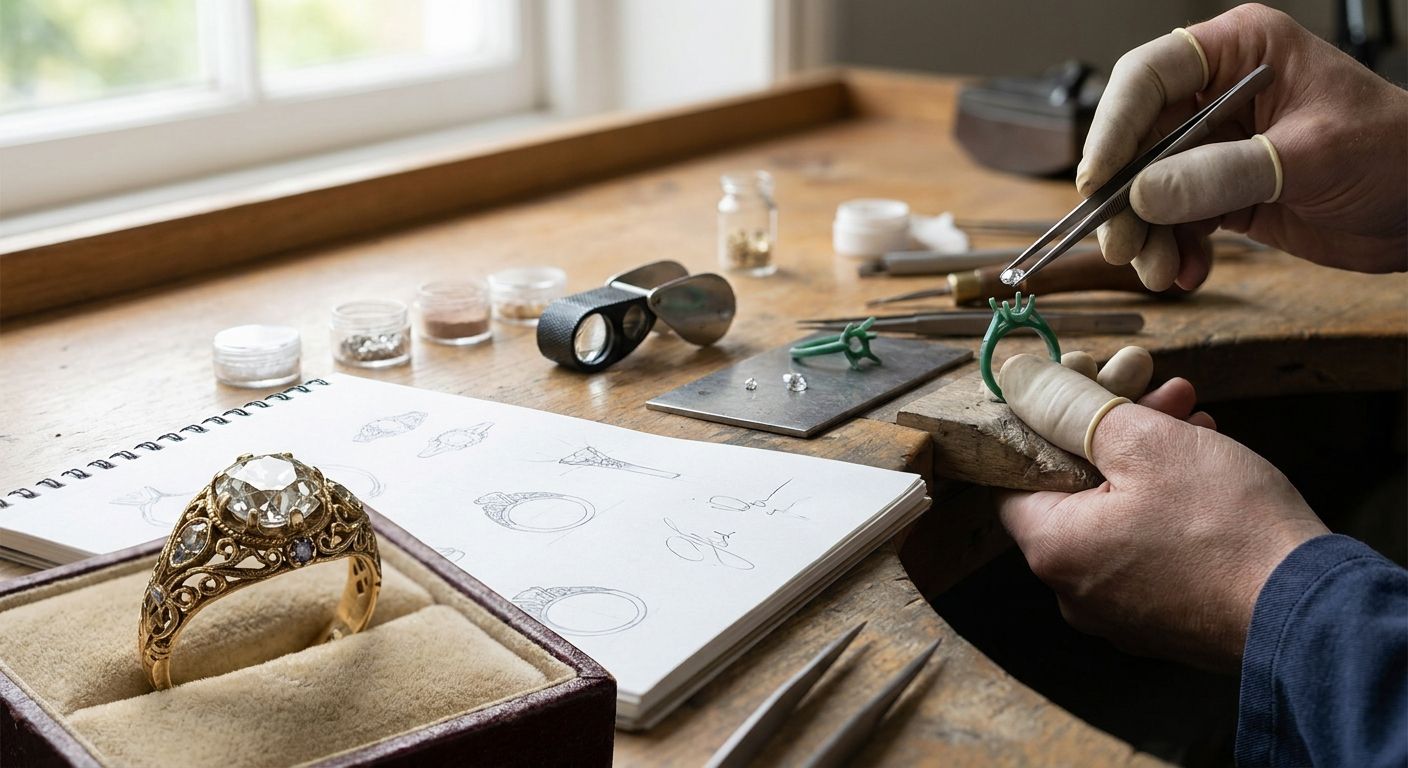
Converting the piece into a design you'll actually wear preserves the sentimental value while fixing the part that doesn't work for your life in 2026: a setting that snags on sweaters, a shank that's too thin, metal that doesn't match anything else you own. The process is well-established among custom jewelers, and getting the order of operations right is what separates a redesign you love from one you regret.
What you'll need
- The ring itself, plus any paperwork — original appraisal, GIA or lab certificate, insurance documents
- A jeweler who does custom work, not just repairs — check their portfolio for prior design a custom engagement ring projects before booking
- A rough style direction: photos, saved images, or just words like "modern" or "vintage-inspired"
- A budget range for the redesign labor, separate from the stone's existing value
- Time — this is not a same-week service, so build in weeks, not days
- An open mind about whether the metal gets reused or recast
The steps
1. Get the ring appraised before anything else
A gemologist needs to confirm what you actually have: carat weight, clarity, cut, color, and metal purity. This matters because the appraisal is what protects the stone's value through the redesign and what your insurer will require afterward.
Don't skip this even if you already have an old appraisal. Settings shift, prongs wear, and stones get recut over decades. Common mistake: bringing in a ring with a 40-year-old appraisal and assuming the numbers still apply.
2. Decide what stays and what gets replaced
Center stones almost always transfer. Small accent diamonds, especially older single-cut or European-cut stones, sometimes get replaced because they're harder to match to new settings. Decide this early because it changes the design brief.
This is also when you find out if the band metal is worth reusing. 18k gold runs 75% pure gold, 14k runs about 58.3%, and platinum settings typically run 90% to 95% pure — the higher the purity, the more workable the metal is for recasting into a new shank.
3. Have the metal evaluated for reuse or recycling
Low-karat gold under 10k, and metal that has already been repaired multiple times, often can't be safely reworked into a new setting. In that case, the old band gets repurposed old gold jewelry credit toward a fresh casting rather than melted and reused directly.
Expected outcome: your jeweler tells you upfront whether the band is salvageable or whether new metal makes more sense for durability.
4. Build the design brief
This is the step people rush and shouldn't. Bring reference photos, but also be specific about daily wear habits — do you type all day, garden, lift weights? A bezel setting behaves differently than a prong setting under that kind of wear, and a good jeweler will steer the brief based on your actual life, not just aesthetics.
Common mistake: choosing a setting purely on looks, skipping the durability conversation, then chipping a stone within the first year.
5. Review the CAD rendering before approving
A computer-aided design render lets you see the finished ring — proportions, stone placement, metal color — before any casting happens. Ask for the render from at least two angles, and ask specifically how the original stone will sit once transferred.
This step is non-negotiable in 2026. If a jeweler won't produce a CAD render before casting, that's a signal to look elsewhere.
6. Approve, then wait through casting and setting
Once you sign off on the CAD, the jeweler casts the new setting using lost-wax casting, then a setter mounts your stone under magnification. This is skilled, slow work. Rushing it is how prongs end up uneven or a stone sits slightly off-center.
Expected outcome: a ring that matches the CAD render closely, with the original stone secured in a setting built for how you actually live.
7. Get the new piece reappraised and reinsured
Once the redesign is finished, get a fresh jewelry appraisal for insurance that reflects the new setting, updated metal weight, and current market value. Your old policy was written for a ring that no longer exists in that form.
Troubleshooting
The stone looks smaller in the new setting than it did in the old one. This is usually an optical effect from a lower profile or a different halo configuration. Measure carat weight against the appraisal, not against memory.
The jeweler wants to skip the CAD step to save time. Push back. A rendering costs little relative to the redesign and it's the only way to catch proportion problems before they're permanent.
Your insurer denies a claim after the redesign. This almost always traces back to skipping the reappraisal step. File the updated appraisal with your policy the same week the ring comes back.
The old metal wasn't reused and you weren't told why. Ask directly. Legitimate reasons include low purity, prior repairs weakening the structure, or a design that requires a different alloy for durability.
The center stone shows a new inclusion or chip after setting. Stop and ask for documentation from before and after the transfer. Reputable jewelers photograph stones under magnification at intake specifically to avoid this dispute.
You've changed your mind mid-process. Revisions are cheap at the CAD stage and expensive after casting. Say something the day the render lands, not the week the ring is finished.
Book a custom design consultation
Bring your heirloom piece to Cherry Creek and talk through the redesign in person.
Tools and resources
- A gemologist or GIA-certified appraiser for the intake evaluation
- A jeweler experienced in redesign work, such as the custom jewelers in Cherry Creek Denver who handle full design consultations rather than repair-counter service
- CAD software access through your jeweler — you don't need your own, just confirm they offer it
- Updated insurance documentation once the piece is finished
- A folder, physical or digital, holding every appraisal, receipt, and photo from the process
Most disputes over heirloom conversions in 2026 come down to missing paperwork, not bad craftsmanship. Keep the folder from day one.
What to do next
If the ring you're converting is meant for a proposal rather than a standalone redesign, the process runs differently — sizing, timelines, and secrecy all change the sequence. Read Element 79's guide to designing a custom engagement ring for the version built around proposal deadlines.
FAQ
How long does it take to convert an heirloom ring into a custom design?
Expect the process to run several weeks once you include appraisal, CAD design, casting, and stone setting. Rush timelines increase the risk of setting errors, so build in buffer if the ring is tied to an event date.
Will converting my heirloom ring lower the value of the stone?
No, if the stone is handled correctly the redesign does not change its carat weight, clarity, or color. Value changes only come from damage during a poor transfer, which is why pre- and post-appraisal documentation matters.
Can any jeweler do a custom heirloom conversion?
Not every jeweler offers full custom design services, since many only handle repairs and resizing. Look specifically for a portfolio of custom redesign work before booking a consultation.
Is it better to reuse the original gold or recast with new metal?
It depends on purity and condition. 18k gold at 75% purity and platinum at 90 to 95% purity are usually strong candidates for reuse, while lower-karat or heavily repaired metal often gets replaced for durability.
Do I need a new appraisal after the ring is redesigned?
Yes, always get a fresh appraisal once the new setting is complete. Insurance policies are written against a specific setting and metal weight, and an outdated appraisal can complicate a future claim.
What happens to accent stones during an heirloom ring conversion?
Center stones almost always transfer, but small accent stones sometimes get replaced if they are an older cut that is hard to match to a new setting. Your jeweler should flag this during the design brief stage.
Can I see the design before the ring is actually made?
Yes, a CAD rendering should be provided before casting begins in 2026, showing proportions and stone placement from multiple angles. Any jeweler skipping this step is cutting a corner you should not accept.
Is converting an heirloom ring cheaper than buying new?
It depends on the stone's existing value and how much metal work the redesign requires. The savings sit in the stone itself, since a quality center stone represents most of a ring's total value.
One last thing
The sentimental value of an heirloom ring isn't in the setting — it's in the stone that's been in the same family for decades. Redesigning the metal around it doesn't erase that history. It gives the stone a setting built for how you actually live in 2026, instead of how someone lived in 1976.