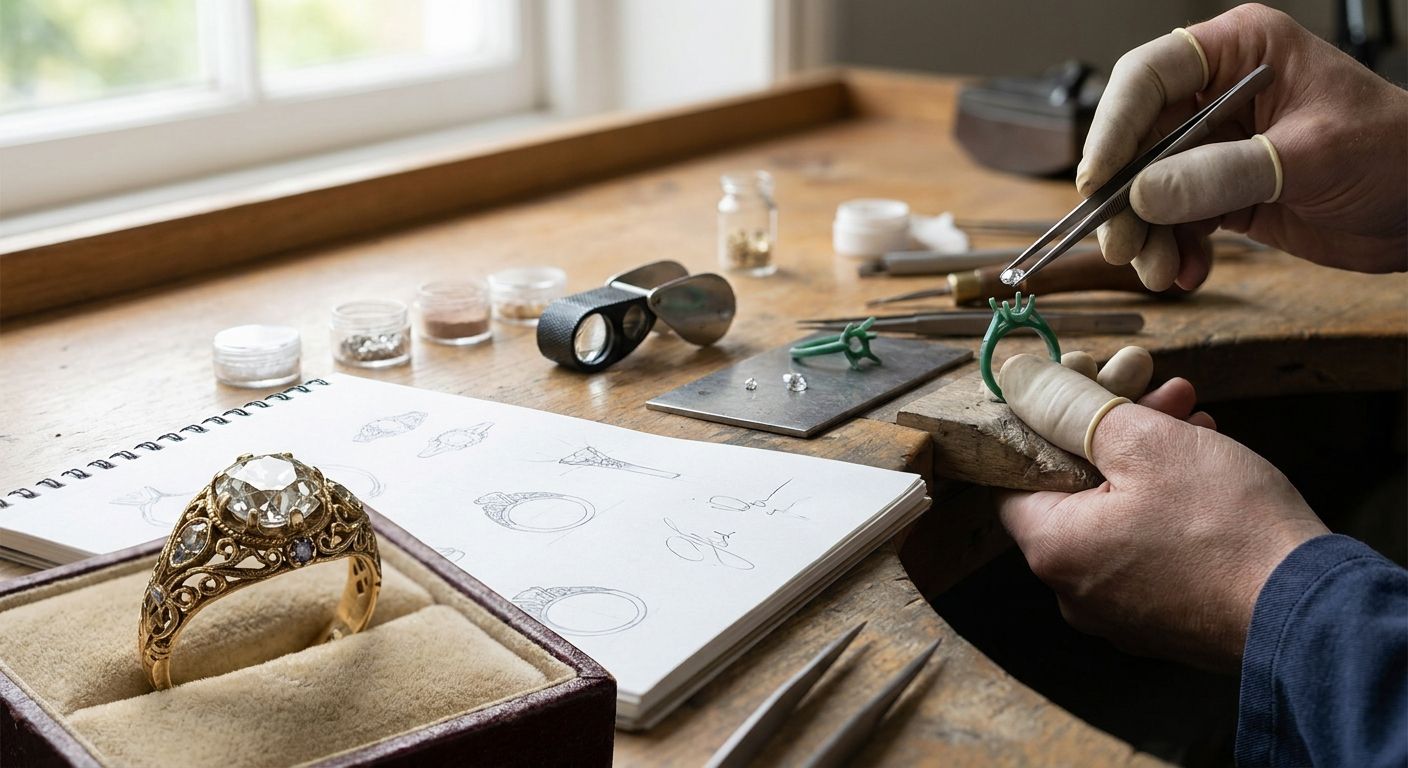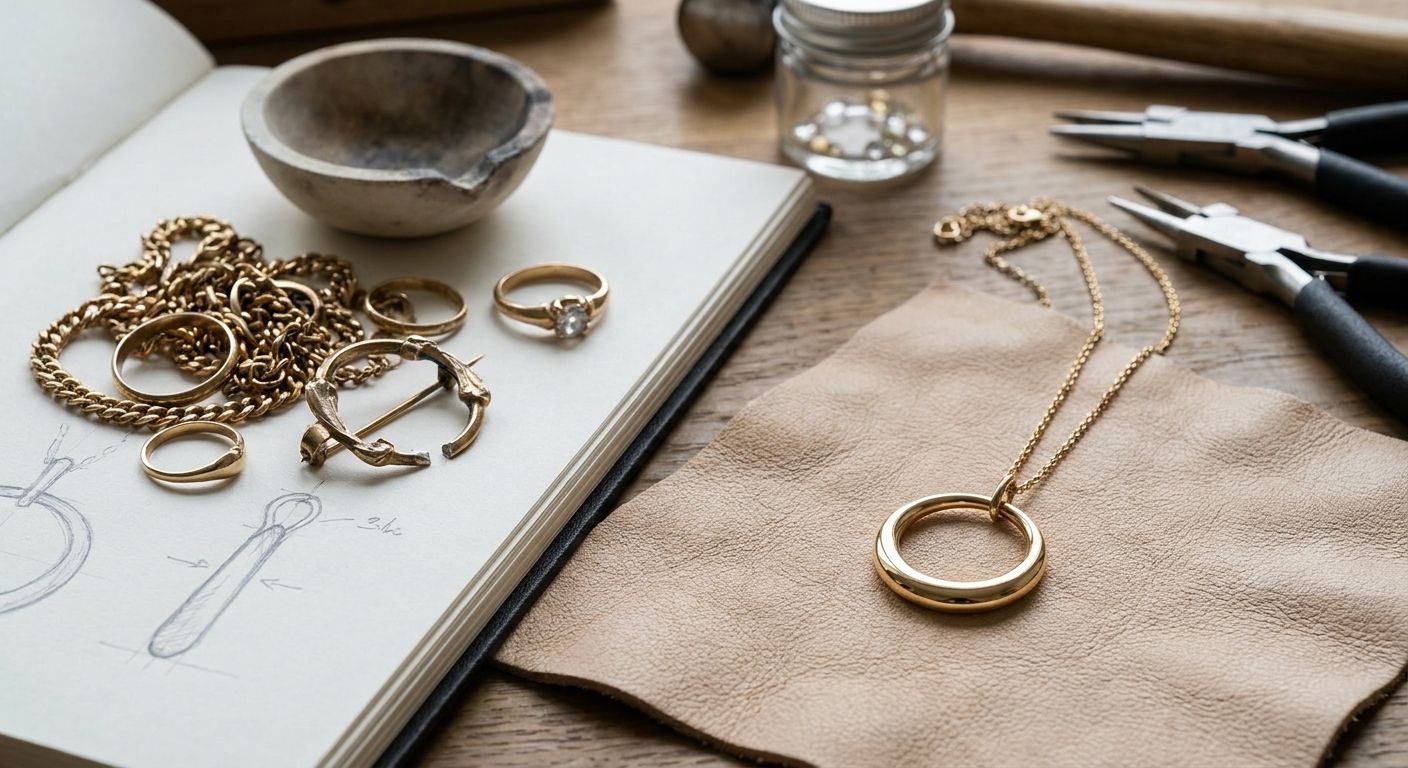
Old gold sitting in a drawer — a broken chain, a ring from a marriage that ended, a pendant nobody wears — has real melt value and real sentimental value, and you don't have to choose between honoring it and wearing something you actually love. This guide walks through how to repurpose old gold jewelry into a new piece, step by step, from sorting your gold to picking a jeweler who can turn it into something current.
- Repurpose old gold jewelry by melting, refashioning, or partially reusing metal into a new setting — most projects run 4-8 weeks with a custom jeweler in 2026.
- Sort gold by karat first: 14k, 18k, and 10k melt and price differently, and mixing them without disclosure throws off your quote.
- A custom engagement ring design is the most common outcome for repurposed gold — Element 79 in Cherry Creek, Denver, handles this exact process.
- Get a written appraisal before you hand anything over; it protects you if the piece is lost, damaged, or undervalued.
- Skip mail-in 'cash for gold' services for anything with sentimental weight — the metal gets scrapped, not saved.
Why this matters
Gold doesn't degrade the way costume jewelry does, so the metal in a piece from 1986 is just as usable today as it was then. The problem is almost never the material. It's the design — dated settings, worn prongs, styles nobody wears anymore.
Repurposing old gold jewelry means you keep the material (and often the sentimental thread) while updating everything about how it looks and functions. A jeweler at Element 79 can walk you through whether your gold is a candidate for a full reset or a partial reuse before any metal gets touched. That single conversation, ideally before you commit, saves most of the regret people report after a rushed melt-down.
What you'll need
- The old gold piece(s), cleaned enough to inspect (a soft brush and warm water works)
- Any paperwork: original receipts, appraisals, certificates for stones
- A rough sense of what you want the new piece to be (ring, pendant, stacking band)
- A jeweler or bench that does custom work, not just repair
- 4 to 8 weeks of lead time for a full custom redesign in 2026
- A budget range that accounts for labor and any new metal or stones added
The steps
1. Sort and identify your gold
Before anything else, separate pieces by karat and color. Most fine jewelry in the U.S. is stamped 10k, 14k, or 18k inside the band or clasp, and yellow, white, and rose gold are alloyed differently even at the same karat.
This matters because mixed-karat gold has to be refined or kept separate, and a jeweler quoting you on unsorted gold will price conservatively to cover the uncertainty. Lay pieces out, note any stamps you can find, and set aside anything with gemstones for separate handling — stones don't survive the melting process.
Common mistake: assuming all your "gold" jewelry is solid gold. Gold-filled and gold-plated pieces have almost no scrap value and can't be repurposed the same way.
2. Get it appraised before you commit to anything
An appraisal gives you a documented weight, karat, and value for the piece as it exists today — separate from any sentimental attachment. This protects you in two ways: it sets a fair baseline for what your gold is worth toward a new piece, and it gives you a paper trail if anything happens to the item in transit or during work.
A proper jewelry appraisal for insurance purposes takes the same information a jeweler needs for a repurposing quote, so it's worth doing even if you're not planning to insure the finished piece right away.
Common mistake: skipping this step and taking a jeweler's verbal estimate as final. Get it in writing.
3. Decide: full melt, partial reuse, or reset
There are three real paths here, and they cost differently:
- Full melt and recast: the gold is refined and poured into an entirely new design. Best when the original setting is damaged or the style is far from what you want.
- Partial reuse: the band or shank is reworked but original elements (an engraving, a distinctive detail) are preserved. Cheaper than a full recast in labor, though not always in material.
- Reset: the gold structure stays largely intact but stones move to a new setting, or a new stone is added. This is the fastest and often the least expensive route.
A jeweler doing a custom engagement ring design from repurposed gold will usually walk you through which of these three fits your specific piece during the first consultation, before any metal changes hands.
Common mistake: assuming a full melt is always necessary. It's the most dramatic option, not always the most practical one.
4. Choose the new design
This is where sentiment turns into something you'll actually wear. Bring reference images, but stay open to what your jeweler suggests based on the gold you have — karat and color limit some design directions more than people expect.
If the gold is coming from an heirloom piece, ask whether a signature detail (a filigree pattern, an engraving) can be preserved in the new design rather than lost entirely in a recast. Contemporary designers working in custom bridal, the kind you'll find through Element 79's roster of bridal designers, often build a modern piece around one preserved element from the original.
Common mistake: picking a design before confirming the gold yield. A recast loses a small percentage of metal to refining, so the new piece may need supplemental gold if the design is larger than the original.
5. Confirm the quote and timeline in writing
Get a written breakdown: labor cost, any added metal or stone cost, and a delivery date. Custom work in 2026 runs longer during peak proposal season (October through February) than the rest of the year, so ask specifically about current lead times rather than assuming the 4-8 week average applies.
Common mistake: verbal timelines with no written confirmation. If a bench is backed up, you want that in writing before you hand over a piece with sentimental value.
6. Have the work done and inspect before final payment
When the piece is ready, inspect it against the original quote: karat stamp, stone settings, any preserved detail you asked for. A reputable jeweler expects this and won't rush the handoff.
Common mistake: paying in full sight-unseen for a mailed piece. Inspect in person or request detailed photos and a hallmark verification before final payment clears.
Talk through your repurposing options
Bring your gold in and get a design consultation at Element 79 in Cherry Creek.
Troubleshooting
- The quote came back lower than expected. Ask for the breakdown by karat and weight — mixed-metal pieces or gold-filled items often quote lower than people assume based on appearance alone.
- You're not sure the jeweler can handle custom work, not just repair. Ask to see examples of past custom redesigns, specifically ones built from repurposed metal, not just new-stock pieces.
- The stone from the original setting is loose or damaged. Have it checked separately before deciding on a reset — a damaged stone may need recutting or replacement, which changes the budget.
- You want to preserve an engraving but recast the band. Say so explicitly at the design stage. Once metal is melted, engraving is gone; it has to be planned around, not fixed after.
- You're outside Denver and want in-person work. Local benches doing custom bridal and repurposing, like the team behind custom jewelers in Cherry Creek, Denver, typically handle out-of-state clients through phone consultations and shipped pieces with insured transit.
Tools and resources
- A jeweler's loupe or magnifier to check hallmarks yourself before dropping the piece off
- Written appraisal documentation, updated for the repurposing project
- Insured shipping if you're mailing a piece rather than dropping it off in person
- A reference folder of design inspiration (screenshots, saved images) to bring to your first consultation
- A working budget range, not a fixed number, since final gold yield can shift cost slightly
What to do next
Once the new piece is finished, get it reappraised and updated on your insurance policy — the old appraisal no longer reflects the current design or value. If this repurposing project is happening because of an engagement or anniversary, it's worth reading up on how to insure a designer engagement ring before the piece leaves the bench, not after.
FAQ
Can you repurpose old gold jewelry into a new ring?
Yes, gold from an old ring, chain, or pendant can be melted and recast into a new ring, or reset if the band is still structurally sound. Most jewelers doing custom bridal work handle this as a standard project in 2026.
How much gold do you lose when melting jewelry for reuse?
A small percentage of gold is lost to refining during a melt and recast, which is why a new design larger than the original piece often needs supplemental metal. Ask your jeweler for the specific yield estimate before confirming a design.
Is it cheaper to repurpose old gold than buy new jewelry?
It depends on the design and labor involved — repurposing saves on raw metal cost but custom labor for a full recast can match or exceed buying a comparable ready-made piece. A reset or partial reuse is usually the more budget-friendly path.
Can stones from an old setting be reused in a new piece?
Yes, as long as the stone is undamaged and structurally sound after removal from the old setting. Have it inspected separately before committing to the new design, since a chipped or worn stone may need recutting.
What karat gold is best for repurposing into a durable piece?
14k gold balances durability and workability for everyday wear, while 18k is softer and shows wear faster in daily-use pieces like rings. The right karat depends on how the finished piece will actually be worn.
How long does it take to repurpose old gold jewelry?
A custom repurposing project typically takes 4 to 8 weeks from design approval to delivery in 2026, longer during peak proposal season from October through February. Ask your jeweler for a written timeline before starting.
Should I get my old gold appraised before repurposing it?
Yes, an appraisal documents karat, weight, and value before any work starts, which protects you if the piece is lost or damaged in the process. It also gives you a fair baseline for pricing the new design.
Can gold-filled or gold-plated jewelry be repurposed the same way?
No, gold-filled and gold-plated pieces have a thin layer of gold over base metal and can't be melted down for meaningful scrap value. Solid gold, stamped 10k, 14k, or 18k, is what repurposing projects require.
One last thing
The detail people skip most often is the engraving or the tiny worn spot that made the original piece feel like theirs. Ask your jeweler, before any metal touches a torch, whether that one detail can survive into the new design. It's the difference between a piece that's technically the same gold and one that still feels like the same ring.