Insuring a designer engagement ring is not the same as insuring a mall-brand solitaire, and treating it that way is how couples end up underpaid after a loss. A signed Artëmer or Spinelli Kilcollin piece needs an appraisal that documents the maker, the metalwork, and the stone quality an adjuster can't guess from a photo.
- Engagement ring insurance for designer pieces requires a current appraisal, not the receipt — buy a scheduled rider or a standalone jewelry policy.
- Standalone insurers like Jewelers Mutual typically charge 1-2% of appraised value per year, so a $12,000 ring runs $120-$240 annually.
- Homeowners and renters policies cap jewelry theft claims at $1,000-$2,500 unless you add a rider — verify the number before you assume you're covered.
- Re-appraise every 2-3 years, and always after a resize, since metal and stone work changes replacement value.
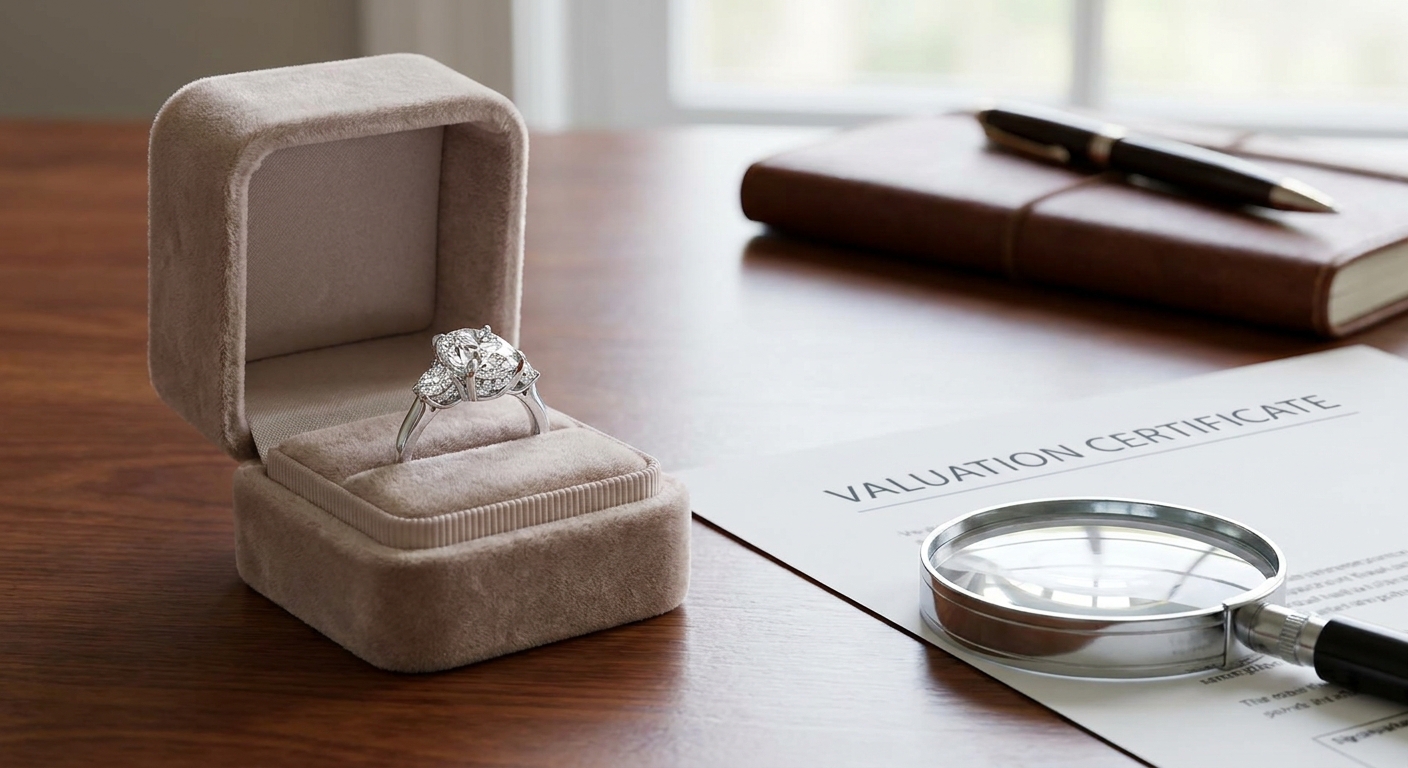
- Photograph the ring with the appraisal document attached to your claim file — designer pieces get denied for mismatched documentation more than for missing coverage.
Why this matters
A designer engagement ring carries value in two places: the stone and the craftsmanship. Insurers who don't see documentation for both will price the claim off the diamond alone and ignore the sculptural band or hand-finished setting that made the piece cost what it did in 2026.
Most couples find this out the hard way, after a ring is lost at a wedding venue or stolen from a hotel room, when the settlement check reflects a generic "solitaire, 1 carat" line item instead of the actual designer piece. The fix happens before the loss, not after.
What you'll need
- A recent sales receipt or invoice naming the designer, metal, and stone specs
- A written appraisal from a certified gemologist (GIA or AGS credentials), dated within the last 2-3 years
- Clear photos of the ring from at least four angles, including any hallmark or maker's stamp
- 15-20 minutes to compare a scheduled homeowners/renters rider against a standalone jewelry policy
- Your current homeowners or renters policy number and declarations page
If the ring came from Element 79, the original invoice already lists designer, metal purity, and stone details — start there before booking a separate appraisal.
The steps
1. Get an independent appraisal, not just the sales invoice
A sales invoice proves what you paid. An appraisal proves what the ring is worth to replace, and insurers weight these differently. For a designer engagement ring, replacement cost includes the setting's labor, which a generic diamond appraisal skips.
Book a certified gemologist appraisal that itemizes the center stone, accent stones, metal weight, and maker. Expect to pay $50-$150 for this in 2026, depending on the complexity of the setting.
Common mistake: submitting an appraisal that only lists carat and clarity. Insurers use that gap to lowball a claim on hand-fabricated or limited-run pieces.
2. Decide between a homeowners rider and a standalone policy
A homeowners or renters rider is cheaper if you already have a policy, but it usually bundles jewelry into the same deductible and claim history as the rest of your home. A standalone jewelry policy from an insurer like Jewelers Mutual or Lavalier has no deductible on most plans and doesn't touch your home insurance claim record.
Standalone jewelry insurance costs roughly 1-2% of appraised value per year. On a $12,000 designer ring, that's $120-$240 annually, compared to a homeowners rider that might run $100-$180 but caps coverage type (mysterious disappearance, for example, is often excluded on base riders).
Common mistake: assuming the base homeowners policy already covers the ring. Standard policies cap jewelry theft at $1,000-$2,500 total, not per item.
3. Confirm the coverage type: replacement value vs. cash value
Replacement value pays to replace the ring with an equivalent piece at current retail pricing. Cash value pays depreciated worth, which can leave you $2,000-$4,000 short on a designer piece bought a few years back.
Read the policy language for "agreed value" or "replacement cost" specifically. If the document says "actual cash value," push back or shop a different carrier.
Common mistake: signing a policy that pays cash value on a ring that's appreciated in designer resale demand, then discovering the payout doesn't cover a comparable replacement in 2026 pricing.
4. Insure the full setting, not just the center stone
Designer rings from brands like Spinelli Kilcollin or Orly Marcel often carry as much value in the band architecture as the stone. A policy that only schedules "1 round diamond, 1.2ct" and skips the metalwork undervalues the piece by hundreds to thousands of dollars.
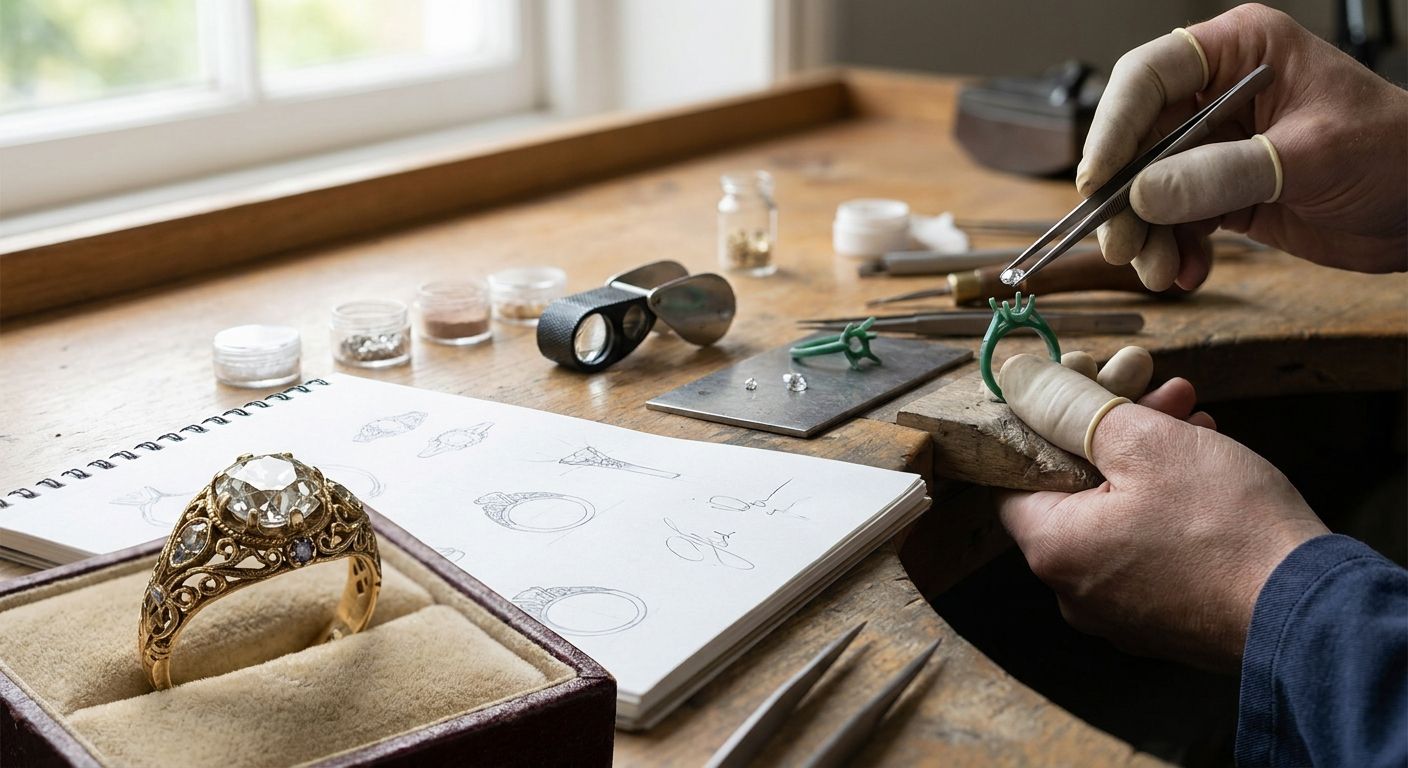
When filling out the insurance application, list the ring by full description: designer name, metal type and weight, stone count, and setting style. If you're building or planning a custom engagement ring, keep the design specs from that process — they double as insurance documentation.
5. Re-appraise after any resize or repair
Resizing a designer ring changes metal weight and can affect stone setting integrity, which shifts replacement value. An insurer that sees a 3-year-old appraisal after a resize may argue the documentation is stale.
Any time the ring goes in for designer ring resizing, request an updated appraisal note from the jeweler doing the work. It takes minutes and closes a gap adjusters look for.
Common mistake: resizing a ring and never updating the insurer, then filing a claim years later on outdated specs.
6. Store your documentation where you can actually reach it
A claim moves faster with the appraisal, receipt, and photos in one folder, digital and physical. Insurers routinely ask for all three before approving a settlement, and delays cost time you don't get back on a lost ring.
Keep a cloud copy and a printed copy. Update the file every time you re-appraise or resize.
Get an appraisal-ready invoice
Book an appointment for documentation on your designer ring.
Troubleshooting
The insurer's quote seems low for a designer piece. Ask if the appraisal itemized maker and metalwork separately from the stone. A generic gemological appraisal undercounts labor-intensive settings.
Your homeowners policy denied a jewelry claim. Check the declarations page for a per-item cap, usually $1,000-$2,500. Anything above that needs a scheduled rider or standalone policy, which should have been added before the loss.
The ring was resized and now the insurer wants a new appraisal. This is standard. Get the updated appraisal from wherever the resizing was done and submit it as an endorsement, not a new policy.
You can't find the original sales documentation. A current gemologist appraisal can substitute, though it will cost more without the original invoice's metal-purity and stone-origin notes.
The policy excludes "mysterious disappearance." This exclusion is common on base homeowners riders. Standalone jewelry insurers include it more often — compare policy language line by line, not just premium price.
Tools and resources
- How to choose a designer engagement ring — for understanding what to document before you insure
- How to resize a designer ring safely — resizing steps that affect your appraisal
- How to care for gemstone rings every day — daily wear habits that reduce claim-worthy damage
- Best custom jewelers in Cherry Creek, Denver — where to source a local appraisal
- A certified gemologist appraiser (GIA or AGS) in your area for the initial valuation
What to do next
Once coverage is in place, the next document worth building is a maintenance log. Insurers respond faster to claims backed by regular care records, and gemstone ring care routines are the easiest way to show a ring was maintained, not neglected, before a loss.
FAQ
How much does engagement ring insurance cost in 2026?
Standalone jewelry insurance runs 1-2% of appraised value per year in 2026, so a $10,000 ring costs roughly $100-$200 annually. Homeowners riders can be cheaper but often cap coverage type and payout method.
Is a sales receipt enough to insure a designer engagement ring?
No, a receipt only proves purchase price, not current replacement value. Insurers want a certified gemologist appraisal that itemizes the designer, metal, and stone details separately.
Does homeowners insurance cover a stolen engagement ring?
Only up to a low cap, typically $1,000-$2,500 total for all jewelry, unless you add a scheduled rider. A designer ring above that value needs additional coverage to be fully protected.
How often should I re-appraise my engagement ring?
Re-appraise every 2-3 years, and immediately after any resizing or repair work. Metal weight and setting changes directly affect the replacement value insurers use.
What's the difference between replacement value and cash value coverage?
Replacement value pays what it costs to replace the ring at current retail pricing, while cash value pays depreciated worth. Designer rings should always be insured at replacement value to avoid an underpaid claim.
Can I insure a custom engagement ring the same way as a retail one?
Yes, but the appraisal needs to document the custom design specs, since there's no standard retail comparison to fall back on. Keep the original design brief alongside the appraisal.
Do I need a new policy after resizing a designer ring?
You need an updated appraisal endorsement, not necessarily a new policy. Submit the resizing jeweler's updated specs to your insurer to keep the coverage current.
What insurers specialize in engagement ring coverage?
Jewelers Mutual and Lavalier are common standalone options in 2026, both offering no-deductible plans built specifically for fine jewelry rather than general home contents.
One last thing
The detail most couples skip: photograph the hallmark or maker's stamp inside the band, not just the stone from the top. Adjusters use that stamp to confirm designer authenticity, and a claim without it can get valued as a generic ring even with a full appraisal on file.