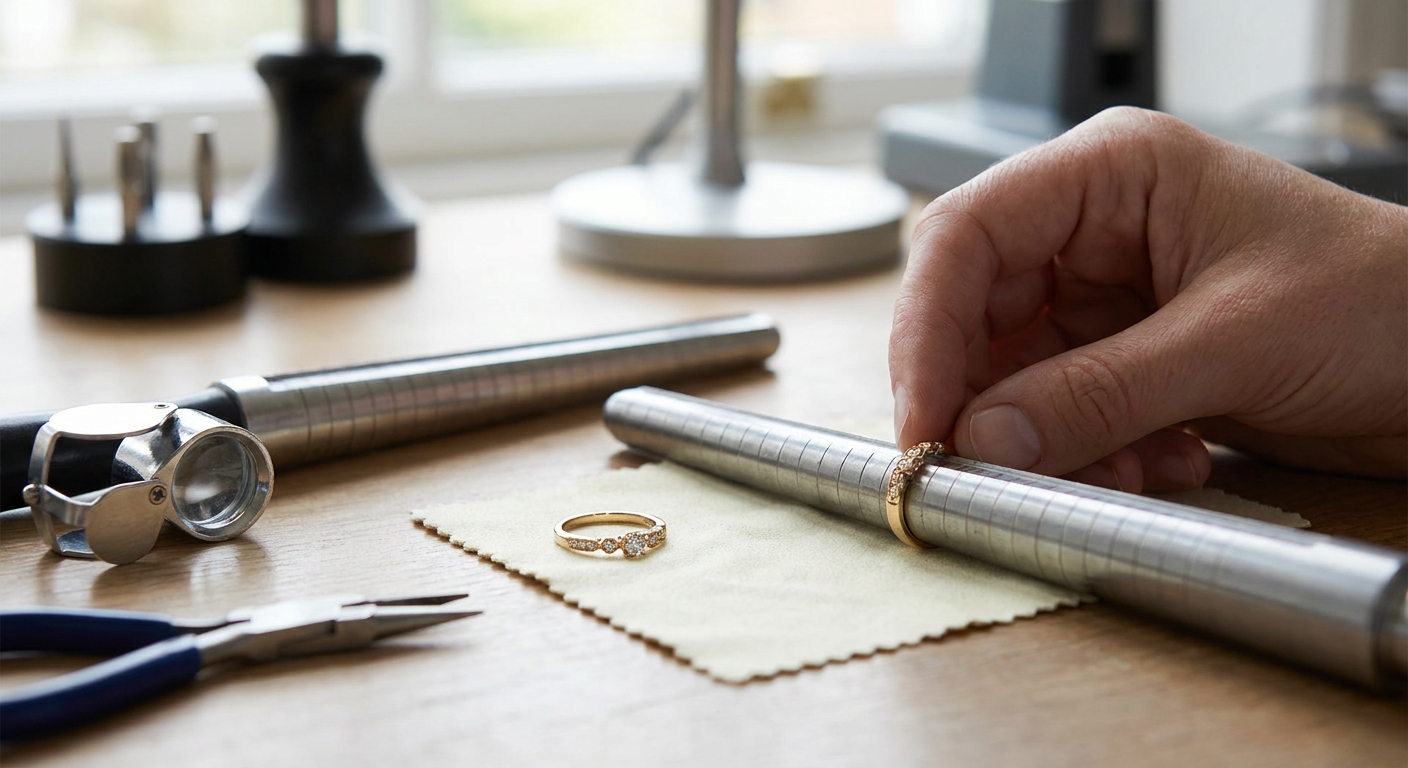
Resizing a designer ring isn't the same job as resizing a mass-produced band, and treating it that way is how eternity bands lose stones and Spinelli Kilcollin gimbals stop moving. This guide walks through the exact steps to resize a designer ring safely in 2026, plus the mistakes that turn a $50 adjustment into a $2,000 repair.
- Never resize a Spinelli Kilcollin stacking ring with standard sizing beads - the gimbal mechanism warps under pressure. Verdict: Skip DIY, book a specialist.
- Pave and eternity bands need a jeweler who removes stones before sizing, not one who solders around them. Verdict: Ask first, resize second.
- Most fine jewelry resizes take 5 to 10 business days in 2026, longer for custom bridal pieces with mixed metals. Verdict: Plan two weeks minimum before an event.
- A ring resized more than two sizes up or down often needs a full remake, not an adjustment. Verdict: Get a written quote before committing.
Why this matters
Designer rings from artisan houses like Artëmer, Orly Marcel, or Spinelli Kilcollin aren't cast in a standard mold. Many use hand-fabricated bands, unusual alloys, or interlocking mechanisms that a generic mall jeweler's sizing machine can damage in seconds.
Get the process wrong and you're not just out the resizing fee. You're looking at a re-cast, a re-set stone, or a piece that no longer moves the way it was designed to. Element 79 Jewelry sees this most often with stacking rings and pave bands that arrive already damaged from a previous resize attempt.
What you'll need
- The ring itself, plus any paperwork from the original designer (certificate of authenticity, sizing notes, or a receipt showing the current size)
- A current, accurate size - measured on the actual finger, at the actual time of day you'd wear the ring, since fingers swell up to half a size by evening
- Knowledge of the metal - platinum, 18k gold, and mixed-metal designs each resize differently, and some designers use proprietary alloys that only their own workshop can match
- A target jeweler with fine jewelry experience - not every shop that resizes cocktail rings should touch a hand-fabricated bridal piece
- Time - 5 to 10 business days is standard in 2026 for a straightforward resize; custom or pave pieces run longer
- A budget buffer - complex resizes (eternity bands, mixed metal stacks) cost more than a simple gold band adjustment
The steps
1. Confirm the ring can be resized at all
Not every design allows it. Eternity bands with stones set all the way around the shank, tension-set rings, and certain mixed-metal Spinelli Kilcollin gimbal styles either can't be resized or need a specialist technique instead of a standard cut-and-solder.
Check the band's inside surface for stones or engraving that runs the full circumference. If it does, ask the jeweler directly whether resizing is possible before you commit to anything. Skipping this step is the single most common reason resizes go wrong.
Expected outcome: a clear yes, no, or "only with a specific method" from someone who's actually handled the design before.
2. Get measured properly, not casually
Use a jeweler's sizing tool, not a printable ring chart from a random website. Measure at the end of the day when fingers are at their largest, and measure the finger the ring will actually live on - ring size can differ by a quarter size or more between hands.
If the ring is for an engagement or anniversary piece and you're sizing based on a guess rather than the wearer's finger, size slightly larger. It's easier to take a ring in a half size later than to add metal back.
Common mistake: sizing a cold, shrunk finger first thing in the morning and ending up half a size too tight.
3. Identify the metal and construction before touching the band
Platinum resizes differently than 18k gold - it has a higher melting point and different malleability, so a jeweler working outside their usual metal can botch the solder joint. Mixed-metal designs (a rose gold band with a white gold setting, for example) need a jeweler who can match both alloys precisely or the seam will discolor within a year.
Ask what metal the piece is before any work starts. If nobody can answer with certainty, that's a signal to slow down.
4. Choose a jeweler who works with designer and custom pieces
This is where most resize damage happens. A jeweler who's never worked with hand-fabricated bridal designs may default to techniques built for factory-cast rings - sizing beads, aggressive stretching, or generic solder that doesn't match the original alloy.
For pieces from artisan brands, look for a jeweler or boutique with direct experience in custom jewelers in Cherry Creek, Denver or a similar fine jewelry specialty, not a mall kiosk that turns around resizes same-day. Same-day is usually a red flag for anything beyond a plain gold band.
5. Get stones removed before the metal is heated, when relevant
Any ring with pave, channel-set stones, or delicate gemstones near the shank should have those stones pulled before the band is cut and resoldered. Heat travels through metal fast, and a diamond or sapphire sitting near a solder joint can crack, discolor, or loosen from thermal shock.
A jeweler who skips this step to save time is taking a real risk with your stones. Ask directly: "Are the stones coming out before you resize this?"
Expected outcome: stones removed, band resized, stones reset and inspected under magnification before the ring goes back to you.
6. Confirm the resize range before paying anything
Most fine jewelry can move comfortably within half a size to two full sizes without structural issues. Beyond that, the band's proportions, stone spacing, or engraving can distort, and a remake may be the more honest recommendation than a resize.
A jeweler who quotes the same price and timeline for a half-size adjustment and a three-size jump probably isn't being straight with you.
7. Inspect the ring before you leave with it
Check the solder seam under good light - it should be invisible or nearly so on a quality resize. Check that any stones sit flush and don't wiggle when you gently press them. Check that engraving or texture on the band lines up correctly across the seam.
This five-minute check in-store saves a return trip later. If something looks off, say so before you walk out.
Get a designer ring resized right
Book an appointment at the Cherry Creek boutique for fine jewelry resizing and repair.
Troubleshooting
- Ring still feels tight after resizing - swelling from the appointment itself can throw off the fit test. Wait 24 hours and try again before assuming the resize is wrong.
- A stone feels loose after pickup - stop wearing the ring immediately and bring it back. This usually means a prong wasn't re-tightened after the stone was reset post-resize.
- The seam is visible or discolored - this points to mismatched alloy in the solder. On platinum or mixed-metal pieces, this is a sign the jeweler didn't match the metal correctly.
- A stacking ring no longer stacks smoothly - Spinelli Kilcollin and similar gimbal designs rely on precise tolerances. If the resize altered the inner diameter unevenly, the stack won't sit flat anymore, and it usually needs to go back to a specialist.
- The jeweler recommends a full remake instead of a resize - for eternity bands or pieces sized more than two sizes, this is often the safer call, even though it costs more than a standard resize.
Tools and resources
- A jeweler's ring sizing gauge (avoid printable paper sizers for anything beyond a rough estimate)
- Written documentation of the ring's metal type and any designer certification
- A guide to caring for gemstone rings day to day so the ring holds up between resizes and cleanings
- A jeweler experienced with the specific brand or construction style of the ring
- A calendar buffer of at least two weeks before any event the ring needs to be ready for
What to do next
If the ring in question is part of an engagement or bridal set, sizing decisions get more complicated because resale value, resizing limits, and design integrity all factor in before you buy, not after. Read through how to choose a designer engagement ring before committing to a size on a piece you plan to keep for decades.
FAQ
How much does it cost to resize a designer ring in 2026?
A standard gold band resize runs less than a mixed-metal or pave design, since simple bands need less labor and no stone removal. Complex bridal pieces or eternity bands cost more because they often require stone removal, resetting, and specialist handling.
How long does resizing a fine jewelry ring take?
Most resizes take 5 to 10 business days in 2026 for standard bands. Custom bridal pieces, pave settings, or mixed-metal designs can take longer because stones need to be removed and reset carefully.
Can every designer ring be resized?
No. Eternity bands with stones set all the way around the shank, tension-set rings, and some gimbal-style stacking rings either can't be resized or need a specialized technique. Always confirm feasibility before paying for an attempt.
Is it safe to resize a ring with pave diamonds?
It's safe only when the stones near the resizing point are removed before the band is cut and heated. Heat from soldering can crack or loosen stones left in place, so ask the jeweler directly whether stones come out first.
How many sizes can a ring go up or down safely?
Half a size to two full sizes is the typical safe range for most fine jewelry. Beyond that, the band's proportions and stone spacing can distort, and a remake is often the better option than a resize.
Does resizing a ring affect its value?
A resize done correctly by an experienced jeweler shouldn't meaningfully affect value. A poorly executed resize - visible seams, mismatched alloy, damaged stones - can lower both the wearability and resale value of the piece.
Should I resize a ring myself with a home sizing kit?
No. Home sizing beads and DIY stretching tools are built for plain, mass-produced bands, not hand-fabricated designer pieces, and they can permanently warp mechanisms like gimbal stacking rings.
What should I bring to a resizing appointment?
Bring the ring, any certification or paperwork from the original designer, and a clear idea of your current size measured at the end of the day. If the piece has stones near the shank, ask ahead whether they'll need to be removed.
One last thing
The detail most people skip: fingers change size with the seasons, not just with age. A ring sized in July can feel snug by January simply from cold-weather swelling changes, which is why a jeweler measuring in one season should account for how the fit will feel in another before finalizing the size in 2026.