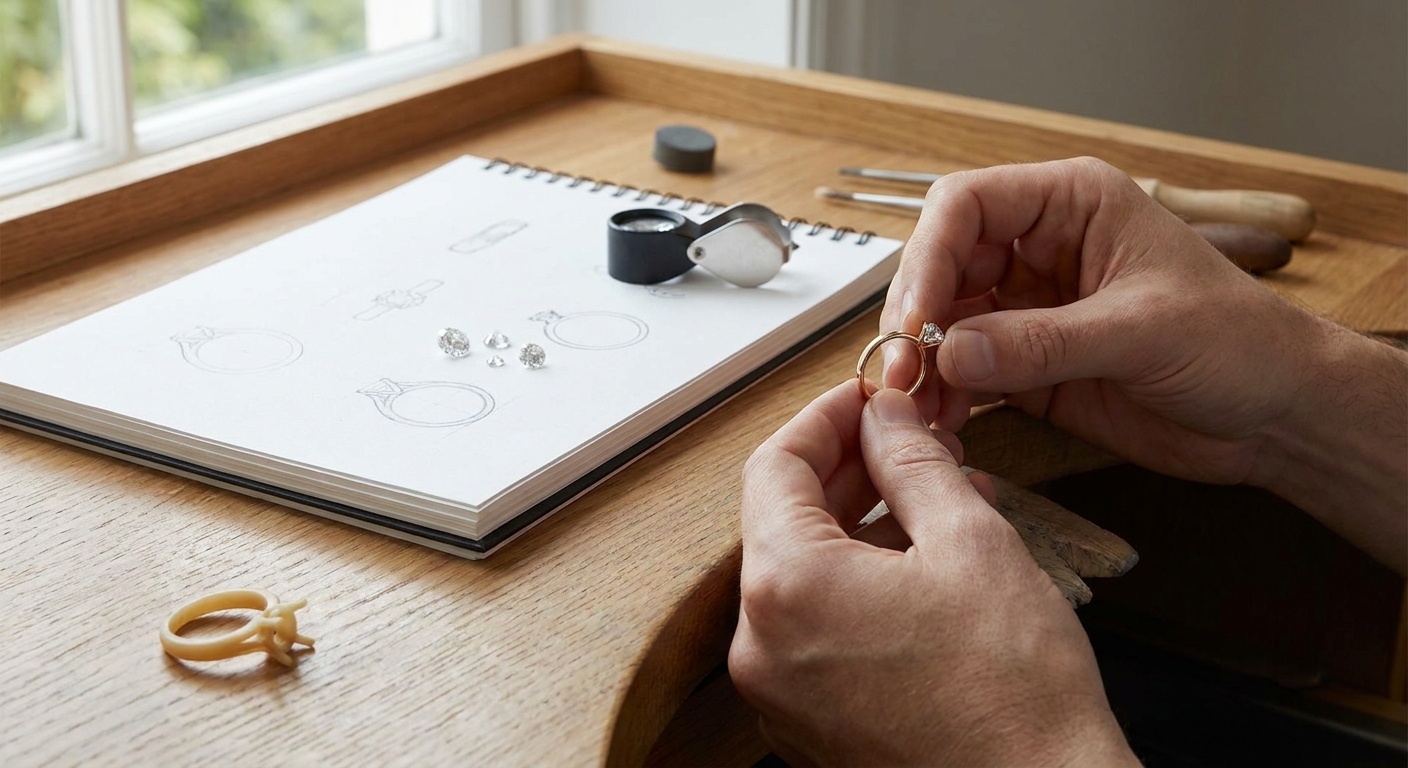
Designing a custom engagement ring in 2026 means turning a proposal idea into a piece that fits one specific hand, one specific style, and one specific story — and it takes a clear sequence of decisions, not a Pinterest board full of maybes.
- Custom engagement ring design starts with budget, center stone, and metal — lock those three before sketching settings.
- CAD rendering and a wax prototype catch sizing and stone-fit problems before any metal is cast in 2026.
- Colored gemstones and lab-grown diamonds now dominate custom requests; both need different setting depth than mined diamonds.
- Element 79 in Cherry Creek, Denver builds custom bridal pieces from concept sketch through final fitting — book a consultation before ordering a stone.
Why this matters
Most engagement ring regret comes from skipping a step, not from picking the wrong stone. A center stone bought before the setting is chosen, a ring sized off a borrowed band, a metal color decided over text message — these are the mistakes that turn a custom ring into a redo. In 2026, with CAD rendering and rush production standard at most bridal studios, there's no reason to guess through any of this.
A custom engagement ring for a proposal in 2026 typically runs a 6-10 week timeline from first consultation to final polish, longer if a rare colored gemstone is sourced. That window is your real constraint — plan backward from the proposal date, not forward from "whenever it's done."
What you'll need
- A budget range, not a single number — most jewelers work in bands (for example $4,000-$6,000) because stone sourcing shifts the final price
- A timeline — the proposal date, worked backward by at least 8 weeks
- Ring size — measured in person, not guessed, and not sized off a ring worn on the wrong finger
- 2-3 reference images — actual rings, not just "vintage" or "modern" as a word
- A center stone preference — diamond, sapphire, emerald, or another gemstone, plus a rough carat range
- A metal preference — yellow gold, white gold, platinum, or rose gold
- A consultation booked with a jeweler who does in-house custom work, not just resizing
The steps
1. Set your budget and timeline before you look at a single stone
This step accomplishes one thing: it stops you from falling for a stone you can't afford and then compromising the setting to make up the difference. Decide on a total budget range and split it roughly 60/40 between stone and setting/labor as a starting point. If the proposal date is fixed, subtract 8-10 weeks from it right now and treat that as your "stone must be chosen" deadline.
Common mistake: picking the center stone first, falling in love with a 2-carat sapphire, and then discovering the setting budget is gone.
2. Choose your center stone and understand what it demands from the setting
Every stone has a hardness, a depth, and a light-return pattern that dictates how it has to sit in metal. A round brilliant diamond behaves differently under a prong than an emerald-cut sapphire, and colored stones in particular need setting depth calculated around their pavilion, not eyeballed. How to choose a gemstone for an engagement ring walks through hardness, cut, and durability by stone type if you're deciding between a diamond and a colored center stone.
Expected outcome: a stone type, shape, and rough carat weight locked in before the setting sketch starts.
Common mistake: choosing a soft gemstone like opal or emerald for daily-wear hands without discussing protective settings first.
3. Pick the metal and confirm it against skin tone and lifestyle, not trend
Platinum holds prongs tighter over decades and suits active hands; 18k yellow gold patinas warmer with age; rose gold shows wear faster in manual jobs. This decision affects both the final look and the maintenance schedule for the next 10-plus years, so weigh daily habits, not just what looks best in the sketch.
Common mistake: matching metal to an existing wedding band without checking whether that metal is even still in production at the same alloy.
4. Select a setting style and confirm the stack logic if other rings will sit beside it
A solitaire, a halo, a three-stone, or a bezel each reads differently and wears differently — a bezel protects a soft stone edge-to-edge, while a halo adds visual size without adding carat weight. If the ring will eventually sit in a stack with a wedding band, decide the profile now so the bands don't shift or gap later.
Expected outcome: a chosen setting silhouette with prong count or bezel width specified, not just a mood-board reference.
5. Get professionally sized and request a CAD rendering before anything is cast
Ring size should be measured at the end of a warm day, on the correct finger, ideally more than once. Once size is locked, a CAD rendering shows the actual proportions — stone height, band width, prong angles — in a 3D file you can review and request changes to before metal is touched. Skipping CAD and going straight to casting is the single most common cause of "it doesn't look like what I imagined."
Common mistake: approving a CAD render without checking it from a top-down angle, which is the angle everyone actually sees the ring from.
6. Review the wax or 3D-printed prototype in person
A wax or resin model lets you hold the actual size and weight before casting in gold or platinum. This is the last point where changes are cheap — after casting, adjustments mean re-melting metal and resetting stones, which adds time and cost. Check prong height, band thickness against your knuckle, and stone tilt at this stage specifically.
Expected outcome: a signed-off prototype with no remaining changes before the final cast.
7. Finalize casting, stone setting, and polish
Once the prototype is approved, casting typically takes 1-2 weeks, followed by stone setting and a final polish pass. This is also when engraving happens, if you're adding it — engraving inside the band should be confirmed in the design file, not requested after the ring is already set.
Common mistake: requesting engraving after the ring is finished, which usually means a rush fee or a delay.
8. Do a final fitting and inspection before the proposal
Check the ring under daylight and indoor light, confirm the size still feels right (weight changes perception of fit), and inspect prongs and settings under magnification if the jeweler offers it. This is the point to catch anything before the ring leaves the shop, not after.
Start your custom ring design
Book a consultation to talk stone, metal, and timeline in person.
Troubleshooting
The CAD render looks flatter than expected. Ask for a side-profile and top-down render together — most "flat" complaints are a lighting artifact in the 3D software, not the actual stone height.
The stone color looks different under store light versus daylight. This is normal for sapphires and some colored gemstones; ask to view the stone under a daylight-balanced lamp before final approval, not just showroom lighting.
The ring feels loose after a few weeks. Fingers change size with temperature and time of day — wait 2-3 weeks of normal wear before requesting a resize, since a same-day adjustment often overcorrects.
Budget crept up mid-process. This usually happens when a colored gemstone gets swapped for a rarer one after the setting is already designed. Lock the stone before finalizing the setting sketch to avoid this.
The timeline slipped past the proposal date. Rare or larger colored gemstones can take 2-4 extra weeks to source. If the date is fixed, ask the jeweler for a stand-in stone or a temporary band while the final piece is completed.
Tools and resources
- A jeweler with in-house custom design capability, not just outsourced resizing — Element 79's custom jewelers in Cherry Creek, Denver handle sketch-to-cast in one studio
- A reference folder of 2-3 real rings, saved from retailer sites, not generic inspiration boards
- A ring sizer or professional in-person sizing appointment
- A written stone certification if the center stone is a diamond or a graded colored gemstone
- If the proposal is a genuinely one-off design, custom engagement rings for a unique proposal covers non-standard requests like asymmetrical settings or heirloom stone resets
What to do next
Once the design process makes sense, the next decision is usually the hardest one: designer versus fully custom. If you're still weighing a named designer collection against a from-scratch build, how to choose a designer engagement ring breaks down when a designer piece covers the same ground as full custom, and when it doesn't.
FAQ
How long does it take to design a custom engagement ring in 2026?
A custom engagement ring typically takes 6-10 weeks from first consultation to final fitting in 2026. Rare colored gemstones or complex settings can add 2-4 extra weeks to sourcing.
How much does a custom engagement ring cost compared to a designer ring?
Custom rings and designer rings often land in similar price ranges once stone and metal are matched, since cost is driven mostly by carat weight and metal type. Custom work adds design and CAD fees, while designer pieces add brand markup.
Do I need to know my ring size before starting a custom design?
Yes, sizing should happen at the first consultation, ideally in person and at the end of the day when fingers are slightly larger. Sizing off a borrowed ring or an online chart is the most common cause of a poor first fit.
What's the best center stone for a custom engagement ring?
There's no single best stone — diamonds offer the widest range of cuts and durability for daily wear, while sapphires and other colored gemstones offer color and a lower cost per carat. The right choice depends on lifestyle and how the stone will be worn day to day.
Can I see my ring before it's finished?
Yes, most custom jewelers provide a CAD rendering and often a wax or resin prototype before final casting. Both stages are the point to request changes, since adjustments after casting take longer and cost more.
Is a custom ring better than buying an existing setting?
A custom ring is better when the buyer wants a specific stone shape, a non-standard size, or a design that doesn't exist in current collections. An existing setting is faster and usually cheaper if the design already fits what's wanted.
What metal holds up best for an engagement ring worn every day?
Platinum holds prong settings tightest over years of daily wear and resists tarnish, making it the most durable choice for active hands. Yellow and rose gold need re-polishing more often but patina in ways many people prefer over time.
Should engraving be added before or after the ring is finished?
Engraving should be requested during the design phase, before casting, so it's built into the final file. Adding engraving after the ring is complete often means a rush fee or a return trip to the jeweler.
One last thing
The detail most people skip: ask to see the CAD render from directly above, the exact angle a partner will see the ring from during the proposal. Side-profile renders look great and hide almost every proportion problem that shows up the moment the ring is actually on a finger in 2026 daylight.