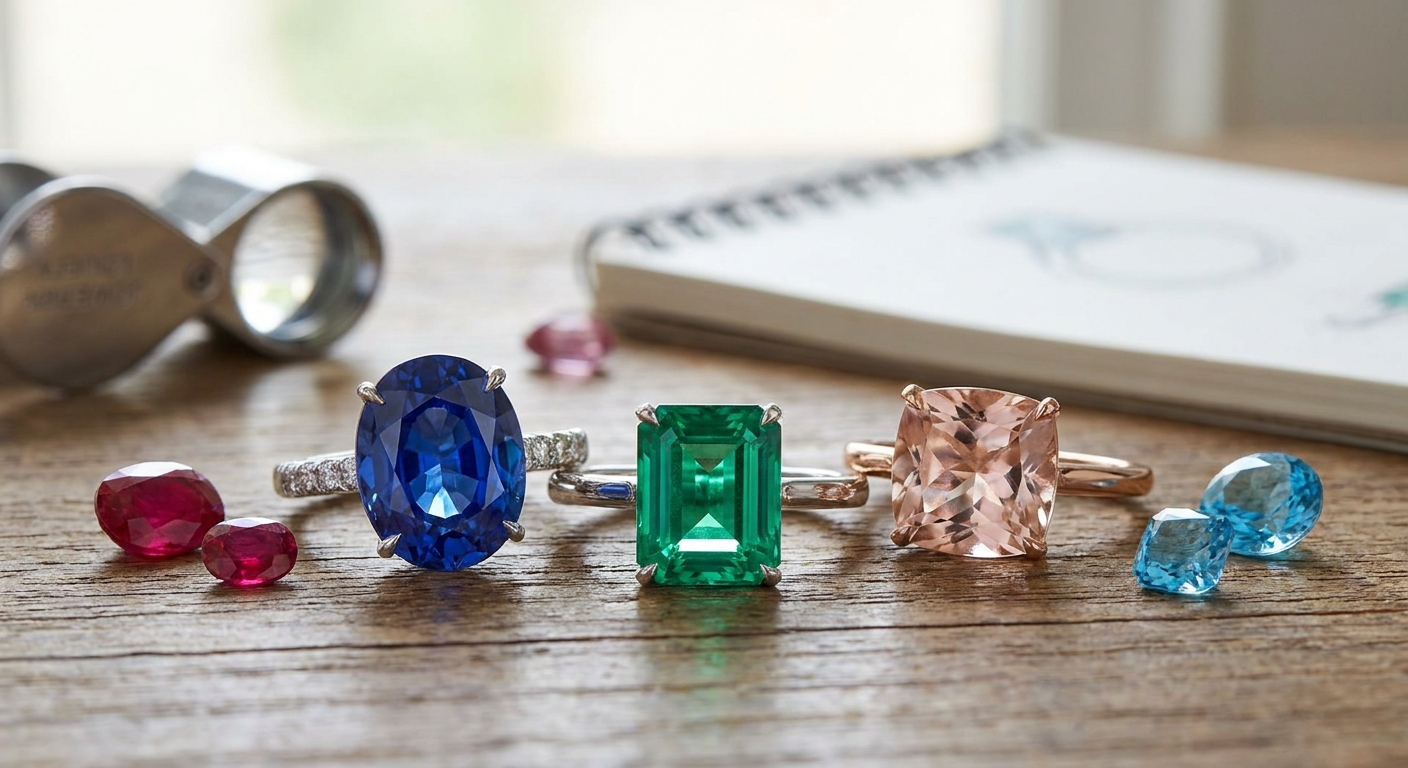
Diamonds still dominate the case, but sapphire, emerald, ruby, morganite, aquamarine, spinel, and tourmaline all make a stronger style statement for less carat-for-carat cost — the question is which one survives forty years of daily wear.
- Sapphire is the safest pick among the best colored gemstones for engagement rings at 9 on the Mohs scale — Buy for daily wear.
- Emerald looks stunning but scores 7.5-8 Mohs with internal inclusions — Consider only with a protective bezel setting.
- Morganite and aquamarine read soft and romantic but sit at 7.5-8 Mohs — Skip for a bride who works with her hands daily.
- Spinel matches sapphire's color range at 8 Mohs and costs less per carat — an underrated Buy for 2026 shoppers.
- Element 79 stocks gemstone engagement rings from Artëmer and Orly Marcel for buyers who want color over a traditional diamond.
Why this matters
An engagement ring gets worn every day for decades — through dish washing, gym sessions, gardening, and everything else a hand does. A gemstone that photographs well in a showcase can chip, scratch, or fade within a few years if it's too soft for that routine.
The Mohs hardness scale (0-10) is the fastest gut check. Anything below 7 picks up surface scratches from ordinary household dust, which contains quartz at 7 Mohs. That single number should shape more of the decision than the color itself.
How this list was ranked
Each gemstone here is scored against three things a daily-wear engagement ring actually needs: Mohs hardness for scratch resistance, toughness against chipping, and how the color holds up under office lighting versus daylight. Pricing follows typical carat-for-carat market positioning relative to diamond, not a fixed dollar figure, since gem pricing swings by origin, treatment, and clarity. Sourcing notes come from standard gemological reference data (GIA hardness and durability charts), not brand-specific testing.
The ranked list: best colored gemstones for engagement rings
1. Sapphire — the safe pick
Sapphire sits at 9 on the Mohs scale, second only to diamond, and comes in blue, pink, yellow, and the increasingly popular padparadscha (peachy-pink) shades. Princess Diana's ring — now Kate Middleton's — put blue sapphire on the map decades ago, and it hasn't lost relevance since.
A sapphire holds its polish through years of daily wear without a bezel or extra protection. It's the gemstone jewelers reach for first when a bride asks for color without added risk. Element 79 carries sapphire rings built for exactly this kind of non-traditional engagement, where the stone reads as intentional rather than a diamond substitute.
Verdict: Buy. Sapphire is the closest thing to diamond-level durability with actual color.
2. Emerald — the showstopper with a catch
Emerald scores 7.5-8 Mohs but carries a lower toughness rating because of the internal inclusions (jardin) that give it that signature garden-like depth. Those same inclusions make emerald more prone to chipping at the edges than its hardness number suggests.
A protective setting — bezel or halo — solves most of the risk. Buyers drawn to the deep green need to plan the setting alongside the stone, not after. Element 79's emerald rings built for a bold engagement look lean into settings designed around that vulnerability rather than ignoring it.
Verdict: Consider — stunning color, but only with the right setting.
3. Ruby — the boldest color, the toughest call
Ruby matches sapphire's 9 Mohs hardness (they're both corundum, just different colors) which makes it one of the most durable colored stones available for 2026 engagement shoppers. The saturated red reads as a deliberate, confident choice rather than an accident.
Ruby's toughness runs slightly lower than sapphire's despite the identical hardness number, so a protective setting is still smart for daily wear, though not mandatory. Cost per carat tends to run higher than sapphire at comparable clarity, especially for stones with strong red saturation and minimal treatment.
Verdict: Buy — for a bride who wants maximum color payoff with sapphire-level toughness.
4. Spinel — the underrated wildcard
Spinel sits at 8 Mohs and was mistaken for ruby and sapphire in royal collections for centuries before gemologists could tell them apart. It comes in nearly every color sapphire does, at a lower price point per carat, with no common treatment history to disclose.
That lack of treatment is actually a selling point: most spinel on the market is untreated, unlike the majority of commercial sapphire and ruby. It's a strong option for a buyer who wants rarity and durability without the premium markup that comes with a recognizable name.
Verdict: Buy for the shopper who wants a genuine alternative, not a compromise.
5. Morganite — the romantic but soft option
Morganite runs 7.5-8 Mohs in its signature blush-pink tone, and its popularity spiked hard over the past decade for rose-gold engagement rings. The color is undeniably flattering against warm metal tones.
The catch: morganite is more brittle than its hardness number implies, and it can chip at facet edges with regular contact against hard surfaces. It suits a low-impact lifestyle — an office job, minimal manual work — far better than a hands-on daily routine.
Verdict: Consider for light daily wear, Skip for anyone working with their hands often.
6. Aquamarine — the pale blue that needs babying
Aquamarine sits at 7.5-8 Mohs, the same range as morganite, with a cool, pale blue that photographs beautifully but shows scratches faster than sapphire or ruby over a five-year span. It's a popular March birthstone pick for a personal, non-traditional gift.
It works better as an anniversary or milestone piece than a daily-wear engagement centerpiece. Buyers who want that pale blue tone specifically for a proposal should budget for more frequent polishing and re-setting down the road.
Verdict: Wait — beautiful stone, wrong durability profile for an everyday ring.
7. Tourmaline — the color-shifter
Tourmaline runs 7-7.5 Mohs and comes in more colors than almost any other gem family, including the rare watermelon variety (pink core, green rim). That range makes it a favorite for buyers chasing something no one else has.
At the bottom of this list's hardness range, tourmaline needs the most conservative setting choice of the group — low-profile, protected, and checked for wear more often than a sapphire or ruby would need.
Verdict: Skip for a primary engagement stone, Consider for a complementary piece worn less often.
Comparison table
| Gemstone | Mohs hardness | Daily-wear risk | Verdict |
|---|---|---|---|
| Sapphire | 9 | Low | Buy |
| Ruby | 9 | Low-moderate | Buy |
| Spinel | 8 | Low | Buy |
| Emerald | 7.5-8 | Moderate-high | Consider |
| Morganite | 7.5-8 | Moderate | Consider |
| Aquamarine | 7.5-8 | Moderate | Wait |
| Tourmaline | 7-7.5 | Moderate-high | Skip (as primary) |
“Anything under 8 on the Mohs scale needs a protective setting if it's going on a hand that works every day.”
Where to buy
- Buy from a jeweler who discloses treatment history. Most sapphire and emerald on the market is heat-treated or oiled; ask for the disclosure in writing before purchase.
- Match the setting to the stone before falling for the color. A bezel or halo changes the risk profile of emerald, morganite, and tourmaline completely.
- Work with a boutique that curates designer settings, not mass production. Element 79 in Cherry Creek, Denver builds gemstone engagement rings around brands like Artëmer and Orly Marcel, where the setting is designed for the stone rather than adapted from a diamond mount.
Still deciding between a traditional diamond and a colored center stone? The full breakdown on how to choose a gemstone for an engagement ring walks through the tradeoffs stone by stone.
Book a colored gemstone consultation
See sapphire, emerald, and spinel settings in person at Element 79.
FAQ
What is the best colored gemstone for an engagement ring?
Sapphire is the best colored gemstone for an engagement ring for most buyers because it scores 9 on the Mohs hardness scale, second only to diamond. Ruby matches that hardness and works equally well for daily wear in 2026.
Is emerald too soft for an engagement ring?
Emerald isn't too soft outright at 7.5-8 Mohs, but its internal inclusions make it more prone to chipping than its hardness number suggests. A bezel or halo setting solves most of that risk for daily wear.
Is morganite durable enough for daily wear?
Morganite runs 7.5-8 Mohs and holds up fine for light daily wear but chips more easily than sapphire or ruby at the facet edges. It suits a low-impact lifestyle better than manual work.
What colored gemstone is closest to diamond in hardness?
Sapphire and ruby both score 9 Mohs, one point below diamond's 10, making them the closest colored gemstones to diamond-level durability.
Is spinel a good diamond alternative?
Spinel is a strong alternative at 8 Mohs hardness, available in nearly every color sapphire comes in, and it's rarely treated unlike most commercial sapphire and ruby on the market.
How much does a colored gemstone engagement ring cost compared to diamond?
Pricing varies by origin, treatment, and clarity rather than a fixed rule, but sapphire, spinel, and ruby generally position below comparable diamond carat weight, while fine untreated stones can run higher.
Can you get a custom setting for a colored gemstone engagement ring?
Yes — boutiques that work with designer bridal lines build settings specifically around a chosen center stone rather than fitting it into a standard diamond mount.
What's the most durable colored gemstone for a hands-on lifestyle?
Sapphire and ruby, both at 9 Mohs, hold up best for a hands-on daily routine. Spinel at 8 Mohs is the next-most durable option with a wider color range than either.
One last thing
Most buyers assume color costs more than clarity — it's usually the opposite. A well-cut spinel or sapphire with strong saturation often runs less per carat than a diamond of comparable size, because the market still prices diamond scarcity higher than colored-stone rarity, even when the colored stone is objectively harder to source untreated.