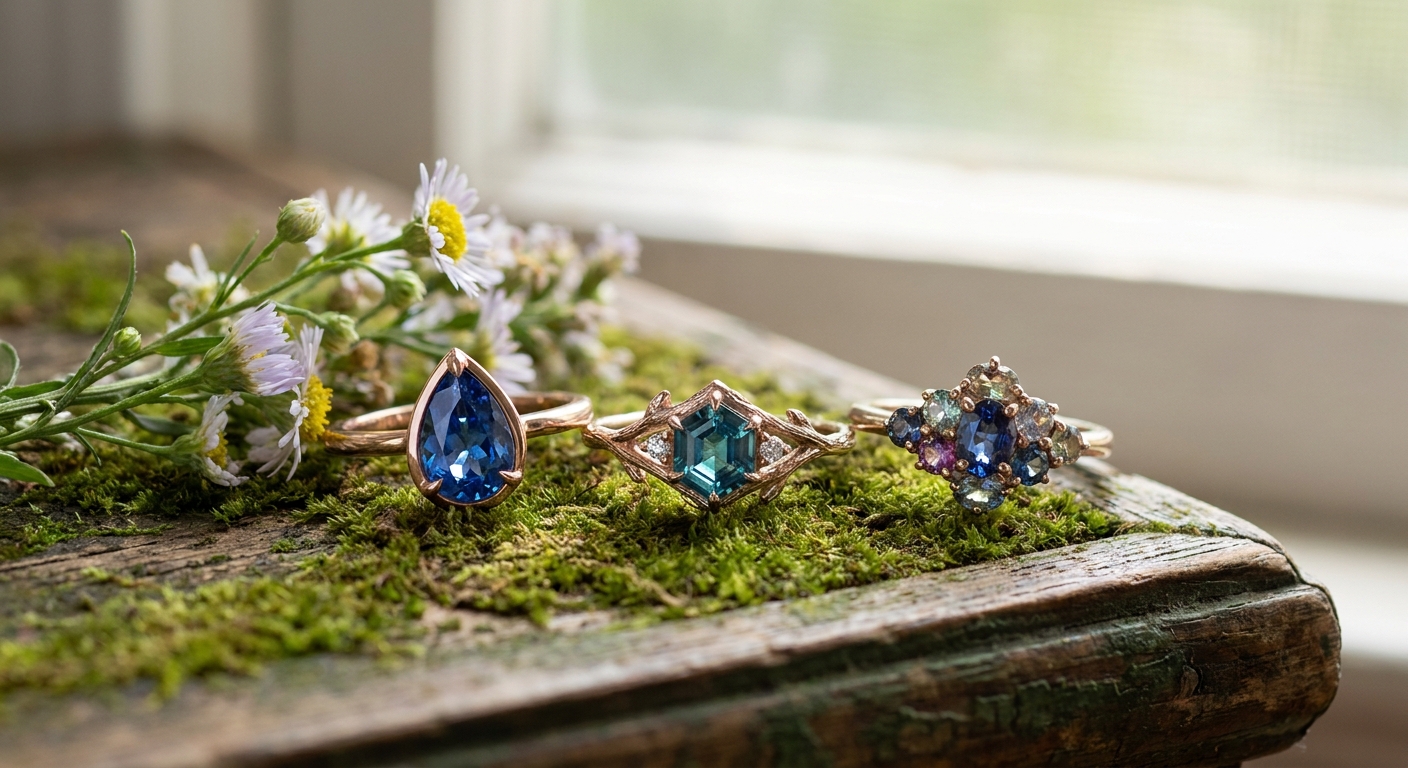
Sapphire engagement rings let you skip the diamond script entirely and still land on something that reads as intentional, not improvised — this guide breaks down what to look for, which styles actually hold up daily, and which sapphire trends are better left on Pinterest.
- Ceylon and Montana sapphires both suit daily wear at a Mohs hardness of 9 — buy either, skip softer colored stones for the center.
- A toi-et-moi sapphire ring is the strongest pick for a non-traditional proposal in 2026 — Buy.
- Cluster settings with mixed gemstones look romantic but loosen faster — Consider only with a protective setting.
- Element 79's sapphire engagement rings work best when paired with a stacking band, not left solo.
Why this matters
A non-traditional engagement usually means the couple already rejected the round-brilliant-diamond-solitaire script before they walked into a jewelry store. Sapphire solves the "I want it to look different but still feel like an heirloom" problem better than almost any other colored stone, because it has the durability of a diamond alternative without the fragility of emerald or the softness of opal.
The catch: sapphire engagement rings get sold under a lot of loose language. "Sapphire" covers everything from a $400 lab-created stone to a five-figure natural Kashmir blue, and the setting matters as much as the gem. Get both wrong and you end up with a ring that looks dated by 2028.
Who this is for
This guide is for couples who want a center stone that isn't a diamond, know they want color, and care more about a ring reading as "us" than as "traditional." It's for the bride who wants mixed metals, the groom shopping for a partner who never wears white gold, and anyone planning an elopement who wants a ring that photographs well against a mountain backdrop instead of a church aisle. If you're leaning toward custom bridal pieces for a smaller, faster wedding, Element 79's custom bridal jewelry for elopements page is the better starting point than a mall jeweler's case.
What to look for in sapphire engagement rings
Stone origin and treatment disclosure
Ask whether the sapphire is natural, lab-created, or heat-treated, and get it in writing. Heat treatment is standard and doesn't hurt value much, but undisclosed treatments tank resale and appraisal numbers later. A reputable seller in 2026 discloses this without you having to push.
Hardness relative to daily wear
Sapphire sits at 9 on the Mohs hardness scale, just below diamond's 10, which is why it's the only mainstream colored stone that survives daily wear without babying. Anything softer — tanzanite, opal, morganite — chips at the edges within a few years of regular wear. If the ring goes on and stays on, hardness is non-negotiable.
Color depth over carat size
A smaller sapphire with deep, saturated cornflower or royal blue reads richer in photos and in person than a larger, washed-out stone. Buyers chasing carat weight over color usually end up disappointed once the ring is set and under normal light instead of a jeweler's spotlight.
Setting security for an active lifestyle
Non-traditional often means an active lifestyle — hiking proposals, elopements, hands-on jobs. A bezel or low-profile setting protects the stone far better than a tall claw prong. Check how our guide to choosing a gemstone for an engagement ring frames setting choice by lifestyle before you commit to a look.
Metal pairing
Sapphire blue reads coolest against white gold or platinum and warmest against yellow or rose gold. Neither is wrong, but the pairing changes how "traditional" the ring feels even with the same stone — rose gold plus sapphire skews modern, platinum plus sapphire skews classic-with-a-twist.
Stackability
If the plan includes adding a wedding band or building a stack later, buy the sapphire ring with that stack in mind now. A wide or oddly-shaped shank limits what pairs with it in 2027 and beyond.
Top picks for a non-traditional engagement
The toi-et-moi sapphire ring — the modern classic. Two stones, sapphire plus diamond or sapphire plus a second colored gem, set side by side instead of one dominant center stone. It reads as a story (two people, one ring) rather than a status symbol, which is exactly the pitch most non-traditional couples want. Verdict: Buy for couples who want symbolism without a diamond solitaire.
The bezel-set solitaire — the safe pick. A single sapphire wrapped fully in metal instead of held by prongs. It's the lowest-maintenance option on this list and the hardest to damage, at the cost of looking slightly more conventional than a cluster or asymmetric design. Verdict: Buy if durability matters more than making a statement.
The asymmetric cluster — the wildcard. Multiple small sapphires and diamonds set off-center or in an irregular cluster. It's the most visually distinct option and photographs beautifully, but the extra prongs and irregular shape mean more snag points day to day. Anyone deciding between this and a cleaner design should read Element 79's take on gemstone rings for a colorful proposal before choosing. Verdict: Consider for couples who don't do heavy manual work.
The sapphire-and-diamond halo — the crowd-pleaser. A center sapphire ringed by a halo of small diamonds. It adds visual size to a smaller sapphire and keeps a nod to tradition through the diamond accents, which works well for couples who want "non-traditional, but not to their families." Verdict: Buy for a middle-ground choice.
The colored-gem trio — the maximalist. Three stones, none of them a traditional white diamond — think sapphire, morganite, and a spinel together. It's the most personal, least conventional option on this list. Non-diamond brides specifically gravitate here; Element 79's picks for non-diamond brides breaks down which combinations wear well together. Verdict: Consider, and confirm hardness on every stone before buying.
See sapphire ring styles in person
Book a Cherry Creek appointment to try on designer sapphire and colored-gem rings.
What to avoid
- Untreated sapphire sold at a discount price. If a "natural, untreated" sapphire is priced like a treated one, something in the disclosure is wrong — walk away.
- Micro-pave-heavy settings for anyone with an active job. Tiny pavé stones look elegant in the store and chip or fall out fastest under daily wear, especially on hands that do physical work.
- Matching the sapphire ring to a mall-brand wedding band later. A custom or designer sapphire ring next to a mass-produced band looks mismatched under close inspection; plan the pairing before the proposal, not after.
The setting protects the stone more than the stone protects itself — a Mohs 9 sapphire in a bad prong setting will still chip.
How the styles compare
| Style | Durability | Everyday wearability | Non-traditional score | Best for |
|---|---|---|---|---|
| Toi-et-moi | High | High | High | Couples wanting symbolism |
| Bezel solitaire | Highest | Highest | Medium | Active lifestyles |
| Asymmetric cluster | Medium | Medium | Highest | Statement-first buyers |
| Sapphire-diamond halo | High | High | Medium | Traditional-adjacent tastes |
| Colored-gem trio | Varies by stone | Medium | Highest | Non-diamond brides |
FAQ
Are sapphire engagement rings a good alternative to diamonds in 2026?
Yes — sapphire ranks 9 on the Mohs hardness scale, just below diamond's 10, so it holds up to daily wear better than almost any other colored gemstone. It also offers color options diamonds can't, which is why sapphire engagement rings remain a top non-traditional choice in 2026.
What's the most durable sapphire ring setting for daily wear?
A bezel setting is the most durable because it wraps metal fully around the stone's edge instead of relying on exposed prongs. It's the best choice for anyone with an active job or hands-on lifestyle.
Is a lab-created sapphire a bad choice for an engagement ring?
No, as long as it's disclosed clearly at the point of sale. Lab-created sapphire has the same hardness and appearance as natural sapphire, just without the mining origin and typically at a lower price point.
Do sapphire engagement rings work for second marriages?
Yes, and many couples choosing a second engagement ring specifically want to move away from a traditional diamond solitaire. A toi-et-moi or colored-gem design signals a fresh chapter rather than repeating a first-marriage look.
What color sapphire is best for an engagement ring?
Cornflower blue and royal blue are the most classic and hold value best, but pink, yellow, and padparadscha sapphires are increasingly common in non-traditional 2026 designs. Color depth matters more than the specific hue for how the ring reads day to day.
Can you stack a sapphire ring with other bands?
Yes, if the shank profile is narrow enough to sit flush against other rings. Wide or heavily embellished sapphire settings are harder to stack later, so plan for a stack before buying if that's the goal.
How much maintenance does a sapphire engagement ring need?
Sapphire itself needs almost no special care thanks to its hardness, but prong and pavé settings should get checked annually for looseness. A bezel-set sapphire needs the least ongoing maintenance of any common setting style.
One last thing
Most couples shopping for a non-traditional engagement ring assume "non-traditional" means fragile or high-maintenance. Sapphire is the opposite case — it's the one colored stone that's genuinely built for daily wear, which is why it keeps showing up in 2026 proposal photos from elopements to backyard ceremonies. The ring that looks the most unconventional in the case is often the most practical one on the hand five years later.