Getting a jewelry appraisal for insurance is the difference between a claim that pays out in full and one that leaves you arguing with an adjuster over a piece you can never replace exactly.
- A jewelry appraisal for insurance needs a written report with photos, measurements, and a replacement value, not a receipt.
- Use an independent, credentialed appraiser (GIA GG or ASA) rather than the seller alone for the most defensible number.
- Update the appraisal every 3-5 years or after any resizing or repair work.
- Scheduling a designer ring under a rider or standalone policy typically requires this document before coverage starts.
Why this matters
Homeowners and renters policies cap jewelry theft coverage at $1,000-$2,000 in most cases, according to the Insurance Information Institute's 2026 guidance on scheduled personal property. A single Artëmer or Spinelli Kilcollin piece can exceed that cap on its own.
An insurer won't pay out based on what you remember paying, or on a gut estimate from a jeweler you've never met before. They pay against a documented, dated, professionally produced appraisal that states a specific replacement value in current dollars. Skip that step and a lost or stolen ring gets settled at policy minimums, not at what it would actually cost to replace it in 2026.
What you'll need
- The piece itself, cleaned and in good condition (dirt and tarnish can obscure details an appraiser needs to see)
- Original purchase documentation, receipt, or certificate of authenticity if you have it
- Any existing gemological certificate (GIA, AGS, or similar) for center stones
- 20-45 minutes for the in-person evaluation, depending on the piece's complexity
- $50-$150 per item for a standard appraisal fee, more for complex custom bridal pieces
- Your insurance agent's contact information, so you know exactly what format they require
The steps
1. Confirm what your insurer requires before you book anything
Call your homeowners, renters, or standalone jewelry insurer first and ask for their appraisal requirements in writing. Some carriers accept a detailed sales receipt for pieces under a certain value; most require a full written appraisal for anything scheduled individually.
Ask specifically whether they need replacement value, market value, or fair market value, since these are different numbers and an appraiser needs to know which one to produce. Skipping this step is the single most common mistake: people pay for an appraisal, then discover the insurer wanted a different valuation standard and the report gets rejected.
Common mistake: assuming all appraisals are interchangeable. A resale-value appraisal for estate sale purposes will undervalue a piece for insurance purposes.
2. Choose an independent, credentialed appraiser
Look for a Graduate Gemologist (GG) credential from GIA or an Accredited Senior Appraiser (ASA) designation. Independent appraisers who don't sell jewelry themselves carry more weight with insurers because there's no incentive to inflate the number for a future sale.
A jeweler can also refer you to a trusted independent appraiser they work with regularly, which is worth asking about at the point of purchase. This matters more for custom bridal pieces and designer settings, where a generic appraiser may not recognize the maker's premium.
Common mistake: using the selling jeweler's in-house valuation as your only documentation. Insurers increasingly ask for a second, independent opinion, especially on pieces over $5,000.
3. Bring the piece in clean and undamaged
Grime, lotion residue, and tarnish can hide prong wear, chips, or inclusions an appraiser needs to note. Clean gemstone pieces gently before your appointment; a quick warm-water and mild-soap soak works for most designer settings, though delicate pieces or pearls need different care.
If a stone is loose or a prong looks worn, mention it before the appraisal starts rather than after. Appraisers document condition at the time of inspection, and a chip discovered later won't be covered retroactively.
Common mistake: having a ring appraised right after wearing it daily for months without a prong check. A loose stone found during appraisal should get fixed before you rely on the report for coverage.
4. Get the metal, stones, and construction documented in detail
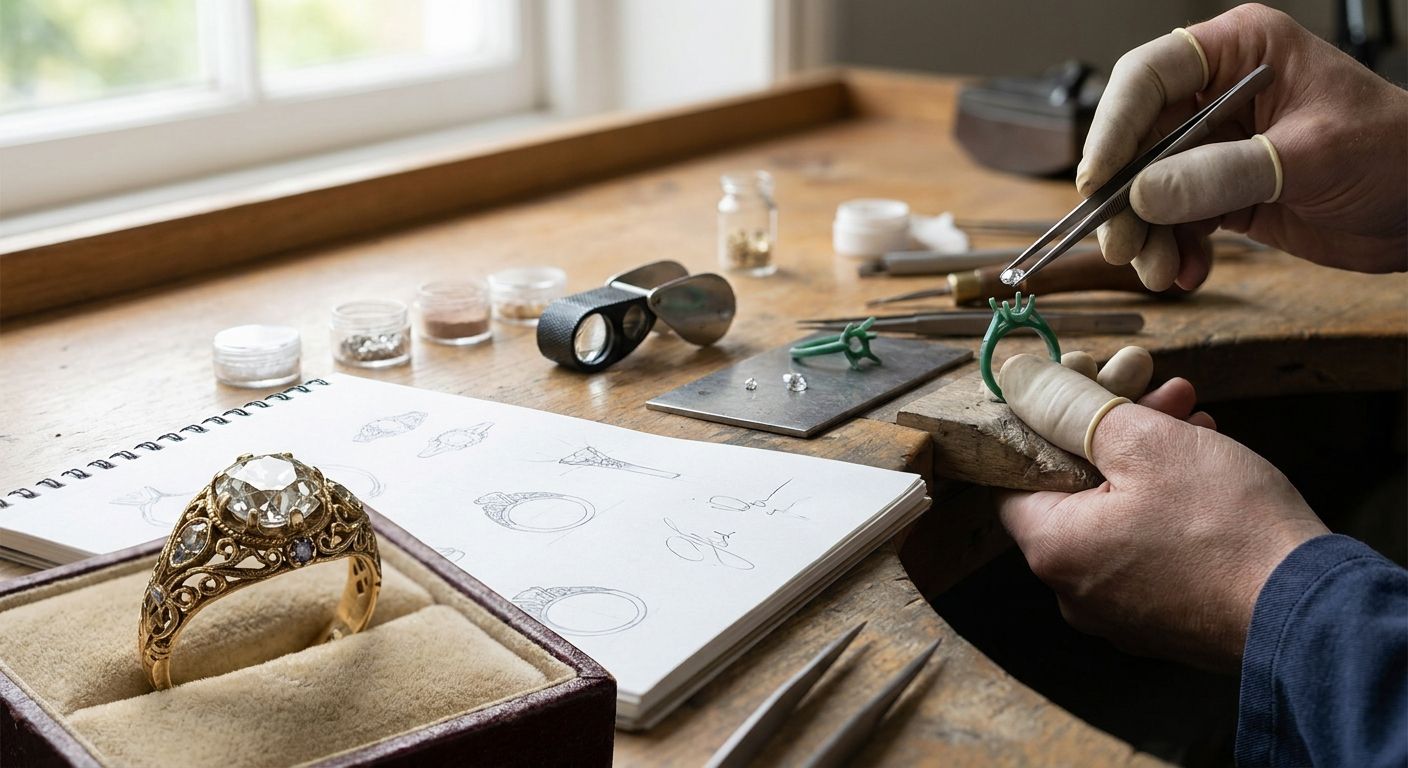
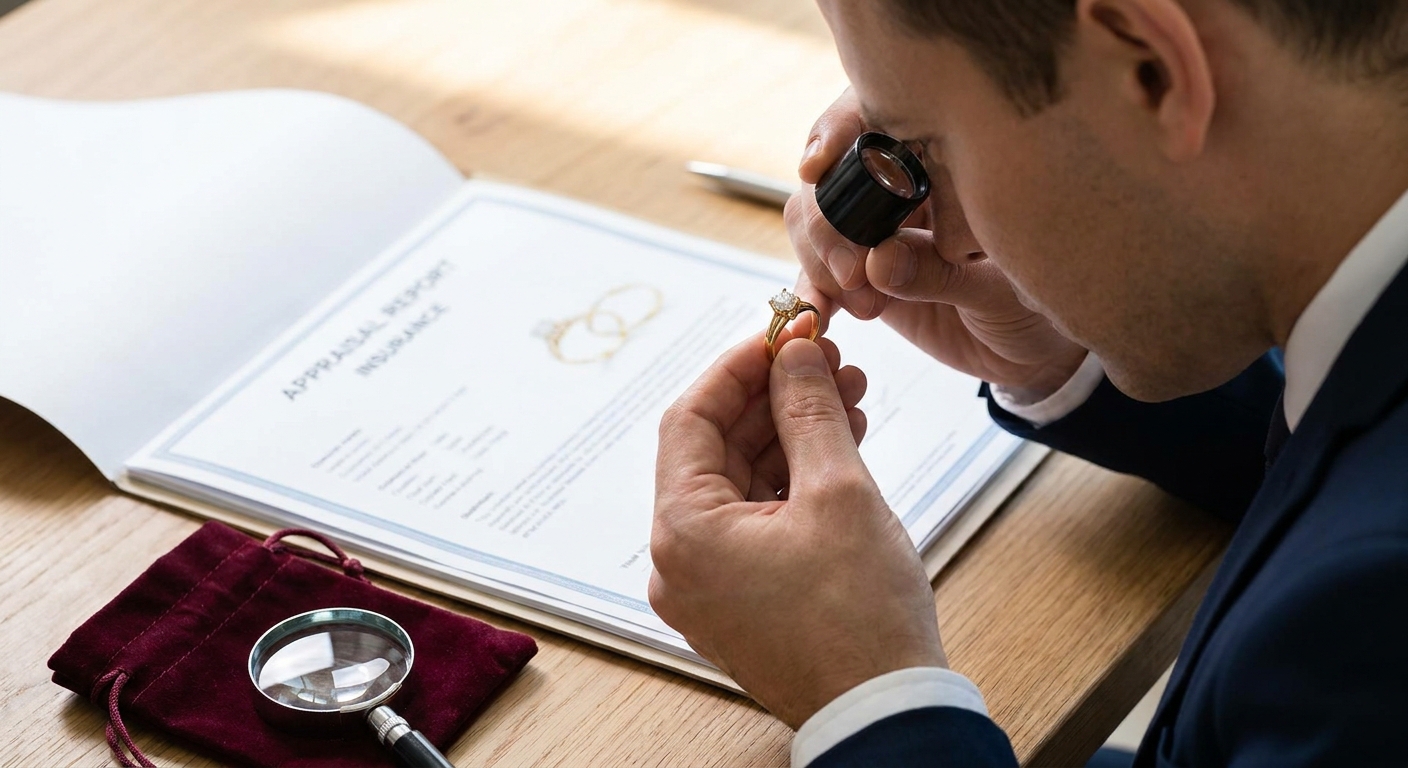
A proper appraisal for insurance records metal type and purity (14k, 18k, platinum), total carat weight, cut, color and clarity grades for center stones, and a description of the setting style and maker if known. For a Spinelli Kilcollin stack or an Orly Marcel design, the appraiser should note the designer by name, since replacement value differs from a generic equivalent.
Measurements matter too: ring size, band width, and stone dimensions in millimeters. This level of detail is what lets an insurer source or fund a true replacement rather than a close approximation.
Expected outcome: a report that's specific enough that a stranger could source the exact equivalent piece from it.
5. Require current, well-lit photographs from multiple angles
Photos should show the piece from the top, side, and any distinctive engraving or maker's mark. This protects you if the physical appraisal document is ever lost, and it gives the insurer visual confirmation that matches the written description.
Ask for digital copies, not just printed photos stapled to the report. A digital file is easier to submit alongside a claim and easier to store as a backup.
Common mistake: accepting an appraisal with no photos at all, which was standard practice decades ago but is now a red flag to most underwriters in 2026.
6. Get the final replacement value in writing, with a date
The appraisal should state a specific dollar figure for replacement value as of the appraisal date, not a range. Insurers use this number to set your premium and your payout ceiling, so vague language like "$3,000-$5,000" creates ambiguity you don't want during a claim.
Confirm the document includes the appraiser's name, credentials, license or membership number, and signature. An unsigned or uncredentialed document carries far less weight if a claim is ever disputed.
Expected outcome: a report your insurance agent can act on the same week, without follow-up questions.
7. Submit the appraisal to your insurer and confirm coverage in writing
Send the completed appraisal to your agent and ask for written confirmation that the piece is now scheduled under a rider or a standalone policy. Don't assume it's covered just because you submitted paperwork; get the confirmation email or updated policy declarations page.
This is also the moment to ask about coverage details: mysterious disappearance, worldwide coverage, and whether a deductible applies to jewelry claims specifically.
Common mistake: filing the appraisal away and assuming coverage started automatically. Many policies require a formal endorsement before the higher limit takes effect.
8. Set a reminder to update the appraisal every 3-5 years
Gemstone and precious metal values shift, and a 2026 appraisal will be stale by 2030 or sooner if the piece is resized, repaired, or has stones reset. Update the report any time the ring undergoes work, since resizing a designer ring can change prong tension and stone security enough to warrant a fresh look.
Expected outcome: your insured value stays accurate instead of drifting years behind current replacement cost.
Get help documenting your ring
Element 79's Cherry Creek team can point you to trusted appraisers for designer bridal pieces.
Troubleshooting
- The appraised value seems too low. Ask whether the appraiser recognized the designer or maker; a generic evaluation of a Petra Class or Artëmer piece often undervalues the craftsmanship premium. Request a second opinion from an appraiser with designer bridal experience.
- My insurer rejected the appraisal. Check the valuation standard used. Retail replacement value and fair market value are different numbers, and insurers almost always want replacement value.
- The appraisal is more than 5 years old. Treat it as expired for insurance purposes. Metal and gemstone prices move enough over five years that a stale number underinsures the piece.
- I lost the original appraisal document. Contact the appraiser directly; most keep records for years and can reissue a copy for a small fee.
- My ring was resized or repaired since the last appraisal. Get it re-evaluated before relying on the old document; altered prong settings or added metal change both condition and value.
- The premium quote seems high for the coverage. Ask about a standalone jewelry policy instead of a homeowners rider; standalone policies sometimes offer broader coverage (including accidental loss) for a comparable cost.
Tools and resources
- GIA's Graduate Gemologist directory, for finding a credentialed independent appraiser near Denver
- Your homeowners or renters policy declarations page, to check current jewelry coverage limits
- How to insure a designer engagement ring for a deeper breakdown of rider versus standalone policy options
- Best custom jewelers in Cherry Creek, Denver if you're sourcing a designer piece and want appraisal-ready documentation from the start
- How to clean gemstone jewelry at home to prep a piece properly before an appraisal appointment
What to do next
Once the appraisal is in your insurer's hands and coverage is confirmed, the next practical step is understanding how designer settings hold up over years of daily wear, since prong wear and stone security directly affect future appraised value.
FAQ
How much does a jewelry appraisal for insurance cost in 2026?
A jewelry appraisal for insurance costs $50 to $150 per item in 2026, with complex custom bridal pieces running higher. Independent appraisers with GIA or ASA credentials tend to sit at the upper end of that range.
Is a receipt enough for jewelry insurance?
A receipt alone is not enough for most insurers once a piece exceeds their standard coverage cap, typically $1,000-$2,000. Insurers scheduling a piece individually almost always require a written appraisal with replacement value, photos, and gemstone details.
How often should I update my jewelry appraisal?
Update a jewelry appraisal every 3 to 5 years, or immediately after resizing, repair, or a reset stone. Metal and gemstone prices shift enough over that window that an old appraisal underinsures the piece.
Who should appraise my ring for insurance purposes?
An independent appraiser with a GIA Graduate Gemologist or ASA credential is the standard choice for insurance purposes. Independence matters because appraisers who don't sell jewelry have no incentive to inflate the number.
What's the difference between replacement value and market value on an appraisal?
Replacement value reflects what it costs to buy an equivalent new piece at retail, while market value reflects resale price. Insurance appraisals almost always need replacement value, since that's what a claim payout is based on.
Does a designer ring need a different appraisal than a generic ring?
Yes, a designer ring from a maker like Spinelli Kilcollin or Artëmer needs an appraiser who recognizes the maker's premium, since a generic evaluation can undervalue the craftsmanship. Ask the appraiser directly about designer bridal experience before booking.
Can I get my ring appraised at the store where I bought it?
You can, but many insurers now ask for a second, independent appraisal on pieces over roughly $5,000. A seller's in-house valuation is a useful starting point, not always sufficient on its own.
What happens if I file a claim without an appraisal?
Without an appraisal, a claim typically settles at your policy's standard jewelry cap, often $1,000-$2,000, regardless of the piece's actual value. That gap is the entire reason to get a piece formally appraised before anything happens to it.
One last thing
Most people appraise a ring once, right after buying it, and never again. That single oversight is why so many insurance claims in 2026 settle for less than the ring actually costs to replace: metal prices and designer premiums move, and a five-year-old number is already behind. Put a recurring reminder on the calendar now, not after something happens.