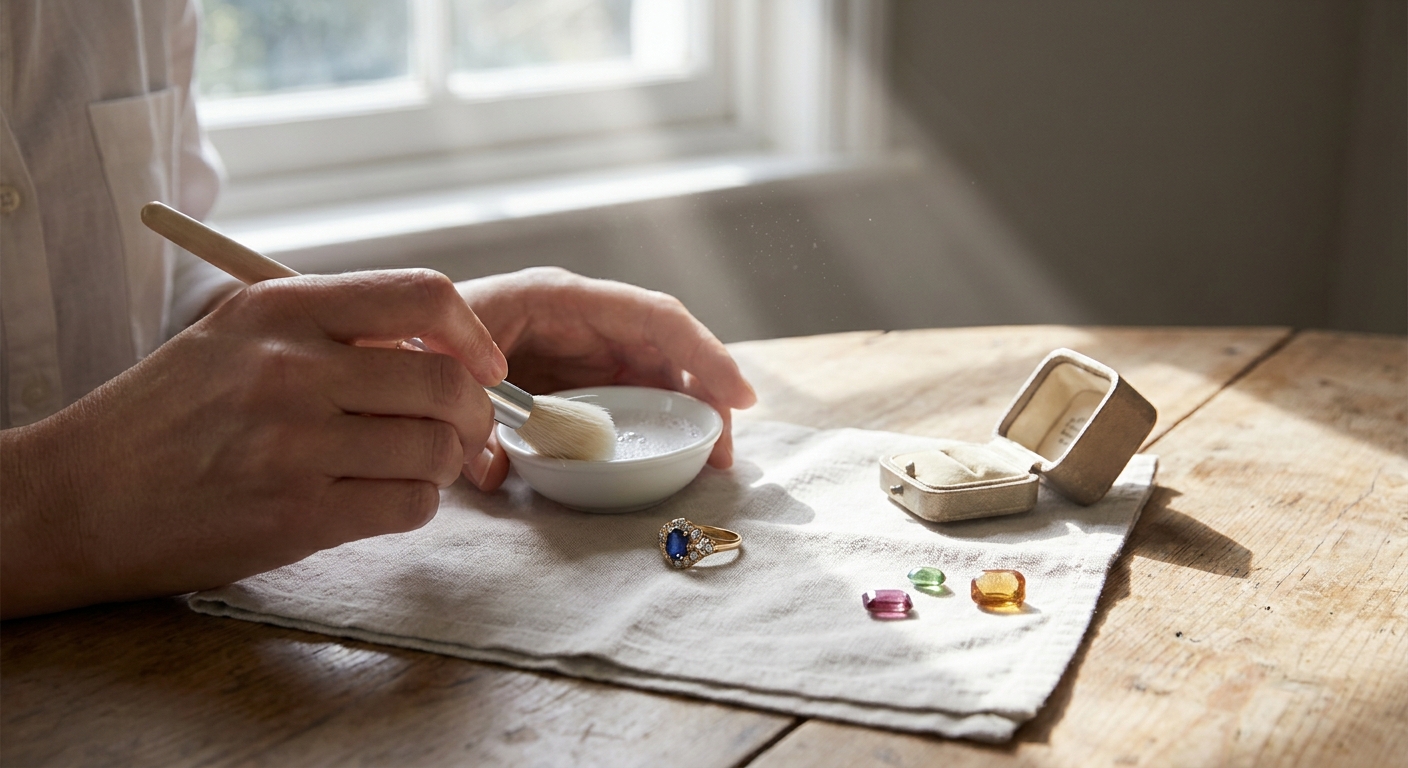
Most gemstone jewelry doesn't need a jeweler's ultrasonic bath to look bright again — a bowl of warm water, mild soap, and 10 minutes of attention handles 90% of the dust and lotion buildup that dulls rings and earrings between wears.
- Learn how to clean gemstone jewelry at home with warm water, mild dish soap, and a soft-bristle brush in under 10 minutes.
- Skip ultrasonic cleaners on opals, emeralds, and pearls — the vibration and heat can crack or cloud them.
- Steam cleaning works on sapphires and diamonds but ruins emeralds treated with oil fillers.
- Element 79 recommends a professional check-up once a year for stacked or pave-set gemstone rings.
Why this matters
Gemstones aren't all built the same, and treating a soft emerald like a hard sapphire is how a $2,000 ring ends up with a hairline fracture. Skin oil, hand cream, and everyday grime dull the surface of a stone within weeks, cutting the light return that makes a cut gemstone look alive. A ring that looked electric in the store in 2026 can look flat by summer if it never gets cleaned. The good news: cleaning gemstone jewelry at home is mostly about knowing which stones tolerate soap and water and which ones need a gentler hand — not about buying special equipment.
If you wear a gemstone ring daily, pair this with a look at everyday gemstone ring care — cleaning and daily-wear habits work together, not separately.
What you'll need
- A small glass or ceramic bowl (metal bowls can scratch soft stones if the ring bumps the side)
- Warm water — not hot. Hot water stresses stones with internal fractures
- A few drops of mild, ammonia-free dish soap
- A soft-bristle brush — a clean, unused toothbrush or a jeweler's brush works
- A lint-free cloth, like microfiber or an old cotton t-shirt
- A strainer or fine-mesh sieve (so you never lose a stone down the drain)
- 10-15 minutes, uninterrupted
Skip anything abrasive: no baking soda, no toothpaste, no paper towels. Paper towel fibers are stiff enough to micro-scratch softer gems like opal and pearl.
The steps
1. Sort by stone hardness before you touch water
Mineral hardness is measured on the Mohs scale, and it tells you exactly how rough you can be. Diamond sits at 10, sapphire and ruby at 9, and most quartz-family stones (amethyst, citrine) land around 7. Opal drops to 5-6, pearl and coral sit at 2.5-4, and amber is softer still. Anything under 7 gets the gentlest version of every step below — shorter soak, lighter brushing, no soap if the stone is porous like turquoise or opal.
Common mistake: assuming all colored stones follow the same rule as diamond. A method safe for a sapphire ring can etch or cloud an opal in one session.
2. Mix the soak
Fill the bowl with warm water and add 3-4 drops of dish soap. Swirl gently until it's just slightly sudsy — you're not making a bubble bath. For porous or soft stones (opal, turquoise, pearl, coral, amber), skip the soap entirely and use plain warm water instead; soap residue can seep into microscopic surface pores and dull the finish over time.
3. Soak for 5-10 minutes
Drop the piece in and let it sit. This loosens dried lotion, sunscreen residue, and skin oil around the setting without any scrubbing. Hard gemstones (diamond, sapphire, ruby, most quartz) can soak the full 10 minutes. Soft or porous stones get 2-3 minutes, max — longer soaking in liquid isn't worse for these stones, but there's rarely enough buildup to justify the extra time, so keep it brief and move to brushing.
4. Brush along the setting, not across the stone face
Use the soft-bristle brush at the base of the stone, where it meets the metal — that's where grime actually collects. Brush in small circles, applying light pressure. Never brush the flat top of a soft stone like opal or pearl; even a soft-bristle brush can leave fine scratches on a nacre or opal surface after repeated cleanings.
Common mistake: scrubbing the crown of the stone hard to "get it shiny." You'll dull the polish faster than dirt ever would.
5. Rinse over the strainer
Run the piece under warm running water, holding it over the mesh strainer the entire time. This is non-negotiable for rings with pave settings or loose-fitting bezels — a prong can be more worn than it looks, and one slip is how a stone disappears down a drain permanently.
6. Dry and buff
Pat dry immediately with the lint-free cloth, then let the piece air-dry fully for 15-20 minutes before storing. Buff lightly with a dry section of the cloth to bring back shine on the metal. Store it away from other pieces — a diamond ring left touching a soft opal pendant in a jewelry box can scratch the opal over weeks of contact.
Not sure if a stone is safe to clean at home
Bring it into the Cherry Creek boutique for a quick professional look.
Troubleshooting
The stone still looks cloudy after cleaning. Cloudiness on diamonds and sapphires usually means residue is trapped under the setting, not on the surface. Re-soak for another 5 minutes and brush the underside of the stone through the open gallery if the setting allows it.
White residue built up around the prongs. That's dried soap or hard-water mineral deposits. Switch to distilled water for the rinse step and use less soap next time — a drop or two is enough.
A pearl or opal looks duller after cleaning, not shinier. These stones absorb moisture into their structure. Over-soaking or soaking too frequently (more than once a month) dries out the surface as it evaporates. Cut soak time to under 2 minutes and skip soap entirely going forward.
A stone feels loose in its setting. Stop cleaning immediately and don't wear the piece until a jeweler checks the prongs. A loose stone is a setting issue, not a cleaning issue, and no amount of home care fixes it.
The metal looks fine but the stone looks scratched. Fine surface scratches on softer stones (Mohs 5 and under) usually mean an abrasive cloth or toothpaste was used at some point. This needs professional polishing — home cleaning won't reverse it.
Multiple stones in a stacked ring or bracelet clean unevenly. Different gemstones in the same piece — say a sapphire next to a moonstone — need different soak times. Clean the piece for the softer stone's tolerance, then spot-brush the harder stone separately if it needs more attention. If you wear several rings together, mixing metals in a jewelry stack has more on keeping stacked pieces from scratching each other outside the sink, too.
Tools and resources
- Soft-bristle brush (jeweler's brush or unused toothbrush)
- Mild, ammonia-free dish soap
- Lint-free microfiber cloth
- Fine-mesh strainer for the sink
- A reference for hardness by stone type, since colored gemstones used in engagement rings and everyday pieces vary widely in how much handling they tolerate
- A jeweler's loupe or your phone's macro camera, useful for spotting loose prongs before they become a lost-stone problem
Avoid ultrasonic cleaners and steam cleaners unless you know exactly what stone you're working with. Ultrasonic vibration can crack emeralds, opals, and pearls, and steam is aggressive enough to damage oil-treated emeralds and turquoise. Both tools are fine for untreated diamonds and sapphires, but that's a narrower list than most people assume in 2026.
What to do next
Once cleaning is routine, the next habit worth building is daily wear protection — knowing when to take rings off (gym, gardening, dish duty) matters more for stone longevity than any cleaning schedule. A once-a-year setting check with a jeweler catches loose prongs before they cost you a stone, and it's the one step home cleaning can't replace.
FAQ
How often should I clean gemstone jewelry at home?
Clean hard gemstones like diamond and sapphire every 2-4 weeks with warm water and mild soap. Soft or porous stones like opal, pearl, and turquoise only need cleaning once every 6-8 weeks since frequent moisture exposure dries them out.
Is it safe to use an ultrasonic cleaner on gemstone rings?
Ultrasonic cleaners are safe for untreated diamonds, sapphires, and rubies but unsafe for opal, emerald, pearl, and turquoise. The vibration can worsen internal fractures common in emeralds and crack the structure of organic gems like pearl.
Can I use toothpaste to clean gemstone jewelry?
No. Toothpaste contains mild abrasives that scratch softer gemstones and dull the polish on metal settings over repeated use. Mild dish soap and warm water clean just as effectively without the risk.
What's the best way to clean an opal ring specifically?
Wipe an opal ring with a damp, soft cloth instead of soaking it, since opals absorb water and can dry out or craze if soaked too often. Skip soap entirely and avoid ultrasonic or steam cleaning.
How much does professional jewelry cleaning cost in 2026?
Many jewelers offer complimentary cleaning with a purchase or during a setting check, though pricing varies by shop and service scope. Ask a local jeweler directly for current rates on cleaning versus a full inspection.
Does home cleaning remove tarnish from gold and silver settings?
Warm water and mild soap remove light tarnish and buildup from gold settings but won't fully reverse heavy silver tarnish. A polishing cloth handles surface tarnish; deeper discoloration needs a jeweler's buffing wheel.
Can I clean a pearl necklace the same way as a gemstone ring?
No, pearls need a different approach entirely — wipe them with a soft, damp cloth after each wear instead of soaking. Pearls are porous and soaking or using soap on them causes clouding over time.
How do I know if my ring's setting needs a professional check instead of just cleaning?
If a stone moves or rocks when you press it gently with a fingernail, that's a setting issue, not a cleaning issue. Stop wearing the ring and get the prongs checked before the stone loosens further.
One last thing
The cleaning step people skip most often is drying time — pieces go straight back into a jewelry box damp, and that trapped moisture is what actually causes the tarnish and cloudiness people blame on "cheap metal" or "bad stones." A full 15-20 minutes of air-dry time before storage does more for long-term shine than any cleaning product on the market.