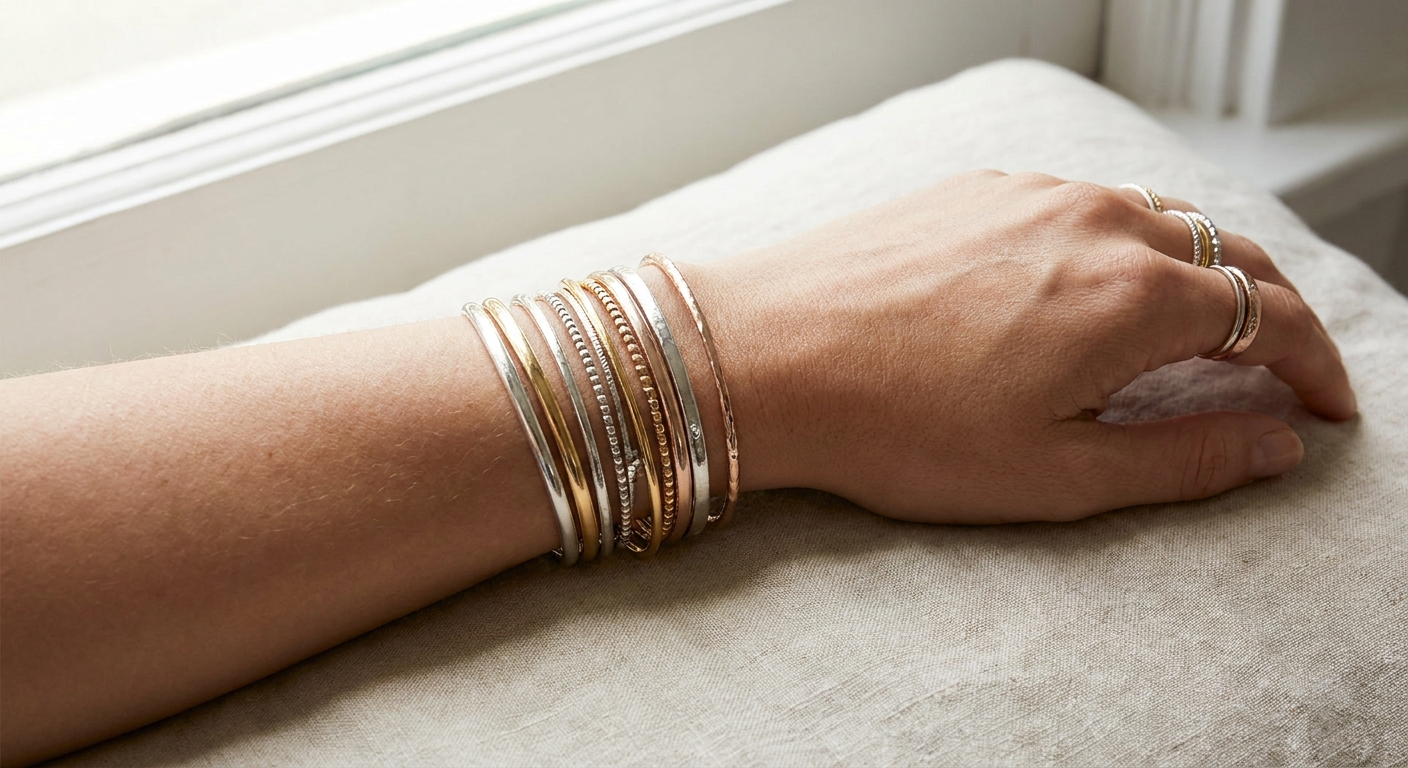
Mixing metals used to be a jewelry sin. In 2026, it's the easiest way to make a stack look intentional instead of matchy — but only if you know which combinations actually hold together.
- Mixing gold, silver, and platinum tones works when you anchor the stack with one dominant metal and use the rest as accents.
- A 60/30/10 ratio (dominant metal, secondary metal, accent metal) is the easiest rule for how to mix metals in jewelry without visual chaos.
- Spinelli Kilcollin's linked bands are built specifically for mixed-metal stacking — start there if you're new to it.
- Warm and cool tones clash less when connected by a warm-toned stone like citrine, garnet, or champagne diamond.
- Rotate metals seasonally instead of buying a matched set — it keeps a stack from feeling stale by 2027.
Why this matters
A stack that's all one metal reads as safe. A stack that mixes tones on purpose reads as personal — and personal is what makes a ring stack or a stacked wrist actually get compliments instead of just getting worn.
At Element 79, the Cherry Creek jewelry counter sees this shift constantly: shoppers who came in for a single gold band leave with a yellow-gold signet, a platinum diamond band, and a mixed-metal Spinelli Kilcollin link stacked together. The trick isn't matching metals. It's balancing them.
What you'll need
- A dominant metal already in your collection. Most stacks start from whatever you wear daily — yellow gold, white gold, or platinum.
- One or two secondary metals in a different tone. Rose gold against yellow gold, or oxidized silver against platinum.
- A connector piece. Linked bands like the Spinelli Kilcollin ring stack styles are built to bridge two metal tones in one piece.
- A mirror and 10 minutes. Mixed-metal stacking is a visual call, not a formula — you have to see it on your own hand or wrist before committing.
- A stacking ring or bracelet with some give. Rigid bands that don't sit flush will shift and expose gaps between metals.
The steps
1. Pick your dominant metal first
Choose the metal that already makes up more than half of what you own. This becomes your stack's anchor and should account for roughly 60% of the visible metal in the final look. Skipping this step is the single biggest reason mixed-metal stacks look accidental instead of styled — without an anchor, the eye has nowhere to land.
Common mistake: starting with three different metals in equal amounts. That reads as clutter, not curation.
2. Add one secondary metal in a contrasting tone
If your anchor is warm (yellow or rose gold), your secondary should be cool (white gold, platinum, or oxidized silver). This secondary metal should sit around 30% of the stack. The contrast is what makes mixed metal look deliberate rather than mismatched.
Expected outcome: your hand or wrist should show two clear metal families, not a blur of similar tones.
3. Use a third metal only as an accent
A third metal — think a rose-gold signet next to a platinum band and a yellow-gold huggie — should never exceed 10% of the total look. One small accent piece is a detail. Two accent pieces in different metals is noise.
Common mistake: treating every ring the same size. A slim accent band next to a wider anchor band reads intentional; three equal-width bands in three metals reads like a drawer dump.
4. Bridge the tones with a connecting stone or texture
A warm-toned stone — citrine, garnet, champagne diamond, or a warm sapphire — pulls a cool metal and a warm metal into the same visual family. This is why so many designer bridal sets pair a platinum band with a warm center stone: the stone does the bridging work the metals can't do alone. If you're building around a colored center stone, how to choose a gemstone for an engagement ring covers which stones read warm versus cool.
5. Stack rigid pieces before flexible ones
Put structured, rigid bands on first, closest to the knuckle or the wrist bone, and let softer, more flexible pieces sit on top or below. Rigid-first prevents thinner bands from sliding under wider ones and disappearing. For rings specifically, the sequencing matters even more when the bands are different widths — how to stack diamond rings without them shifting breaks down the order that keeps a multi-metal stack from spinning out of place.
6. Check the stack in daylight, not store lighting
Store lighting and phone-camera lighting both flatten metal tone differences. Step outside or near a window before deciding a mix works. Rose gold and yellow gold can look nearly identical under warm indoor light and completely distinct in daylight — a mistake that gets discovered at home, not at the counter.
7. Repeat the ratio on a second stack point
Once the ring stack works, apply the same 60/30/10 logic to a necklace layer or a bracelet stack rather than inventing a new rule each time. Consistency across stack points — one hand, one wrist, one neckline — is what makes an entire mixed-metal look cohesive instead of three separate experiments. For the neckline specifically, layering necklaces for everyday wear applies the same dominant-secondary-accent logic to chain lengths and clasps.
Build your mixed-metal stack in person
See gold, platinum, and mixed-tone pieces together before you buy in Cherry Creek.
Troubleshooting
- The stack looks busy no matter what you try. You likely have three metals at roughly equal proportions. Pull one piece and re-measure against the 60/30/10 ratio.
- One metal keeps disappearing visually. Thin bands in a cool tone get lost next to wide warm-toned pieces. Swap the thin piece to a wider band or move it to a different finger.
- The mix looked right in the store and off at home. Store lighting skews warm. Recheck in daylight before making a final call — see step six above.
- Rings keep spinning and exposing gaps. Rigid bands stacked on top of flexible ones shift constantly. Reorder so structured pieces sit closest to the knuckle.
- Rose gold and yellow gold look like the same metal. They often do under warm light. Add a cooler accent — white gold or platinum — to force visual separation between the two warm tones.
- The mix feels dated within a year. A fully matched three-piece set locks you into one combination. Buy pieces individually so you can rotate the secondary and accent metals as tastes shift into 2027.
Tools and resources
- A jeweler's loupe or your phone camera's zoom, to check finish and tone up close before buying.
- A ring sizer or bracelet gauge, since mixed-metal stacks depend on pieces sitting flush against each other.
- Linked stacking pieces designed for this exact purpose, like designer bracelets for a stacked wrist, which are built with connectors that hold multiple metal tones in place without shifting.
- Natural or north-facing daylight, for the color-check step above.
- A private fitting appointment at Element 79 if you want a second opinion on proportion before committing to a full stack.
What to do next
Once the ratio clicks on one stack point, the fastest way to extend it is styling a second piece against a metal you already trust. How to style Spinelli Kilcollin rings together walks through building a linked stack that mixes tones inside a single brand's system, which is the lowest-risk way to practice the 60/30/10 rule before mixing across brands.
FAQ
How do you mix metals in jewelry without it looking mismatched?
Keep one metal dominant at roughly 60% of the stack, add a contrasting secondary metal at about 30%, and limit any third metal to a small accent. The dominant metal anchors the eye so the mix reads intentional instead of random.
Can you mix rose gold and yellow gold together?
Yes, but they read as similar warm tones under indoor lighting, so add a cool metal like platinum or white gold to create visible contrast. Without a cool accent, rose and yellow gold can blur into one metal.
Is mixing metals still in style in 2026?
Mixed-metal stacking is one of the strongest jewelry trends heading into 2026, especially in linked stacking rings and layered necklaces. It has moved from a styling risk to a standard way to wear a personal collection.
What's the easiest way to start mixing metals if I've never done it?
Start with a linked ring designed to bridge two tones in one piece, like a Spinelli Kilcollin stacking band, rather than pairing two separate solid-metal rings. The connector does the balancing work for you.
Does mixing metals work for engagement and wedding rings too?
Yes, pairing a platinum engagement ring with a yellow-gold or rose-gold wedding band is common and durable, since both metals wear well against daily contact. The contrast also makes each ring easier to spot when worn separately.
How many metals is too many in one stack?
Three is the practical ceiling for most hands or wrists. Past three metals, the stack usually needs a stone or texture to bridge the tones or it starts to look cluttered.
Do mixed-metal stacks need to be cleaned differently?
No, each metal in the stack still follows its own care routine — gold and platinum tolerate regular polishing while oxidized silver needs a gentler touch to preserve the darkened finish.
Should bracelets and rings match the same metal mix?
They don't have to match exactly, but repeating the same dominant metal across your ring stack, bracelet stack, and necklace layer keeps the whole look cohesive rather than looking like three separate experiments.
One last thing
The fastest fix for a mixed-metal stack that isn't working is almost never adding a piece — it's removing one. Most stacks that look chaotic have too much accent metal and not enough dominant metal doing the anchoring work; pull the smallest, least-worn piece first and reassess before buying anything new.