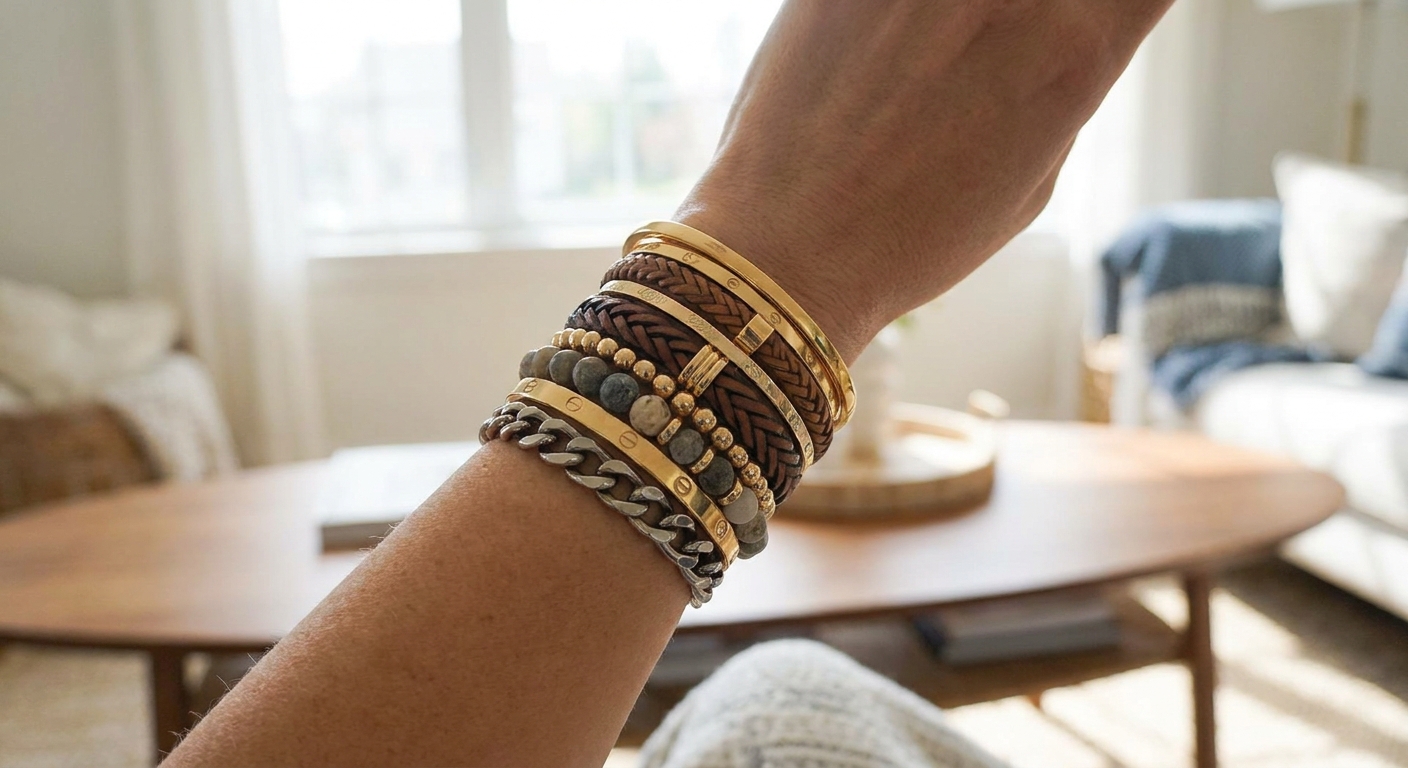
Designer bracelets for stacking turn a bare wrist into a signature, but only when the metals, widths, and closures actually work together instead of fighting for space. This guide breaks down what separates a considered stack from a pile of jewelry, with picks pulled from the artisan roster at Element 79.
- Petra Class's hammered-gold cuffs anchor a stack without competing with thinner pieces — Buy.
- Spinelli Kilcollin's interlocking link design solves the shifting problem that ruins most bracelet stacks — Buy.
- Mixing more than two metal tones in one stack reads cluttered, not curated, in 2026.
- Orly Marcel's sculptural bangles work as a statement layer but need a quieter stack around them — Consider.
Why this matters
A stacked wrist looks effortless online and chaotic in person when the pieces aren't chosen with intent. Bracelets that clack, tangle, or slide off-center get worn twice and then left in a drawer. Getting the width, weight, and metal logic right in 2026 is the difference between a stack you wear daily and one you photograph once.
The same stacking discipline that governs ring stacks that don't shift applies to bracelets: spacing, proportion, and closure security matter more than how many pieces you can fit on one arm.
Who this is for
This guide is for the buyer who already owns a few good pieces and wants to build them into a wrist that looks intentional, not accidental — someone shopping designer fine jewelry rather than fast-fashion bangles, and willing to add one strong piece at a time instead of buying a matched set. If you're starting from zero, browse the collection before committing to a stacking plan, since the right foundation piece changes everything that comes after it.
What to look for in designer bracelets for stacking
Metal consistency (or a deliberate mix)
A stack built entirely in 18k yellow gold reads cohesive from across the room, while three different metal tones without a plan reads busy. If you're mixing gold and silver, pick one dominant tone and let the second metal appear only once or twice — a single Orly Marcel piece in mixed metal can bridge two tones better than three separate bracelets trying to do it alone.
Band width and how it layers
Width controls how many pieces physically fit and how the stack sits against your wrist bone. A single wide cuff plus two or three narrow bands creates visual hierarchy; five bands of identical width just blur together. Decide on your widest anchor piece first, then build outward with thinner designs.
Closure security for daily wear
A bracelet that needs two hands and a mirror to fasten gets worn once and abandoned. Spring-ring and box clasps hold up to daily removal better than delicate hook closures, which matter more the moment you're stacking three or four pieces that all need to go on and come off together every day.
Weight and wrist proportion
A smaller wrist carries three narrow bangles more comfortably than one oversized cuff plus two chains — the total weight and how it distributes matters as much as the piece count. Try the stack on and move your hand through a full range of motion before deciding it works; jewelry that looks right sitting still can clack or dig in when you type or drive.
Versatility across your existing pieces
The best stacking piece works with what you already own, not just with itself. A Petra Class hand-textured cuff pairs with both a delicate chain bracelet and a bolder Spinelli Kilcollin link piece, which is why texture-forward, single-metal designs tend to outlast trend-driven statement pieces in a long-term stack.
Scale relative to a watch or ring stack
If you already wear a watch or a heavily stacked ring hand, your bracelet stack needs to sit quieter by comparison. Building a bracelet stack in isolation, without accounting for what's already on your wrist and fingers, is the fastest way to end up with too much going on at once.
Top picks for a stacked wrist
Petra Class — the foundation piece
Petra Class's hand-hammered gold work gives a stack its anchor: one textured cuff at roughly the width of two narrow bands sets the tone for everything layered around it. The organic surface hides the small dents and marks that come with daily wear better than a polished finish does. Verdict: Buy — start here if you're building a stack from scratch in 2026.
Spinelli Kilcollin — the architect
Spinelli Kilcollin built a reputation on interlocking link construction that solves the exact problem most stacked jewelry runs into: pieces sliding, twisting, or bunching on one side of the wrist. The Spinelli Kilcollin styles built for stacking use the same connected-link logic across rings and bracelets, which is why the brand shows up in both categories of a well-built stack. Verdict: Buy for anyone who wants structure without buying five separate pieces.
Orly Marcel — the wildcard
Orly Marcel's sculptural, mixed-composition pieces work as the one loud element in an otherwise quiet stack — think one bold cuff surrounded by two or three simple bands rather than three Orly Marcel pieces together. It reads as a statement, not a set. Verdict: Consider if your stack already has a calm foundation and needs one point of interest.
Artëmer — the purist
Artëmer's fine diamond-set pieces bring polish and shine into a stack built mostly from textured or matte gold, giving the eye somewhere to land. Because the designs lean delicate, they work better as the third or fourth piece added to an existing stack than as the starting point. Verdict: Consider once you already have a wider anchor piece in place.
Build your stack in person
See how Petra Class, Spinelli Kilcollin, and Orly Marcel actually layer before you buy.
What to avoid
- Bangles with no give. Rigid bangles that don't flex slightly at the opening bruise your wrist bone when stacked against another rigid piece — look for a small amount of flex or a hinge.
- More than two metal tones at once. Three or more competing tones in one stack reads unplanned, even when every individual piece is well made.
- Delicate hook clasps on daily pieces. A clasp that needs two hands to fasten gets skipped on busy mornings, and a stack you don't actually wear isn't a stack.
“If you have to think about which arm to wear your watch on, the stack is already too heavy.”
Verdict comparison
| Designer | Metal | Best role in the stack | Verdict |
|---|---|---|---|
| Petra Class | 18k gold, hand-hammered | Foundation / anchor piece | Buy |
| Spinelli Kilcollin | Gold, interlocking links | Structure, prevents shifting | Buy |
| Orly Marcel | Mixed metal, sculptural | Statement / wildcard | Consider |
| Artëmer | Gold with diamonds | Polish, added last | Consider |
FAQ
How many bracelets should you stack at once?
Three to five bracelets is the range most stacks hold before they start crowding the wrist and clacking together. Start with one anchor piece and add one at a time, checking movement and comfort before adding another.
Can you mix gold and silver in a bracelet stack?
Yes, but pick one dominant metal and let the second appear in only one or two pieces. A stack split evenly between gold and silver tends to read unplanned rather than intentional.
What width bracelet works best for stacking?
Start with one wider piece as your anchor and layer narrower bands around it rather than combining several bracelets of the same width. Contrast in width is what creates visual hierarchy in a stack.
Are designer bracelets worth it for everyday stacking?
Designer pieces from brands like Petra Class and Spinelli Kilcollin hold their finish and closures under daily wear better than mass-produced bangles, which matters most in a stack you put on and take off every day. Fine jewelry construction shows up in the clasp and hinge quality first.
Do stacked bracelets tangle with a watch?
They can, especially chain-style pieces with open links. Keep the stack on the opposite wrist from your watch, or choose a bangle-style piece with a closed profile if you wear both on the same arm.
How do you keep bracelets from sliding down your wrist?
Choose pieces sized closer to your actual wrist measurement rather than sizing up for comfort, and favor bangles with a slight oval shape over perfectly round ones. Interlocking designs like Spinelli Kilcollin's also resist sliding better than loose chain bracelets.
Should a bracelet stack match a ring stack?
They should share a metal tone but don't need to be identical designs. A gold ring stack pairs naturally with a gold bracelet stack even when the individual pieces look nothing alike.
One last thing
The stacks that actually get worn every day in 2026 usually have one deliberately quiet piece nobody notices — a plain gold band bracelet doing the job of holding the whole arrangement together while the bolder pieces get the attention. Buy the quiet piece first, not last.