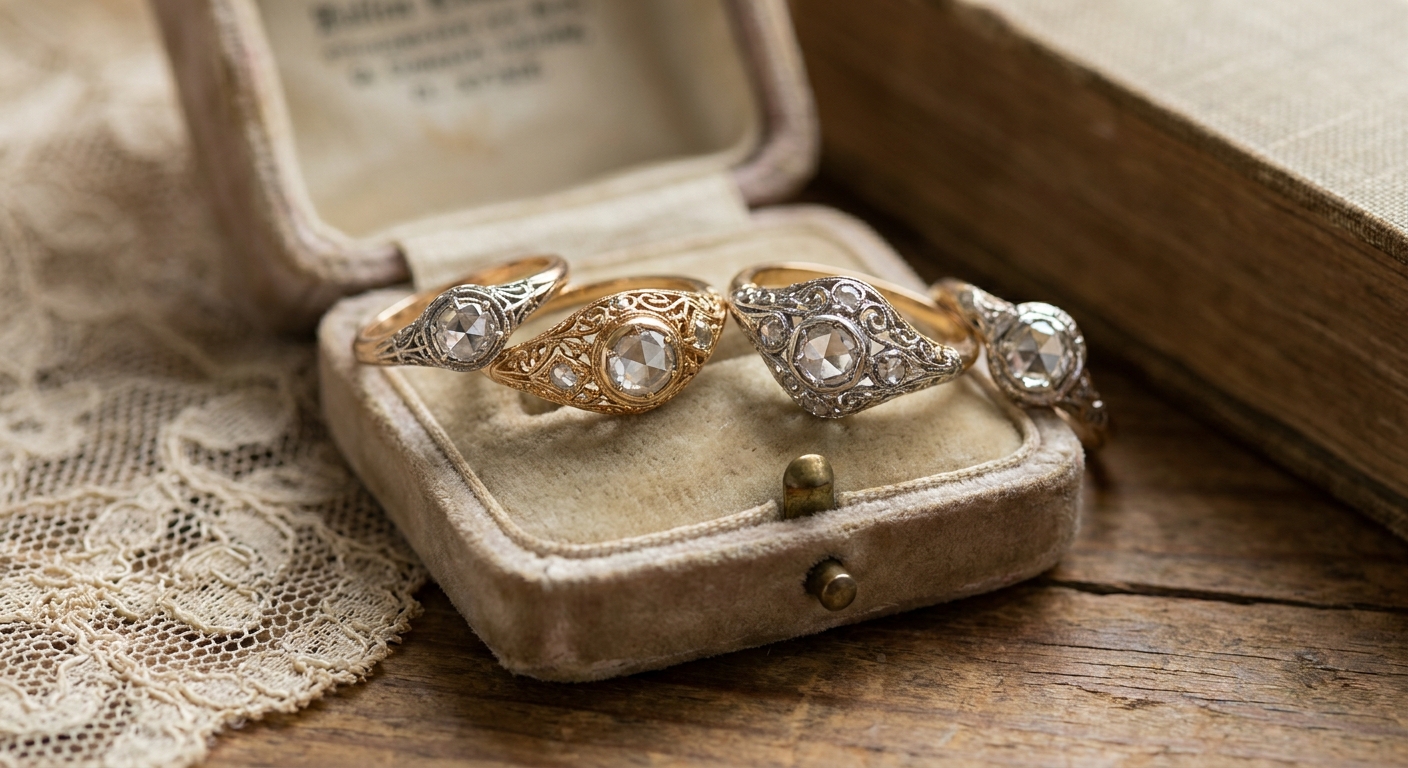
Vintage-inspired engagement rings borrow the details of antique jewelry—milgrain edges, filigree, old-world cuts—without the wear, resizing headaches, or shaky provenance of an actual estate piece. This guide covers what separates a genuine heirloom look from a costume-jewelry knockoff, and which settings hold up decades from now.
- Vintage inspired engagement rings in 2026 combine antique detailing (milgrain, filigree) with modern metal purity and lab-verified stones.
- The pear-shaped halo ring is the safe pick for an heirloom feel: Buy.
- Three-stone settings carry the most built-in symbolism for couples who want a story behind the ring, not just sparkle.
- Skip anything with hollow-back filigree or paper-thin prongs on daily-wear rings; that's where vintage-style pieces fail first.
Why this matters
The word "vintage" gets slapped on rings that have nothing structurally in common with jewelry from the Edwardian or Art Deco eras. A ring can look like your grandmother's without wearing like a museum piece that shatters if you load the dishwasher wrong.
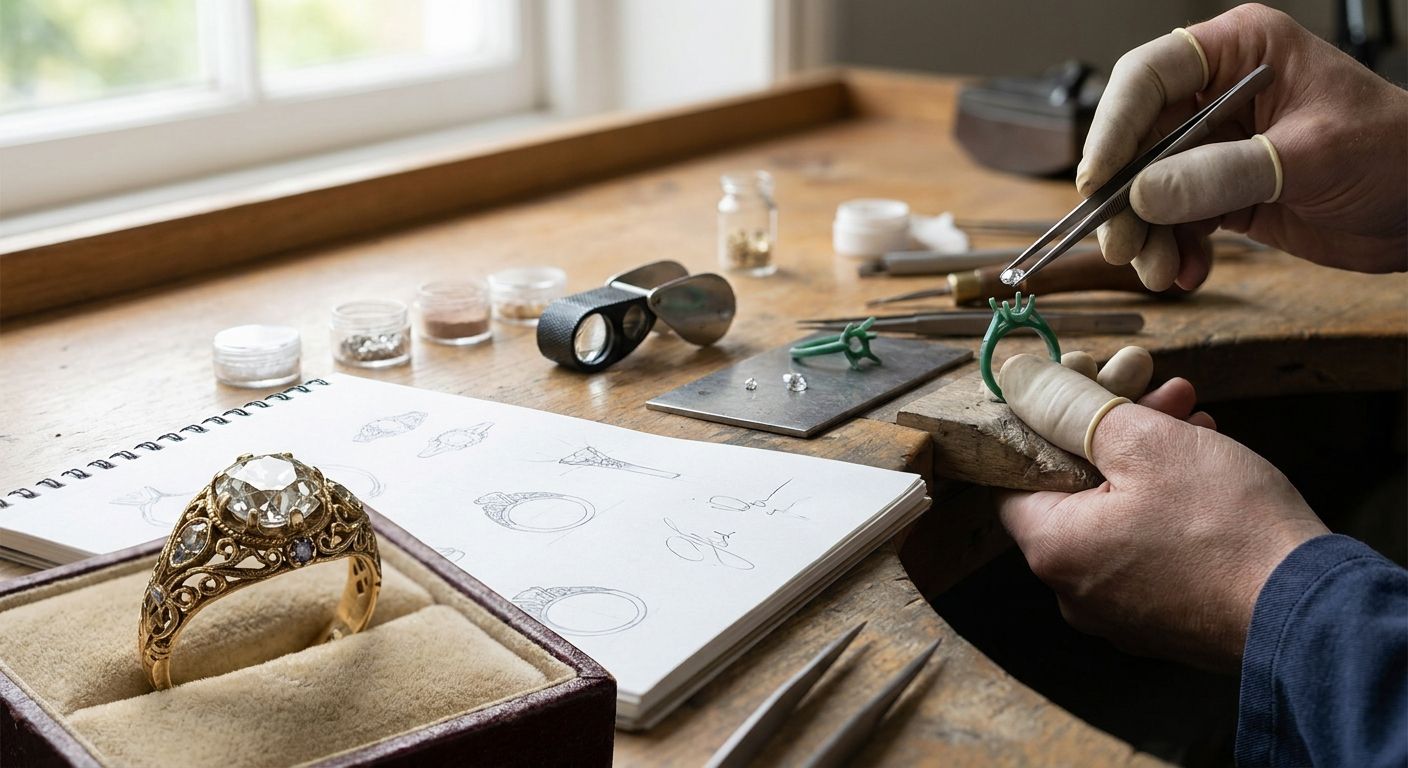
The real differentiator in 2026 is craftsmanship: hand-set milgrain, cast filigree with actual depth (not etched surface patterns), and metal purity that can survive decades of daily wear. Element 79 works with designers who build this into new pieces rather than distress old ones to fake age.
Who this is for
This guide is for the couple who wants a ring with weight and story, not a trend piece that will look dated by 2030. You're drawn to details you'd find in a jewelry box passed down three generations, but you want the stone graded, the metal warrantied, and the sizing done in your actual finger measurement. If you've been scrolling Element 79's collection wondering whether "vintage inspired" just means rose gold and a filter, this is the breakdown you need before you commit.
What to look for in vintage-inspired engagement rings
Milgrain edging that's actually beaded
Real milgrain is a row of tiny beads pressed into the metal edge, not a laser-etched line that reads as texture in photos and flat in person. Run a finger along the edge in the store — you should feel individual bumps, not a smooth ridge with a printed pattern. This is the single fastest tell between a designer piece and a mass-market casting.
Filigree with depth, not surface engraving
Filigree means wire-worked metal, twisted and soldered into open lacework, usually along the shank or gallery. It should have visible negative space you can see light through when you hold the ring up. Flat engraving that mimics the look from the top but is solid metal underneath won't hold the same three-dimensional shadow that reads as "antique" to the eye.
Metal choice for warmth and longevity
Yellow gold and rose gold read more period-accurate for Edwardian and Art Deco looks; platinum was the metal of choice for early 20th-century settings and still holds detail work better than white gold over 2026-level daily wear. If the setting has intricate filigree, platinum keeps those thin wire elements from wearing thin the way softer golds can. Check the platinum band guide before locking in a metal.
Cut shapes that signal an era
Old mine cut and old European cut diamonds have a soft, romantic sparkle with a smaller table than modern brilliant cuts — this is the actual antique look, not just a marketing label. Cushion cut, pear, and marquise shapes read as vintage-adjacent even when cut to modern standards, because their silhouettes predate the round brilliant's dominance.
Halo settings with period-correct proportions
A halo can either look 1920s or look like a 2015 Pinterest board, depending on proportion. A tight, single-row halo that hugs the center stone closely reads more period-accurate than a thick double halo, which tends to look contemporary no matter the metal or engraving choice.
Symbolism built into the design
Three-stone settings, toi et moi styles, and signet-adjacent motifs all carry inherited meaning — past/present/future, or two lives joined — that mass-produced solitaires don't. If the story behind the ring matters as much as the look, this criterion outweighs the others.
Not sure which era fits your style?
Book a fitting at the Cherry Creek boutique and try settings side by side.
Top picks for an heirloom feel
The Silhouette Classic — pear-shaped halo. Spec that matters: the elongated pear cut reads as antique on sight, no engraving required. It's the shape most associated with early-20th-century settings and it elongates the finger visually more than any round or cushion shape can. Pair it with a single-row halo and milgrain edge for the closest match to genuine period jewelry. See the full breakdown on pear-shaped rings for a vintage silhouette. Verdict: Buy.
The Storyteller — three-stone with milgrain gallery. The wildcard pick because it carries built-in symbolism most couples don't think to ask for until they see it. Past, present, future isn't marketing copy here — it's a 19th-century convention that's stayed relevant into 2026 precisely because it means something concrete. Verdict: Buy if the story matters more than the sparkle count.
The Old-World Charmer — cushion cut with hand-engraved shank. Cushion cuts soften the light return compared to a round brilliant, giving a warmer, less clinical sparkle that reads closer to candlelight-era jewelry. Hand engraving on the shank (not the head) is where you'll see the most craftsmanship variance between designers — look for depth you can feel with a fingernail. Verdict: Consider, especially if you want vintage character without full-coverage filigree.
The Minimalist's Compromise — toi et moi, two-stone. This shape carries genuine 18th-century lineage (Napoleon gave Josephine one) but reads clean enough for someone who doesn't want heavy detailing. It's a lighter entry point into vintage symbolism without the visual weight of a halo or three-stone build. Verdict: Consider for style-conscious buyers who want history without ornamentation.
What to avoid
- Hollow-back filigree on a daily-wear ring. It looks identical to solid filigree in a photo but traps debris and bends under pressure — fine for a cocktail ring, risky for something worn every day for the next 20 years.
- Etched "vintage texture" instead of true milgrain. Manufacturers use a rolling die to fake beaded edges; it wears smooth within a few years and won't hold the light the way hand-set beading does.
- Oversized double halos labeled "vintage." These are a 2010s trend dressed in antique language — genuine period settings from the 1920s almost never use a thick double halo.
If the setting has more than three prongs and no visible metal between stones, it's vintage-inspired styling stretched thin, not an actual antique-era build.
Verdict comparison
| Pick | Era signal | Detail work | Best for | Verdict |
|---|---|---|---|---|
| Silhouette Classic (pear halo) | Edwardian/Art Deco | Milgrain, single-row halo | Elongated-finger look | Buy |
| The Storyteller (three-stone) | Victorian symbolism | Milgrain gallery | Meaning-first buyers | Buy |
| Old-World Charmer (cushion) | Candlelight-era sparkle | Hand-engraved shank | Softer light return | Consider |
| Minimalist's Compromise (toi et moi) | 18th-century lineage | Minimal engraving | Light vintage entry point | Consider |
FAQ
What makes a ring vintage inspired versus a real antique?
A vintage inspired engagement ring is newly made using antique design cues like milgrain, filigree, and old-world cuts, while a real antique ring is an actual period piece with its own wear and provenance. Vintage inspired rings in 2026 let you get the look with modern metal certification and sizing.
Is milgrain edging durable for everyday wear?
Yes, hand-set milgrain in platinum or 18k gold holds up to daily wear for decades when the beading is pressed into solid metal rather than etched on the surface. Ask whether the milgrain is cast or hand-applied before buying.
Are old mine cut diamonds worth choosing over modern round brilliants?
Old mine cut diamonds give a softer, warmer sparkle with less fire than a modern round brilliant, which is exactly why they read as period-accurate. Choose one if the antique look matters more to you than maximum light performance.
Do three-stone rings still count as vintage inspired in 2026?
Yes, the three-stone setting carries 19th-century symbolism (past, present, future) that remains one of the clearest vintage-style signals available today. It works with nearly any center stone shape, including pear, cushion, and oval.
What metal holds filigree detail best over time?
Platinum holds fine filigree and milgrain detail better than white gold or softer alloys because it resists wear at thin wire points. This matters most on rings with heavy antique-style engraving worn daily.
Can a vintage inspired ring be custom built?
Yes, custom builds let you combine specific era details, like an Edwardian-style gallery with a modern lab-grown center stone, in one piece. This is common for couples who want heirloom character without sourcing an actual antique.
How do I know if a halo setting looks dated instead of vintage?
A thick double halo generally reads as a 2010s trend rather than a period-accurate style; single-row halos that hug the stone closely read closer to genuine 1920s proportions. Proportion matters more than sparkle count here.
One last thing
The detail that separates a convincing vintage-inspired ring from a costume look isn't the stone size — it's whether the metal between the diamonds is visible or hidden. Antique-era jewelers left negative space in the gallery and shank on purpose, both for weight savings and for the shadow play that makes filigree look alive. Modern castings that fill in that space to save on labor cost lose the exact effect they're trying to sell you on.