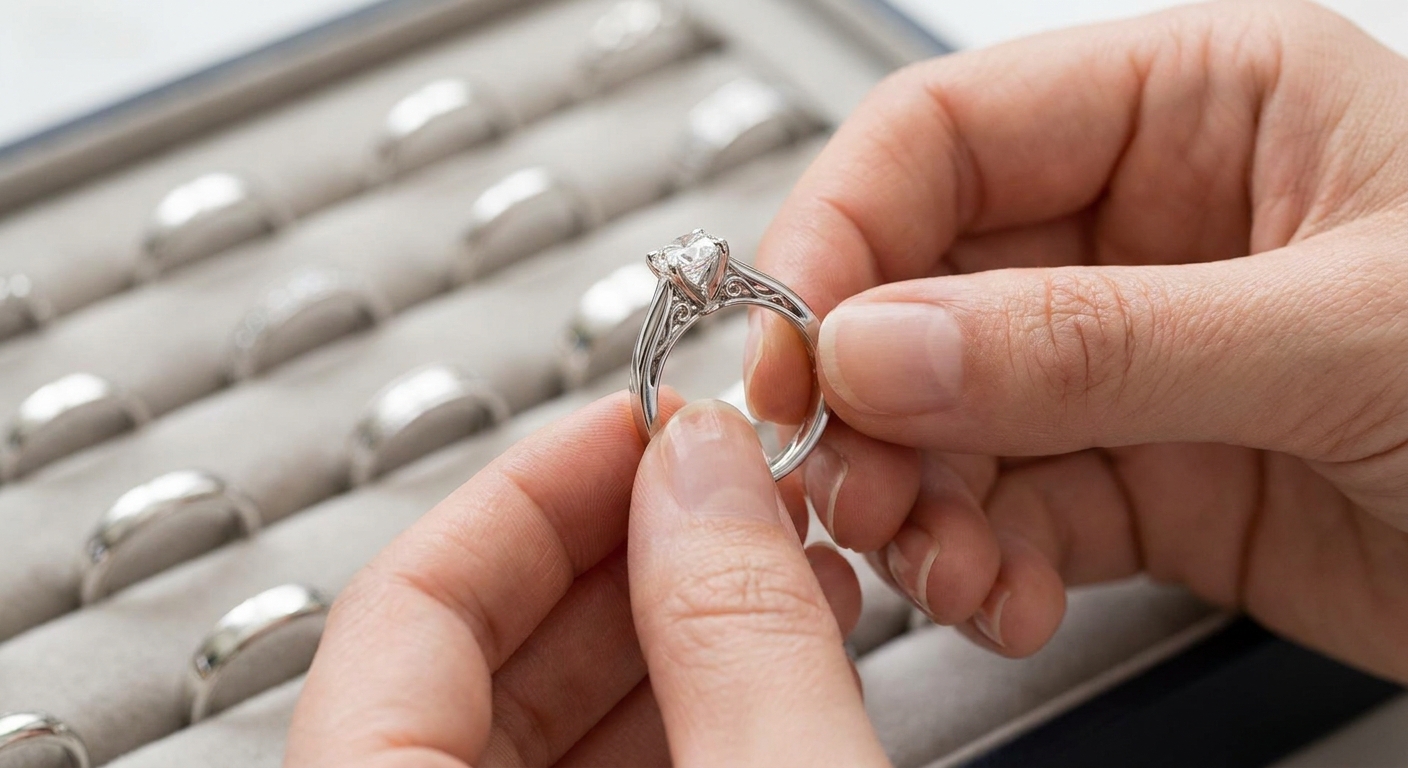
Platinum is the metal jewelers reach for when a band has to survive decades of daily wear without losing its shape, and choosing the right grade, weight, and finish for your ring takes a few specific decisions, not just a gut call at the counter.
- Platinum engagement ring bands run 90-95% pure metal, denser and more durable than 14k or 18k gold.
- 950 platinum is the standard bridal grade in 2026 — anything lower isn't true platinum.
- A platinum band patinas to a soft matte gray within 6-12 months; that's normal, not damage.
- Expect a platinum band to weigh 40-50% more than the same design in 18k white gold.
- Element 79 in Cherry Creek fits and resizes platinum bands in-house rather than shipping them out.
Why this matters
Most people shopping for platinum are comparing it to white gold and assuming the two behave the same way. They don't. Platinum doesn't need rhodium replating, it holds a stone setting tighter over time because the metal is malleable rather than brittle, and it's naturally white for life instead of fading to a yellowish cast after a few years.
The tradeoff is weight and price per gram — platinum costs more to buy and more to resize because there's more of it, by mass, in every band. Knowing what you're paying for before you sit down with a jeweler keeps the conversation useful instead of overwhelming.
What you'll need
- A ring size, or a plan for how to choose a ring for a proposal without her size if this is a surprise
- A sense of band width — 2mm for a delicate stack, 4-6mm for a solo statement band
- A target purity grade: 950 platinum (95% pure) is the bridal standard, 900 platinum (90% pure) shows up in some European and antique-style designs
- A finish preference: high polish, brushed matte, or hammered texture
- 20-30 minutes with a jeweler who can show you loose platinum vs. white gold side by side
The steps
1. Confirm the purity stamp before anything else
A genuine platinum band carries a hallmark — usually "Pt950" or "950Plat" — stamped on the inside of the shank. This tells you the alloy is 95% pure platinum mixed with metals like ruthenium or cobalt for hardness.
Without that stamp, you're looking at a white metal that might be palladium, white gold, or a platinum-plated alloy — none of which wear the same way over 2026 and beyond. If a listing or a jeweler can't point to the hallmark, ask directly before you commit.
Common mistake: assuming "platinum-colored" or "platinum finish" means platinum. It doesn't — it's marketing language for a white-metal look, usually rhodium-plated silver or white gold.
2. Decide on band width based on how it'll be worn
Width changes both comfort and how the ring reads visually next to a stack. A 2-3mm platinum band sits comfortably under most engagement ring settings and pairs well if you're building toward stackable diamond rings for everyday wear later.
A 5-6mm band, by contrast, reads as a standalone statement piece and is common in men's platinum bands or bold solitaire settings like a solitaire engagement ring for a timeless look. Try both widths on the same finger before deciding — the difference feels bigger in person than in photos.
Common mistake: picking width purely from a photo. Hand size and finger length change how a 2mm band vs. a 6mm band actually sits.
3. Choose a finish that matches lifestyle, not just style
High polish shows every scratch clearly because light bounces straight off it — fine for someone who takes the ring off for manual work, less fine for daily-wear hands. A brushed or satin finish hides surface wear for months longer between polishes.
Hammered or matte platinum finishes are having a moment in 2026 bridal design because they lean into platinum's natural patina instead of fighting it. Ask to see a finish sample under indoor light, not just under jewelry-case spotlights.
Common mistake: choosing high polish for a hands-on job (nursing, cooking, gardening) and being surprised by scratches within weeks.
4. Weigh the cost difference against 18k white gold honestly
Platinum is denser than gold, so a platinum band of the same design weighs roughly 40-50% more than its 18k white gold equivalent — and price follows weight. Budget for that difference upfront rather than discovering it mid-consultation.
What you get for the extra weight: platinum doesn't wear away as fast as gold under friction, so prongs holding a center stone stay tighter for longer. If the ring will anchor a setting from how to pick an engagement ring setting for a colored stone, that security matters more than it does on a plain band.
5. Plan for the patina, don't fight it
Platinum develops a soft, matte gray surface called a patina within 6-12 months of regular wear — this is oxidation on the surface, not tarnish, and it doesn't weaken the metal. Some brides love it as a lived-in look; others want the mirror shine back.
If you want to preserve high polish, expect to have the ring re-polished by a jeweler roughly once a year. If you're drawn to the matte patina, skip the polishing and let it develop naturally — it's part of what platinum is supposed to do.
6. Match the band to the center stone's demands
A heavier stone — a large oval or a three-stone design like three-stone engagement rings for a meaningful symbol — puts more stress on the shank where it meets the setting. Platinum's malleability lets prongs be pushed back down over the stone during future tightening appointments without the metal cracking, which is a real risk with brittle white gold alloys.
If the design pairs with how to choose a gemstone for an engagement ring, ask specifically how platinum interacts with that stone's hardness and setting style before finalizing.
Talk through platinum options in person
Cherry Creek jewelers who fit and resize platinum bands on-site.
7. Confirm resizing policy before you buy
Platinum resizes differently than gold — it takes more heat and more skilled labor to move, which means not every jeweler resizes it in-house. Ask directly whether resizing happens on-site or gets shipped to a third party, since turnaround time and cost both depend on the answer.
A band that will need resizing within the first year (weight changes, seasonal swelling) should come from a jeweler who's upfront about the process. Review how to resize a designer ring safely before your fitting appointment so you know what to ask.
Troubleshooting
The band looks dull gray within a few months. That's the natural patina forming, not tarnish or damage — it's cosmetic and reversible with a professional polish if you want the shine back.
The ring feels heavier than expected. Platinum's density means a band that looks identical to white gold in a photo will feel noticeably heavier on the hand; this is normal and not a sign of a manufacturing error.
Prongs feel loose after a year of wear. Platinum prongs shift slightly with wear but rarely crack the way brittle alloys do — a jeweler can re-tip or push the prongs back down rather than replacing the setting.
The band shows a scratch after one wear. High-polish platinum scratches easily because of how reflective the surface is; a brushed or satin finish would have hidden the same mark.
Price quotes vary wildly between jewelers for the "same" band. Confirm both are quoting 950 platinum at the same gram weight — a lighter-weight band or a 900 platinum alloy will always price lower and isn't a fair comparison.
Tools and resources
- A jeweler's loupe or magnifier to check for the Pt950 hallmark yourself
- A ring sizer or prior sizing record before any fitting appointment
- How to design a custom engagement ring if you're building the band from scratch rather than buying a set design
- How to choose a designer engagement ring for comparing platinum options across bridal designers
- An appointment with a jeweler who can show loose platinum stock next to white gold under the same light
What to do next
Once the band metal is settled, the harder decision is usually the setting and stone pairing that sits on top of it — that's where design personality actually shows up. Walking through how to design a custom engagement ring is the logical next step if you're not buying a fixed design off the shelf.
FAQ
What's the best platinum grade for an engagement ring band?
950 platinum, meaning 95% pure platinum alloyed for hardness, is the standard bridal grade in 2026. It's stamped Pt950 on the inside of the band, and anything without that hallmark isn't confirmed platinum.
Is platinum better than white gold for an engagement ring band?
Platinum holds prong settings tighter over time and never needs rhodium replating, while white gold needs replating every 1-2 years to stay white. Platinum costs more and weighs 40-50% more for the same design, so the tradeoff is durability versus price.
How much does a platinum engagement ring band cost compared to gold?
A platinum band typically costs more per gram than 18k white gold, and because platinum is denser, the same design uses more metal by weight. Get quotes for the exact same gram weight and purity to compare fairly.
Does platinum scratch easily?
Platinum scratches as easily as any precious metal, but unlike gold it doesn't lose metal when scratched — the surface just displaces, which is why platinum can be re-polished many times without thinning the band. High-polish finishes show scratches faster than brushed or matte finishes.
Why did my platinum ring turn gray?
That gray, matte look is a natural patina forming on the surface from daily wear, and it's cosmetic, not damage. A jeweler can polish it back to a mirror shine, or you can leave it to keep developing the matte look.
Can a platinum band be resized?
Yes, but platinum resizing takes more heat and specialized tools than gold resizing, so not every jeweler does it on-site. Ask before buying whether resizing happens in-house or gets sent out, since that affects turnaround time.
How do I know if a ring is real platinum?
Look for a Pt950 or 900Plat hallmark stamped on the inside of the band — genuine platinum is always marked with its purity. A jeweler can also verify it with an acid test or density check if the stamp is worn or missing.
How long does a platinum band last?
A well-made 950 platinum band can last multiple decades of daily wear without needing the metal replaced, only occasional re-polishing or prong maintenance. It's the reason platinum is the default recommendation for bands meant to be worn every single day.
One last thing
The patina everyone warns you about isn't a flaw to manage — jewelers in 2026 are increasingly starting platinum bands with a matte finish on purpose, because the metal is going to get there on its own within a year anyway. Asking for it upfront saves a polishing appointment later.