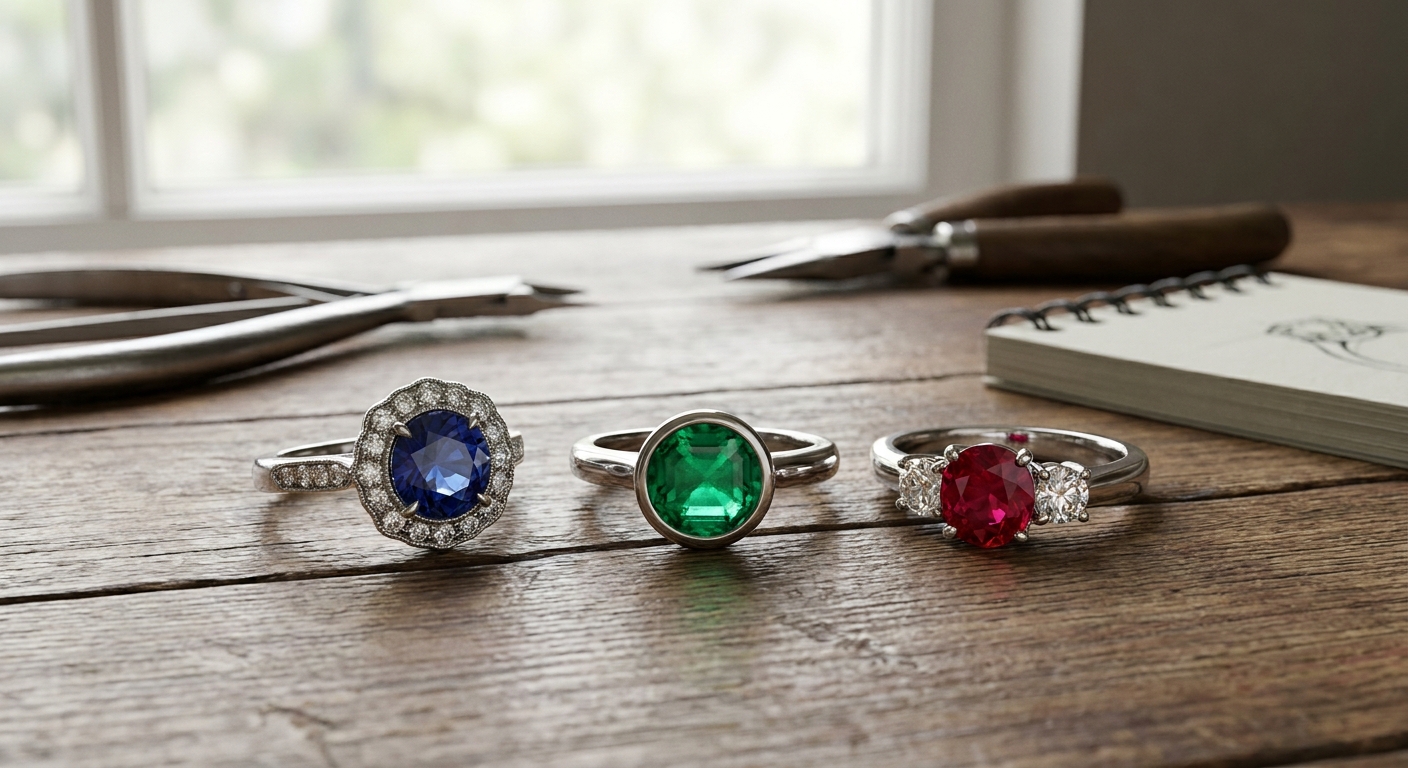
Picking the right setting for a colored stone engagement ring is a durability decision first and a style decision second — get the order backwards and you're paying for repairs by year two.
- Bezel and half-bezel settings protect softer stones like emerald and opal best for daily wear in 2026.
- Six-prong settings suit sapphire and ruby since both sit at 9 and 8-9 on the Mohs scale.
- Platinum or white gold keeps blue and green hues true; yellow gold warms citrine, peridot, and morganite.
- An engagement ring setting for a colored stone should get inspected annually — chipped facets show up fastest at the culet.
- Element 79 recommends matching prong count to stone hardness before matching it to Pinterest boards.
Why this matters
A diamond shrugs off daily knocks because it sits at a 10 on the Mohs hardness scale. Colored stones don't get that luxury. Sapphire and ruby are close at 9 and 8-9, but emerald drops to 7.5-8 and usually carries internal inclusions that make it brittle even at that hardness. Opal sits at 5.5-6.5, which is barely harder than window glass.
The setting is what stands between that stone and the dishwasher, the gym bag, and the car door. Pick wrong and you're back at the jeweler in 2026 with a chipped facet or a stone that's gone missing from its mount. Pick right and the ring survives decades of actual wear, not just photos.
What you'll need
- The stone's hardness rating and cut style (round, oval, emerald-cut, cushion)
- A sense of daily wear habits — hands-on job, gym routine, frequent travel
- A target metal tone: platinum, white gold, yellow gold, or rose gold
- A ring size, ideally taken later in the day when fingers run slightly larger
- A jeweler who can walk you through how to choose a gemstone for an engagement ring before you lock in the setting
- Roughly 45-60 minutes for a proper consultation, longer if the piece is custom
The steps
1. Rate the stone's durability before you fall in love with a style
Start with the Mohs number, not the Pinterest board. A stone at 9 (sapphire) tolerates an open prong setting; a stone at 7.5 (emerald) does not.
Emeralds also carry more inclusions than sapphires on average, which makes them prone to cracking under pressure at the setting point. If the stone you're circling is soft or included, plan on a bezel or half-bezel before you look at anything else. Skipping this step is the single most common reason colored-stone rings end up back at the bench within a year.
2. Match the setting style to how the ring actually gets worn
A prong setting with four to six claws maximizes light entry and shows off color, which is why it's the default for sapphire and ruby. A bezel wraps a rim of metal fully or partially around the stone's edge, trading a little brilliance for real protection.
Someone who works with their hands daily should lean bezel or half-bezel regardless of stone hardness. Someone who takes the ring off for workouts and dish duty has more room to choose an open prong setting purely for looks.
3. Choose the metal tone to work with the stone's hue, not against it
Platinum and white gold keep blue sapphire and green emerald reading true because the metal doesn't compete with the color. Yellow gold pulls warmth into citrine, peridot, and morganite, deepening tones that can look washed out in white metal.
Rose gold sits in between and flatters pink sapphire, morganite, and pink tourmaline especially well. If you're torn, sapphire rings for a non-traditional engagement is worth a look before you commit to a metal tone.
4. Decide how much metal coverage the stone actually needs
More prongs mean more security, fewer prongs mean more visible stone. Six-prong settings suit round sapphires and rubies where symmetry matters. Four-prong settings work for stones with strong color saturation that don't need extra metal stealing the eye.
Brittle or heavily included stones do better with a bezel that covers the full girdle, even if it costs some brilliance. This is where emerald rings for a bold engagement look shows a range of coverage options side by side.
5. Pick a band style that won't fight the center stone
A plain band lets a saturated color do all the talking. A pavé band adds sparkle but can make a mid-tone stone look duller by comparison. A sculptural or twisted band, the kind you'll see in contemporary designer collections, gives the ring a signature without competing for attention.
Think about what sits next to it long-term too, since most colored-stone engagement rings eventually get stacked with a wedding band.
Talk through your setting in person
Bring the stone or the idea — leave with a setting plan that fits how you actually live.
6. Get the sizing right before the setting is finalized
Bezel settings are harder and more expensive to resize than prong settings because the metal wraps the stone rather than just the shank. If your size is likely to shift, size a bezel ring slightly generous rather than tight.
Size your finger later in the day, when it's at its largest, and mention any history of swelling to whoever's taking the measurement.
7. Confirm the setting can be custom-built if nothing off-the-shelf fits
Unusual cuts — emerald-cut sapphire, cushion-cut tourmaline, oval morganite — often need a setting built around the exact stone rather than a stock mount resized to fit. That's a custom build, not a modification.
Verdict: if the stone is soft, included, or an unusual cut, go custom rather than forcing a stock setting. How to design a custom engagement ring covers what that process actually involves.
“If the stone sits under an 8 on the Mohs scale, the setting has to do more work than the metal alone can promise.”
Troubleshooting
- Stone feels loose in the prongs. Get it checked immediately — a loose prong on a colored stone risks losing it entirely, unlike a diamond which at least holds value if recovered scratched.
- A facet edge chips after a few months. This usually means the setting didn't match the stone's hardness. A bezel retrofit can often save the stone without replacing it.
- The color looks washed out under office lighting. Fluorescent light shifts how saturated a stone appears. Check the stone under daylight and warm indoor light before finalizing, not just under jeweler spotlights.
- A halo setting makes the center stone look smaller than expected. Halos create contrast that can shrink perceived size on lower-saturation stones. A solitaire or three-stone setting often reads larger for the same carat weight.
- Resizing a bezel-set ring costs more than expected. Budget for this upfront if your size might change — it's a real cost difference from prong settings, not a hidden fee.
- The metal develops a patina that mutes the stone's color over time. White gold rhodium plating wears down gradually; expect a re-plating conversation within a few years of daily wear.
Tools and resources
- Best colored gemstones for an engagement ring for a side-by-side on hardness and color
- Best gemstone engagement rings for non-diamond brides for finished examples across settings
- How to care for gemstone rings every day for cleaning and storage habits that keep a setting intact
- A jeweler's loupe or phone macro lens to check facet edges for wear before 2026 ends
- An appointment with a bench jeweler who can size the stone in person, not just from photos
What to do next
Once the setting style is locked, the next decision is the stone itself, cut and origin included. Gemstone engagement rings for a colorful proposal walks through how cut choice interacts with the setting you just picked.
FAQ
What's the best engagement ring setting for a colored stone?
A bezel or half-bezel setting is the safest choice for softer or included stones like emerald and opal in 2026. Six-prong settings work well for harder stones like sapphire and ruby that don't need extra metal coverage.
Is a bezel setting better than a prong setting for colored stones?
Bezel settings protect the stone's edges better, which matters most for stones under 8 on the Mohs hardness scale. Prong settings show off more color and brilliance but offer less protection for daily wear.
How much does a custom colored-stone engagement ring setting cost?
Costs vary by metal, stone size, and setting complexity, so pricing is best confirmed directly with a jeweler for the specific stone in hand. Unusual cuts typically require a custom build rather than a stock mount.
Does white gold or yellow gold look better with a sapphire?
White gold and platinum keep blue sapphire reading true because the metal doesn't compete with the cool tone. Yellow gold can mute a blue sapphire's saturation, so it's more often paired with warmer stones like citrine or peridot.
Can an emerald engagement ring be worn every day?
Yes, but it needs a protective setting like a bezel or half-bezel since emerald sits at 7.5-8 on the Mohs scale and often carries inclusions. Daily wear without protection increases the risk of chipped facets over a few years.
How often should a colored-stone ring setting be inspected?
An annual check is standard, catching loose prongs or worn plating before they become a lost stone. Anyone wearing the ring daily for manual work or gym sessions should check every six months instead.
What setting works best for an oval-cut colored stone?
Oval-cut stones typically need a custom-built prong or bezel setting rather than a stock mount, since the proportions vary stone to stone. A six-prong setting with reinforced tips at the points is common for oval sapphire and morganite.
Do halo settings make colored stones look bigger?
Halos add surrounding sparkle but can create contrast that makes the center stone look smaller on lower-saturation gems. A solitaire or three-stone setting often reads larger for the same carat weight.
One last thing
The detail most people skip: ask whether the setting's prong tips sit at the stone's most brittle points. On an emerald-cut stone, that's the corners — and corner damage is the number one repair Element 79 sees on colored-stone engagement rings that come back within the first two years.