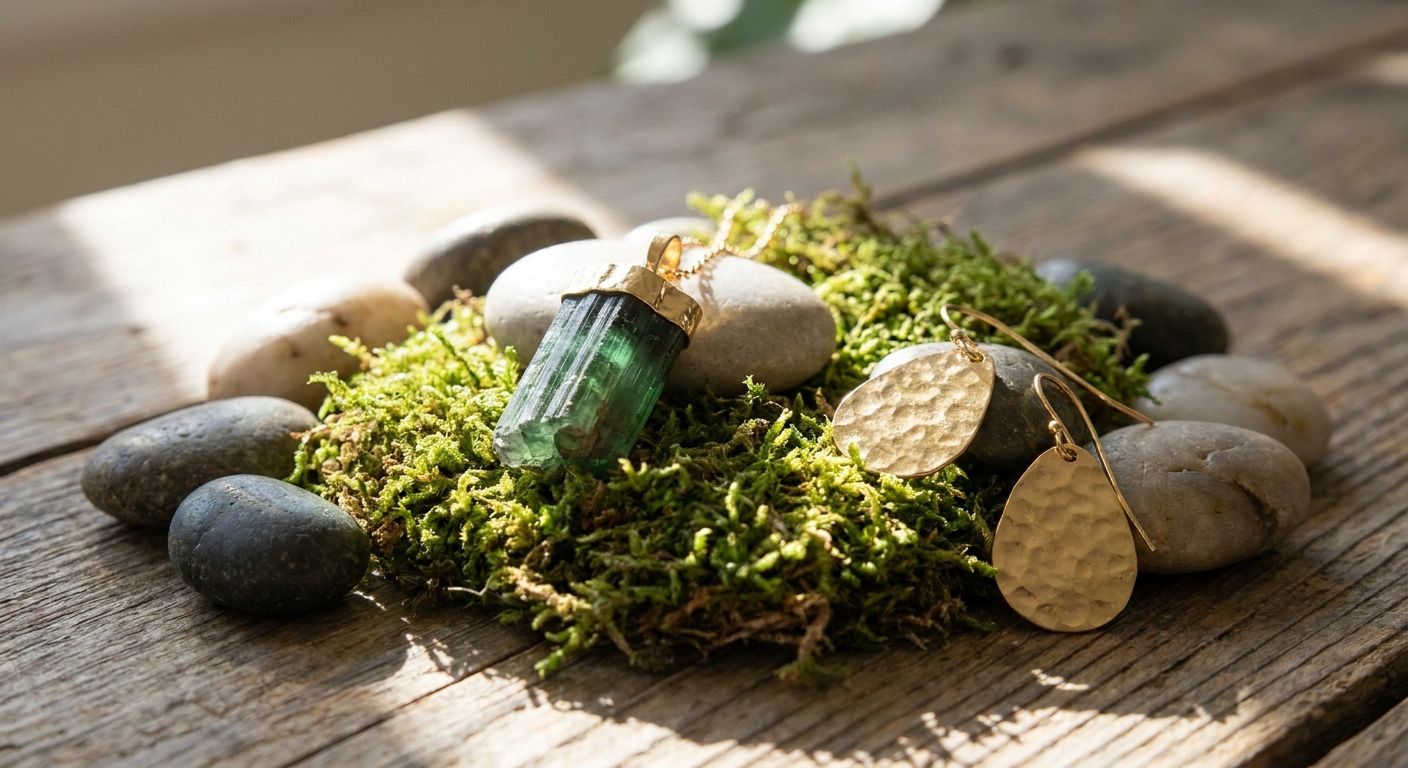
Petra Class jewelry pulls its shapes and textures straight from the earth—rough-cut gemstones, hammered gold, forms that look like they were pulled out of a riverbed rather than a jewelry case. This guide breaks down what makes a piece genuinely nature-inspired versus just marketed that way, and which Petra Class styles hold up for daily wear in 2026.
- Petra Class jewelry favors rough-cut and cabochon gemstones over faceted stones for a raw, organic look.
- 22k granulated gold and oxidized silver are the two signature textures worth prioritizing in 2026.
- Granulated gold cuffs and rings are the Buy pick; ultra-thin polished bands are the Skip.
- One-of-a-kind pieces cost more but hold resale and heirloom value better than production runs.
Why this matters
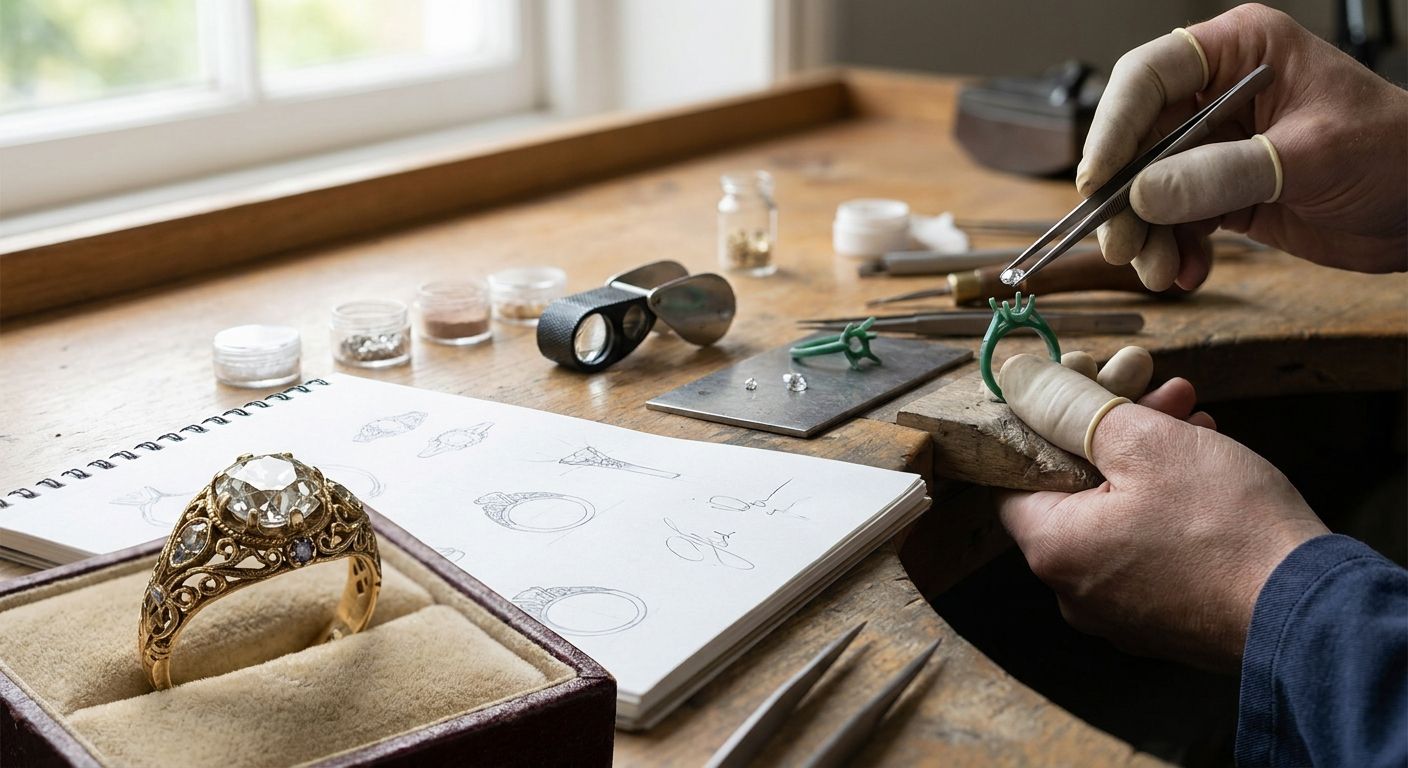
Most "nature-inspired" jewelry marketing means a faceted diamond in a leaf-shaped setting. That's not what Petra Class does. Her work leans on hand-fabrication, rough mineral surfaces, and asymmetry—closer to found objects than catalog pieces. If you're shopping this designer without knowing what separates a signature piece from a look-alike, you'll overpay for the wrong texture or underbuy on something that won't age well. Element 79 carries a curated edit of contemporary and designer fine jewelry, Petra Class included, for exactly this reason: knowing the difference matters more than the price tag.
Who this is for
This guide is for the buyer who wants fine jewelry that doesn't look like everyone else's engagement ring or tennis bracelet—someone drawn to texture, imperfection, and pieces that read as handmade rather than mass-produced. It's for the person who'd rather wear a rough sapphire cabochon than a brilliant-cut diamond, and who values a piece that looks like it has a story. If your taste runs toward minimalist and machine-polished, Petra Class isn't your designer—look elsewhere first.
What to look for in Petra Class jewelry for a nature-inspired look
Rough-cut and cabochon gemstones over faceted stones
Faceted stones are cut for maximum sparkle under artificial light. Petra Class's signature work uses rough-cut or cabochon-polished stones—tourmaline, sapphire, moonstone—that show natural inclusions and irregular surfaces instead of geometric precision. That's the whole point: the stone looks pulled from the ground, not engineered. A piece that swaps in a standard faceted gem loses the organic read entirely, even if it's technically the same designer's setting style.
Granulated and hammered 22k gold texture
22k gold is soft enough to hold the fine granulation and hammered surface texture that defines this aesthetic—18k and 14k don't take the same finish as convincingly. Look for visible surface texture: tiny gold beads, hammer marks, uneven edges. A smooth, high-polish gold setting on a piece marketed as "Petra Class style" is a red flag in 2026, when texture is the actual differentiator buyers are paying for.
Organic, asymmetrical silhouettes
Symmetry reads as manufactured; asymmetry reads as handmade. Nature-inspired pieces in this category lean into uneven edges, irregular stone placement, and forms that mimic branches, pods, or river stones rather than perfect circles and squares. If a ring or pendant looks like it came off a CAD file with clean, repeatable geometry, it's not doing the job this aesthetic is built for.
Oxidized silver and mixed-metal combinations
A lot of the depth in this look comes from oxidized (blackened) sterling silver paired against warm 22k gold—the contrast reads as weathered and earthy rather than shiny and new. Pieces that skip the oxidation step and use bright, unfinished silver lose that aged, mineral quality that makes the style recognizable at a glance.
One-of-a-kind or limited production
Because each piece is largely hand-fabricated, true nature-inspired designer work tends to run in small batches or as singular pieces rather than large production runs. That scarcity is part of what holds value over time. If you find an identical piece in five different colorways at a chain retailer, it's a mass-produced imitation, not the real thing.
Versatility for stacking and layering
The best pieces in this category are built to be worn in combination—rings meant to stack, cuffs meant to sit alongside other bracelets, pendants meant to layer with finer chains. Mixing metals in a jewelry stack is part of the intended styling here, not an afterthought, so a piece that only works in isolation is fighting the aesthetic it's supposed to belong to.
See the current Petra Class edit
Book an appointment to try pieces in person at the Cherry Creek boutique.
Top picks
The signature texture pick — granulated gold cuff. Look for a wide 22k gold cuff with visible surface granulation and a slightly irregular edge; this is the piece that reads as "Petra Class" from across a room. One granulated cuff can anchor an entire stack without needing anything else layered on top. Buy.
The colored-stone standout — rough-cut tourmaline or sapphire ring. A rough or cabochon-cut colored stone set in textured gold gives you the organic, uncut-from-the-earth look this designer is known for, and it works as a daily-wear alternative to a standard colored gemstone engagement ring. Expect visible mineral inclusions rather than clarity-graded perfection—that's the feature, not a flaw. Buy.
The everyday layer — hammered gold hoops or thin bangle. Smaller hammered-texture pieces work as daily wear rather than occasion jewelry, and they're the easiest entry point if you're testing the aesthetic before committing to a bigger piece. Consider.
The statement piece — oxidized silver and gold cocktail ring. A large cabochon set against oxidized silver with gold accents makes a strong evening piece with real visual weight; this is a piece you build an outfit around, not one you throw on absentmindedly. Consider.
The wildcard — mismatched stacking rings. Multiple thin, individually textured bands meant to be worn together rather than as a single ring. It only works if you commit to the full stack; worn as a single band it loses most of its visual interest. Skip if you want one clean ring; buy if you're building a stack.
What to avoid
- Faceted "nature" pieces. A leaf or branch-shaped setting with a standard brilliant-cut diamond is a marketing shortcut, not the real aesthetic—the sparkle contradicts the raw, earthy intent.
- High-polish gold in this category. Mirror-finish gold on a piece sold as organic or nature-inspired means the texture step got skipped; it will look generic next to actual hand-textured work.
- Perfectly symmetrical settings. If every stone sits dead-center and every edge is machine-clean, you're looking at a production piece riding on the aesthetic's popularity, not an actual hand-fabricated design.
“If a piece looks too polished to have texture, it isn't doing what this aesthetic is built to do.”
Verdict comparison
| Piece type | Gold purity | Stone cut | Best for | Verdict |
|---|---|---|---|---|
| Granulated gold cuff | 22k | N/A | Daily statement | Buy |
| Rough-cut colored stone ring | 22k setting | Rough/cabochon | Everyday color | Buy |
| Hammered gold hoops | 22k | N/A | Entry-level daily wear | Consider |
| Oxidized silver cocktail ring | 22k + oxidized silver | Cabochon | Evening events | Consider |
| Mismatched stacking rings | 22k | Mixed | Building a stack | Consider/Skip solo |
FAQ
What makes Petra Class jewelry different from other designer jewelry?
Petra Class jewelry uses rough-cut and cabochon gemstones, hand-textured 22k gold, and asymmetrical forms instead of faceted stones and high-polish finishes. The result reads as organic and hand-fabricated rather than machine-produced.
Is Petra Class jewelry good for everyday wear?
Smaller pieces like hammered gold hoops or thin stacking bands work well for daily wear in 2026, while larger cabochon cocktail rings suit occasion wear. Match the piece size to how often you plan to wear it.
What gold purity does Petra Class jewelry typically use?
22k gold is the standard for this aesthetic because it's soft enough to hold granulation and hammered texture. Lower-karat gold doesn't take the same surface finish as convincingly.
Can you stack Petra Class rings with other designer pieces?
Yes, the organic and asymmetrical silhouettes are designed to mix with other textured metals and stacking pieces. Oxidized silver against warm gold is a common pairing within a single stack.
How do you tell a genuine nature-inspired piece from an imitation?
Check for visible surface texture, irregular stone placement, and rough or cabochon-cut gemstones rather than faceted stones. Perfectly symmetrical, high-polish settings usually signal a production imitation, not hand-fabricated work.
What's the best colored gemstone for this aesthetic?
Rough-cut or cabochon tourmaline, sapphire, and moonstone are the most common choices because their natural surface texture supports the earthy, uncut look. Faceted versions of the same stones undercut the aesthetic.
Does oxidized silver tarnish differently than regular silver?
Oxidized silver is intentionally blackened to create contrast against gold and won't develop new tarnish the same way polished silver does. Light cleaning maintains the contrast without stripping the finish entirely.
One last thing
The detail most buyers miss in 2026: the value in this category sits in the texture, not the stone size. A smaller rough-cut stone in well-executed granulated gold will outlast a bigger faceted stone in a generic setting, both stylistically and in resale terms—buy for the hand-fabrication, not the carat weight.