Cushion cut engagement rings pair the fire of a round brilliant with the soft, pillow-shaped outline of an antique cushion — no sharp corners, no harsh light leakage, just a rounded-square silhouette that photographs warm under any light. This guide breaks down what to check before you buy one in 2026 and which settings actually flatter the shape.
- Cushion cut engagement rings hide inclusions well and read larger than their carat weight — buy one with a length-to-width ratio between 1.00 and 1.10 for the classic soft-square look.
- Halo settings are the safest pick for cushion cut engagement rings in 2026 because pave amplifies a cut that already has fewer, bigger facets than a round brilliant.
- Skip cushion cuts with visible bowtie shadowing or windowing in the center — that's a cutting problem, not a lighting problem.
- Three-stone settings suit cushion cuts with symbolic meaning (past-present-future); solitaires suit brides who want the stone, not the setting, to do the talking.
Why this matters
Cushion cut diamonds and gemstones cut differently than round brilliants — fewer, larger facets, a rounded outline, and a crown height that varies more from stone to stone. That variation is exactly why buyers get burned: two cushion cuts at the same carat weight and clarity grade can look completely different on the hand. One sparkles evenly across the table facet. The other shows a gray shadow (a bowtie) running through the center, or looks glassy and lifeless because the pavilion is cut too shallow.
At Element 79, cushion cut engagement rings show up constantly in custom bridal consultations because the shape works for almost every hand and almost every style — vintage, modern, minimalist, maximalist. The trick isn't finding a cushion cut. It's finding the right proportions and the right setting for the stone you land on.
Who this is for
This guide is for a buyer who wants a softer alternative to round or princess cut — someone drawn to vintage character but not ready to commit to an old mine cut or a rose cut, and someone who wants a stone that reads bigger and warmer without going full cushion-halo-on-a-pave-band cliché. If you're comparing cushion against emerald or asscher because you like rectangular silhouettes but want more brilliance, this is your shape.
What to look for in cushion cut engagement rings
Length-to-width ratio
A cushion cut with a ratio between 1.00 and 1.05 looks like a rounded square. Push that to 1.15–1.25 and the stone elongates into a soft rectangle — better for narrow fingers, worse for a bride who wants that classic pillow shape. Know which silhouette you're buying before you fall for a photo; ratio changes the entire look of the ring.
Facet pattern: chunky vs. crushed ice
Cushion cuts come in two visual families. "Chunky" cushions have fewer, larger facets and flash big blocks of light — closer to the antique cushion look. "Crushed ice" cushions have a modified brilliant facet pattern that scatters light into a sparkly, almost sugary texture. Neither is objectively better, but they photograph and wear differently, so hold both in person before deciding.
Crown height and light return
A crown that's too shallow lets light leak out the bottom instead of bouncing back to your eye — that's the glassy, lifeless look buyers describe as "the stone doesn't sparkle." A crown that's too steep can trap a dark bowtie shadow across the center. There's no single magic number here across labs and cutters, so this is a see-it-in-person criterion, not a spreadsheet one.
Setting compatibility
Cushion cuts have rounded corners, which means prong placement matters more than on a princess cut. Four-prong settings that grip the corners tend to look more secure and more classic; six-prong settings distribute pressure better on larger stones but can visually crowd a smaller cushion. Check how the prongs sit against the curve before committing to a mount.
Metal tone against the stone
Cushion cuts — especially warmer, chunkier-faceted ones — tend to look richer against yellow or rose gold. Crushed-ice cushions with more brilliance-style sparkle hold their own in platinum or white gold. If you're buying a colored gemstone cushion, this matters even more: a warm sapphire or morganite can go muddy against the wrong metal.
For a deeper walk-through on stone selection before you land on a shape, Element 79's guide to choosing a gemstone for an engagement ring covers how clarity, color, and cut interact before you even get to setting choices.
Top picks for cushion cut engagement rings
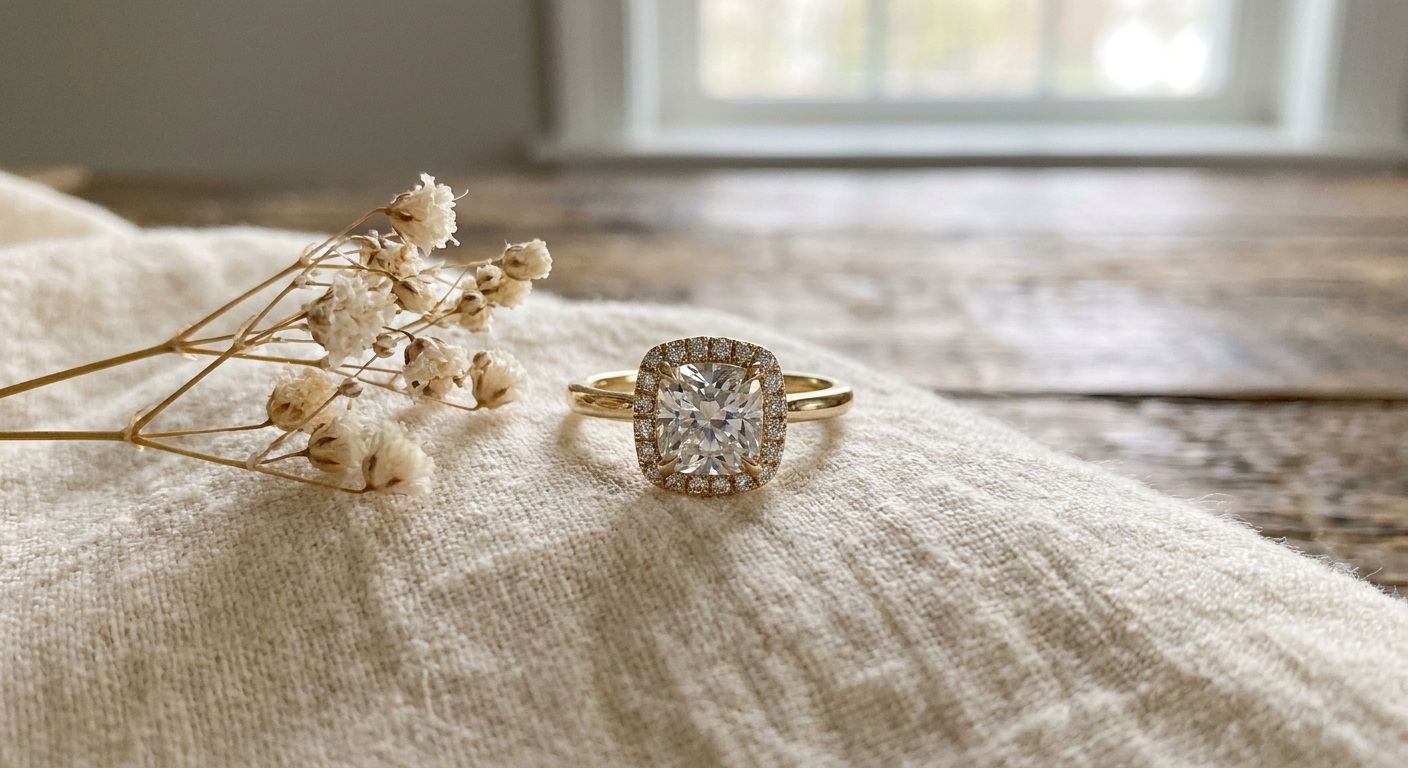
The sparkle amplifier — halo setting. A halo setting rings the center cushion cut with a border of pave stones, which does two things: it makes the center stone read 15–20% larger visually without adding carat weight, and it fills in the negative space around the rounded corners that a plain solitaire leaves bare. This is the pick for a buyer who wants maximum visual sparkle in 2026 without upsizing the actual stone. See how it's built in Element 79's halo engagement ring guide. Buy if you want more visual size for the budget; Skip if you want the cushion's outline to stay clean and unbroken.
The symbolic pick — three-stone setting. A cushion cut center flanked by two smaller stones (often round or trapezoid) reads as past-present-future or as a nod to a specific relationship milestone. Side stones typically run 30–40% of the center stone's carat weight, which keeps the composition balanced instead of top-heavy. Full breakdown in Element 79's three-stone engagement ring guide. Buy if the symbolism matters to your proposal story; Consider if you're not attached to a three-stone narrative, since it adds cost without changing the center stone's presence.
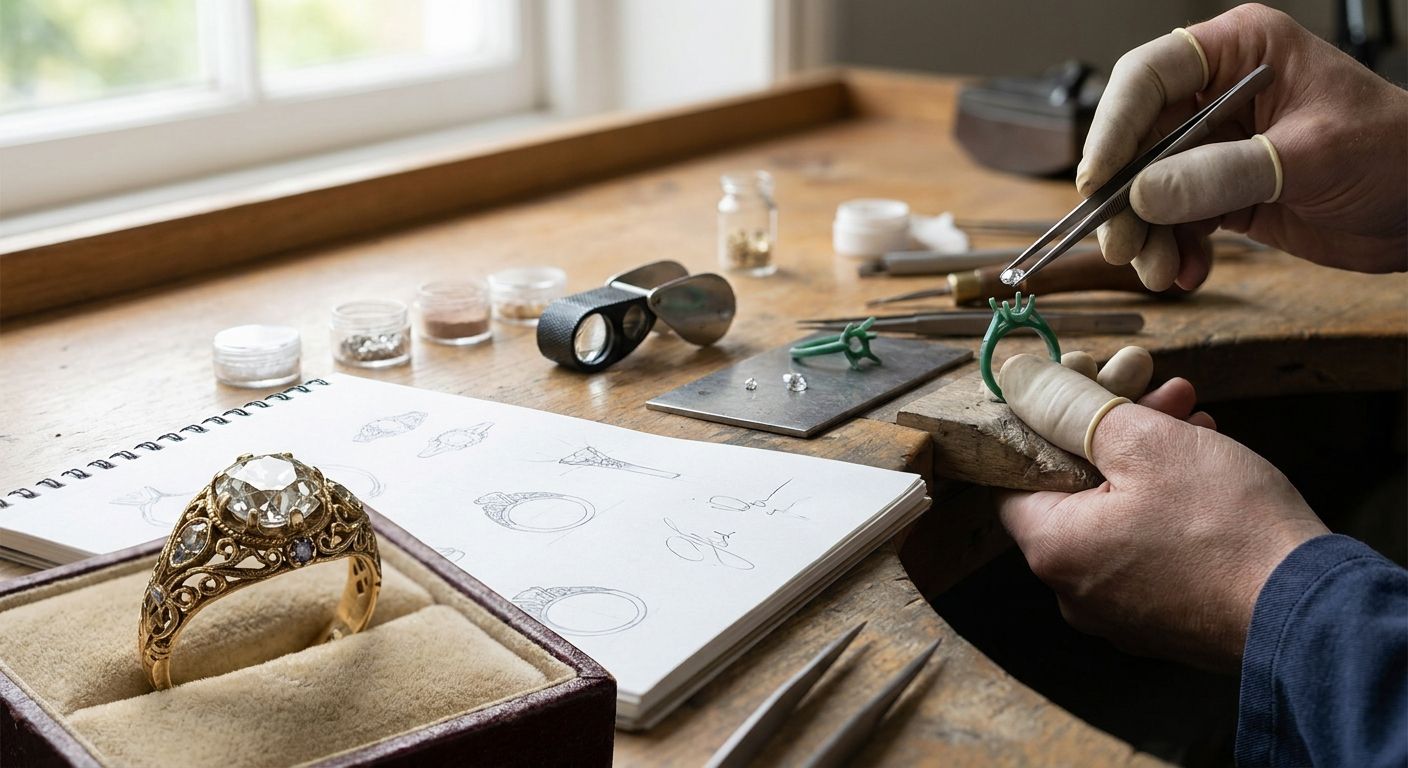
The bespoke pick — custom-built mount. If you already have a cushion cut stone — inherited, reset, or sourced separately — building a custom mount around it lets you dial in prong placement, metal tone, and band width specifically for that stone's proportions instead of forcing it into an off-the-shelf setting. This route takes longer and costs more, but it's the only way to guarantee the prongs actually hug a nonstandard cushion outline. Start that conversation through Element 79's custom engagement ring page. Buy if you have a specific stone or a strong design point of view; Skip if you want to walk out with a ring the same day.
The colorful wildcard — colored gemstone cushion. Cushion cuts aren't just for diamonds. Sapphires, morganites, and even emeralds get cut in cushion shape, and the rounded corners are more forgiving of a colored stone's natural inclusions than a sharp-cornered cut would be. This is a strong 2026 pick for a bride who wants a non-traditional engagement ring without going full alternative-shape. Consider this route if color matters more to you than maximum brilliance; Skip it if you're set on a diamond.
The minimalist's pick — clean solitaire. No halo, no side stones, just a cushion cut center in a simple four- or six-prong mount. This is the setting that puts all the attention on the stone's proportions, which means it only works if the cushion cut itself is well cut — a shallow or lifeless stone has nowhere to hide in a bare solitaire. Buy if your stone has strong light return on its own; Skip if you're not fully sold on the stone yet, since a solitaire won't compensate for a mediocre cut.
See cushion cut rings in person
Book an appointment at the Cherry Creek boutique to compare settings side by side.
What to avoid
- Visible bowtie shadowing. A dark gray band running through the center of the stone under normal light is a cut-quality issue, not something a setting fixes. Walk away or ask for a different stone.
- Ultra-elongated ratios past 1.30. At that ratio the stone starts reading as a rectangle, not a cushion, and it loses the soft-pillow look that's the entire point of choosing this shape.
- Narrow bands under wide stones. A cushion cut wider than about 8mm on a band under 2mm looks unstable and top-heavy, even when the prongs are technically secure. Match band width to stone size, not just style preference.
Cushion cut engagement rings: verdict comparison
| Setting style | Best for | Key spec | Verdict |
|---|---|---|---|
| Halo | Maximum visual sparkle | Adds ~15–20% visual size | Buy |
| Three-stone | Symbolic milestone stories | Side stones at 30–40% of center carat | Buy |
| Custom mount | Nonstandard or inherited stones | Built to exact stone proportions | Buy for a specific stone |
| Colored gemstone cushion | Non-diamond, non-traditional brides | Rounded corners forgive natural inclusions | Consider |
| Clean solitaire | Well-cut stones with strong light return | No halo, no side stones | Buy if the cut is strong |
FAQ
What makes a cushion cut different from a round brilliant?
A cushion cut has a rounded-square or rounded-rectangle outline with fewer, larger facets than a round brilliant, giving it a softer, more vintage-leaning sparkle. Round brilliants use a standardized 58-facet pattern engineered for maximum fire; cushion cuts vary more by cutter.
Is a cushion cut engagement ring more affordable than a round diamond?
Cushion cuts generally cost less per carat than round brilliants of comparable clarity and color because the shape uses more of the rough stone during cutting. The exact savings depend on the specific stone, not a fixed percentage.
What's the best setting for a cushion cut engagement ring?
A halo setting is the safest choice for 2026 because it boosts visual size and frames the rounded corners that a bare solitaire leaves exposed. A clean solitaire works best when the cushion cut already has strong light return on its own.
Do cushion cut diamonds show inclusions more than other shapes?
Cushion cuts tend to hide small inclusions better than step cuts like emerald or asscher because the facet pattern breaks up light more. They can still show a visible bowtie shadow if the cut proportions are off, regardless of clarity grade.
What length-to-width ratio should I look for in a cushion cut?
A ratio between 1.00 and 1.05 gives the classic rounded-square cushion look. Ratios above 1.15 elongate the stone into a softer rectangle, which changes how the ring reads on the hand.
Can cushion cuts work for colored gemstone engagement rings?
Yes — sapphires, morganites, and emeralds are commonly cut in cushion shape, and the rounded corners are more forgiving of a colored stone's natural inclusions than sharper cuts. This makes cushion a strong option for non-traditional engagement rings in 2026.
How do I know if a cushion cut has a bowtie shadow?
Look at the stone under normal indoor light and check for a dark gray band running across the center facet. If it's there in every lighting angle, it's a cut-proportion issue and won't disappear once the stone is set.
One last thing
Cushion cut is one of the oldest diamond shapes still in circulation — it descends directly from the old mine cut popular in the 1800s, which is why it reads "vintage" even in a brand-new setting. If you want that antique character without an antique stone's light performance, ask specifically for a modified brilliant cushion cut rather than a true old-mine reproduction; you'll get the softer outline with 2026-grade sparkle instead of the duller light return old cuts are known for.