Designing a custom wedding band means building the ring around your life, not picking one off a case. This guide walks through the exact sequence Element 79 uses in Cherry Creek, Denver, from first sketch to final casting, so you walk into 2026 with a band that actually fits how you live and wear jewelry.
- Custom wedding band design starts with metal and profile, not stone count -- pick those first.
- A CAD mockup review before casting catches 90% of fit and proportion issues.
- Platinum and 14k gold dominate 2026 custom bands for durability against daily wear.
- Element 79 in Cherry Creek pairs you with a designer for a one-on-one custom build, not a catalog pick.
- Budget 4-8 weeks from first sketch to final ring for most custom band builds in 2026.
Why this matters
A wedding band gets worn every day for decades, which is a different design problem than an engagement ring you show off once. Fit, comfort, and how it sits against your other rings matter more than sparkle. Getting the design process right the first time saves you a resize trip and a second bill. If you're also working on the center-stone piece, the same logic applies -- see how to design a custom engagement ring for the parallel process.
What you'll need
- A reference direction -- pull 3-5 images of bands you like, not 30. Too many references dilutes the design brief.
- Your existing ring or stack -- bring the engagement ring or any rings you plan to wear alongside the band so the designer can check clearance.
- A metal preference -- platinum, 14k, or 18k gold in yellow, white, or rose.
- A budget range -- custom work is priced by metal weight and labor, so a range up front keeps the design realistic.
- 4-8 weeks of lead time -- rush builds happen, but standard custom timelines run this window in 2026.
- An appointment -- most contemporary bridal designers work by consultation, not walk-in purchase.
The steps
1. Define your design vocabulary
Before anyone touches a sketch pad, put a name to your aesthetic: sculptural and organic, clean and architectural, or textured and vintage-inspired. This single decision filters every choice that follows -- setting style, band profile, even which designer's portfolio to start from.
Skipping this step is why so many custom builds stall at revision three. Bring your reference images and name the one you'd keep if you could only pick one. Common mistake: chasing trends instead of your own worn-daily habits -- a band you'll love in 2026 needs to still feel right in 2036.
2. Choose your metal
Metal decides durability, maintenance, and how the band reads next to your skin tone and existing pieces. Platinum resists wear better over decades and holds up against daily knocks; 14k gold is lighter and more affordable per gram. For deeper guidance on this specific fork, see how to choose platinum for an engagement ring band.
Make this call before finalizing the profile shape -- platinum holds finer detail and thinner rails than softer gold alloys, so metal choice changes what design options are even on the table. Common mistake: picking a metal purely on color without checking how it will wear against the metal of your engagement ring.
3. Select the band profile and width
Profile (flat court, comfort fit, knife edge) and width (usually 2mm-4mm for women's bands, 4mm-7mm for men's) determine how the ring feels on the hand all day, every day. A knife-edge profile reads sharp and modern; a comfort-fit rounds the interior for a softer daily feel.
Try on physical samples in these widths before committing -- what looks right in a photo often feels different at hour eight of wear. Common mistake: designing a band too wide to sit flush against a low-set engagement ring, forcing a resize later.
4. Plan the stack fit
If the band pairs with an engagement ring, the two need to sit flush with no gap and no seesaw rocking. This is the step most DIY custom projects skip, and it's the single most common return reason in bridal jewelry.
Bring the engagement ring to this stage of the design process, not after casting. A curved or contoured band shape can be built specifically to hug an existing setting. Common mistake: designing the wedding band in isolation and discovering a 2mm gap at the fitting.
5. Work with a designer on CAD or hand-sketch mockups
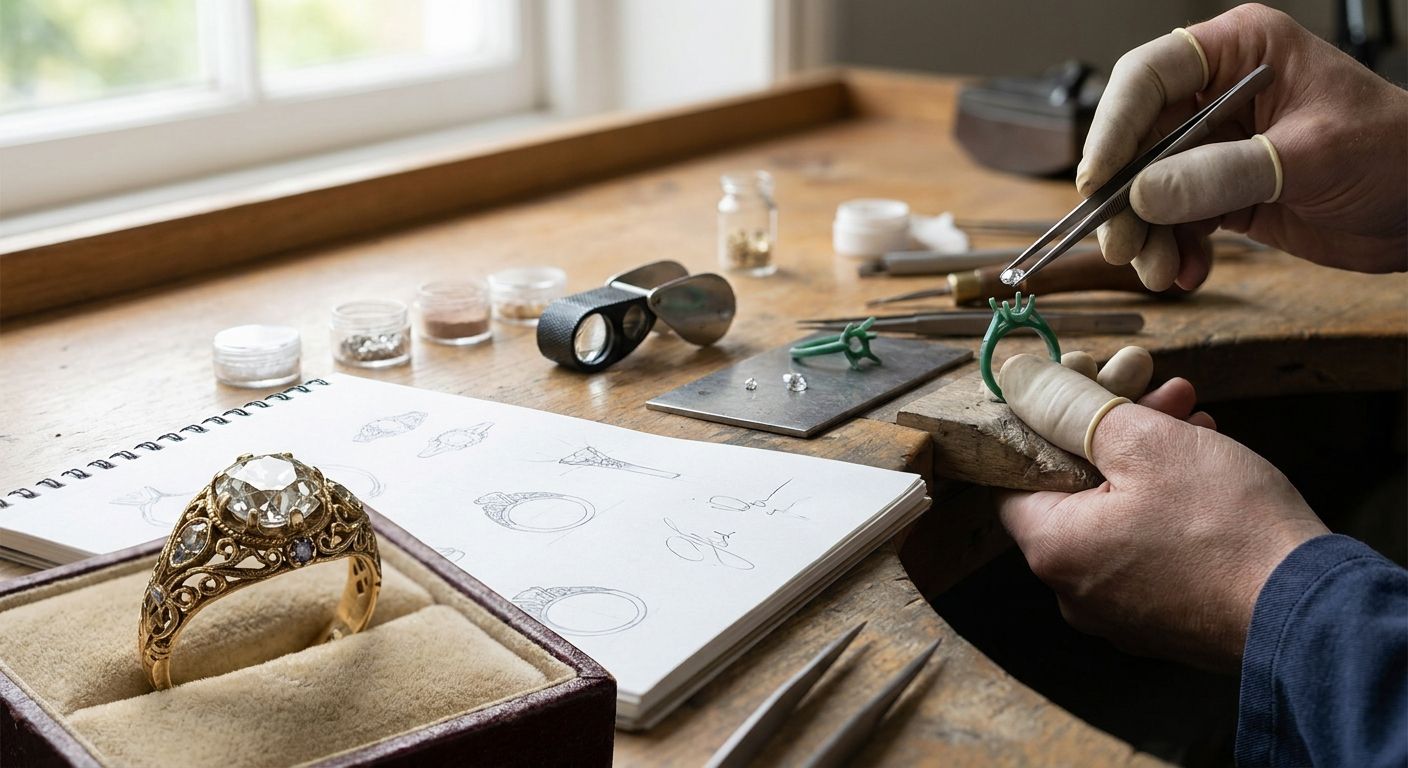
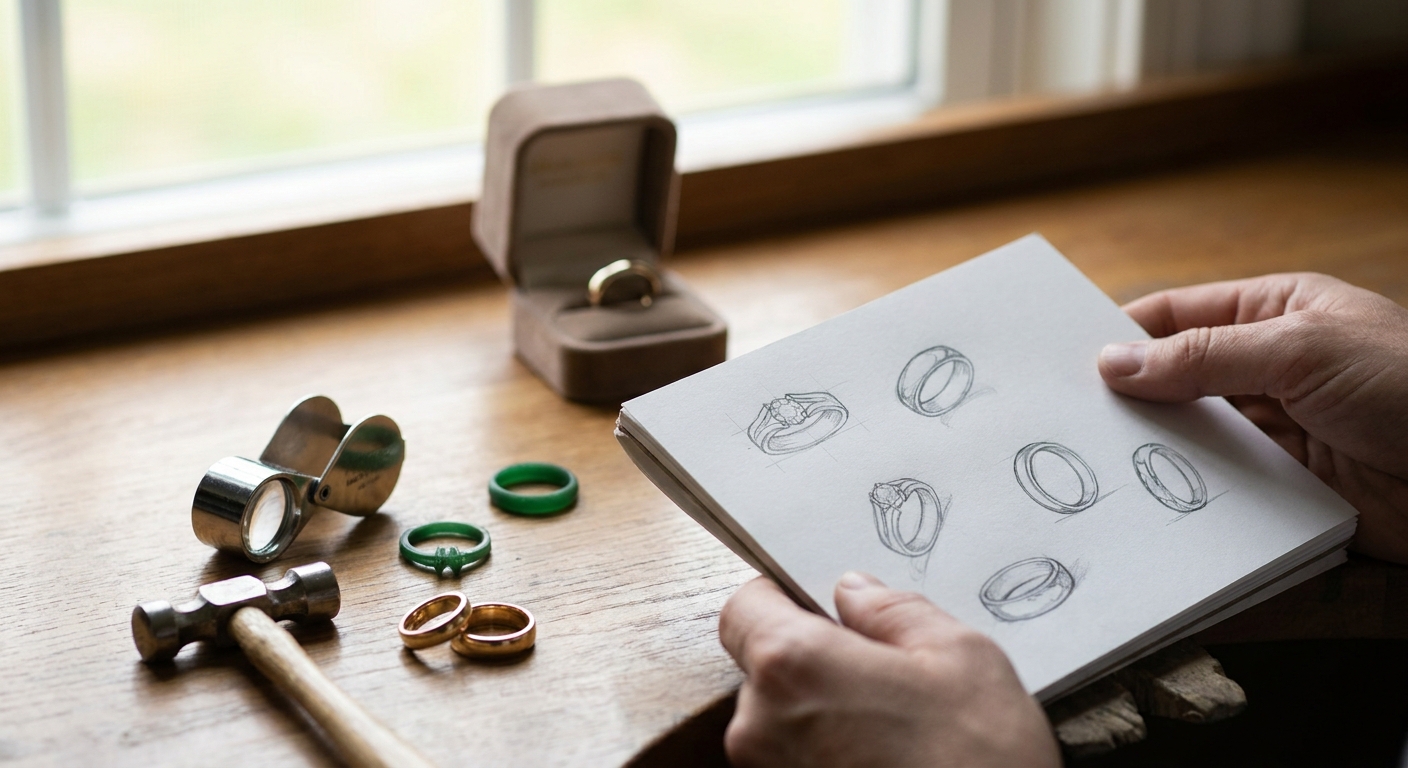
A CAD (computer-aided design) render or wax mockup translates your brief into something you can actually evaluate before metal is cast. This is where texture, engraving, and stone placement -- if any -- get locked in. Element 79's approach pairs you directly with a designer through this stage rather than handing you a generic template.
Ask to see the mockup from at least two angles: straight-on and in profile, since a band that looks balanced from above can look thin or bulky from the side. Common mistake: approving a CAD file without checking it against your actual finger size and shape.
6. Review, revise, approve
Most custom builds get one to two revision rounds before final approval -- more than that usually signals the design vocabulary from Step 1 wasn't locked down. Flag anything that feels off now; changes after casting mean starting the metal work over.
This is also the point to confirm engraving text, if you're adding any, since engraving is done after casting and before final polish. Common mistake: approving under time pressure near a wedding date instead of building in the full 4-8 week runway.
7. Casting, setting, and final fit
Once approved, the ring goes to casting, then any stone-setting, then final polish and sizing. This stage typically runs 2-3 weeks depending on metal and complexity. Expect a final in-person fitting before you take the ring home.
If sizing needs adjusting after the wedding -- fingers change with seasons and years -- a qualified jeweler can resize most designer bands safely; see how to resize a designer ring safely before attempting any fix yourself. Common mistake: assuming all custom bands can be resized the same way -- eternity-style bands with stones set full-circle often can't be resized without redoing the stone work.
Book a custom design consultation
Sit down with a designer in Cherry Creek and start your band from a sketch, not a catalog.
Troubleshooting
- The mockup looks bulkier than expected in person. CAD renders can misrepresent scale on screen -- ask for a 3D-printed resin proof before casting in metal.
- The band and engagement ring won't sit flush. This almost always traces back to skipping the stack-fit step; a contoured or notched band can usually solve it without redesigning the engagement ring.
- Your metal choice changed mid-process. Switching from gold to platinum this late resets the CAD file, since wall thickness and casting specs differ by metal -- expect an added 1-2 weeks.
- The size feels off after a few months. Body temperature, weather, and weight shifts change finger size seasonally; a proper resize fixes this without redesigning the ring.
- You're not sure the designer/brand fits your style. Look at portfolios from a few different contemporary bridal designers before committing -- see the roundup of contemporary bridal designers built for custom rings to compare aesthetics.
- You need a band for a groom, not a bride-to-be. Men's custom bands follow the same steps but usually run wider profiles and heavier metal weights -- see designer wedding bands built for a groom.
Tools and resources
- A jeweler's ring sizer (borrow one at your consultation rather than guessing from an online chart)
- Reference images saved to one folder, capped at 5-8 photos
- Your engagement ring or current stack, brought physically to every fitting
- A written budget range shared with your designer before sketches start
- A calendar buffer of at least 8 weeks before your wedding date
What to do next
Once your custom wedding band design is locked, the next natural step is confirming how it'll be protected and maintained for daily wear -- start with insuring the finished piece before the wedding, since appraisals take time to schedule.
FAQ
How long does custom wedding band design take in 2026?
Most custom wedding band builds take 4-8 weeks from first consultation to final fitting in 2026. Complex stone-set or eternity designs can run longer due to added casting and setting steps.
Is a custom wedding band more expensive than a ready-made one?
Custom bands typically cost more than mass-produced rings because of design labor and one-off casting, though pricing depends heavily on metal weight and complexity. A simple custom platinum band can still land close to a designer ready-made piece.
Can I design a wedding band to match my engagement ring exactly?
Yes -- bringing your engagement ring to the design consultation lets the designer match metal tone, profile curve, and finish so the two sit flush. This is the most common reason couples choose custom over off-the-shelf.
What metal is best for a custom wedding band?
Platinum holds up best against decades of daily wear and resists wearing thin, while 14k or 18k gold offers more color options at a lighter weight. The right choice depends on your engagement ring's metal and your daily activity level.
Do I need to bring my engagement ring to design a wedding band?
Bring it if the two rings will be worn together, since fit-checking the stack before casting prevents a gap or rocking motion later. If you're designing a standalone band, this step isn't necessary.
Can a custom wedding band be resized later?
Most solid-band designs can be resized safely by a qualified jeweler, but full eternity or heavily stone-set bands often can't without redoing the setting. Confirm resizability with your designer during the design phase, not after.
Where can I design a custom wedding band in Denver?
Cherry Creek in Denver has several boutique jewelers offering one-on-one custom bridal design consultations, including studios working with contemporary artisan brands. Book a consultation directly to see design portfolios before committing.
Should I design my wedding band before or after the engagement ring?
Designing them together, or the band shortly after the engagement ring is finalized, gives the most accurate fit match. Designing them years apart still works but requires bringing the engagement ring to the later consultation.
One last thing
The detail that trips up the most couples isn't the metal or the setting -- it's forgetting to test the band against a full day of hand movement before final approval. Wear the CAD-approved wax or resin proof for a few hours if your designer offers it; a profile that photographs beautifully can still feel wrong against a steering wheel or keyboard eight hours in.