Lab-grown diamond engagement rings let a modern budget stretch toward a bigger stone, a better cut, or a designer setting instead of paying a premium for rarity alone. This guide breaks down what to look for, which ring styles work best for the money, and where a custom build beats an off-the-shelf setting.
- Lab-grown diamond engagement rings run 60-70% less than mined equivalents at the same carat and clarity in 2026.
- IGI certification matters more than brand marketing when buying a lab-grown diamond engagement ring.
- A custom setting from Element 79 lets you pair a lab-grown center stone with a designer band from Artemer or Petra Class.
- 1.5 to 2.0 carats is a realistic range for a modern budget without sacrificing cut quality.
- Spinelli Kilcollin stacking bands work well layered next to a lab-grown solitaire.
Why this matters
Mined diamond prices track rarity, not just quality — a 2-carat mined stone can cost four to five times a 1-carat one for a marginal jump in size. Lab-grown diamonds are graded on the same 4Cs (cut, color, clarity, carat) but priced on production cost, so the size-to-price curve is far flatter in 2026 than it was even three years ago.
That shift changes the math for anyone planning a proposal. A couple who could only afford a 0.75-carat mined stone in 2023 can now credibly shop 1.5 to 2.0 carats lab-grown at the same budget, provided the cut and setting are chosen right. Element 79 works with couples on exactly this trade-off through its custom bridal process.
Who this is for
This guide is built for engaged couples and proposers who want a visibly substantial stone without financing a mined diamond over five years. It's for style-conscious buyers who care more about the setting, the metal, and how the ring photographs than they do about the diamond's geological origin — and who want a jeweler who'll walk them through certification instead of just upselling carat weight.
What to look for in a lab-grown diamond engagement ring
Certification from IGI or GIA
A lab-grown diamond without a grading report is a diamond you're buying on trust alone. IGI (International Gemological Institute) and GIA both grade lab-grown stones on the same cut, color, and clarity scale as mined diamonds, and the report number should be laser-inscribed on the stone's girdle. Skip anything sold without a report — that's where budget deals turn into budget regrets.
Cut quality over carat count
A well-cut 1.3-carat stone throws more light and looks bigger than a poorly cut 1.6-carat stone. Because lab-grown diamonds free up budget, buyers often overcorrect toward size and undervalue cut grade — that's the single most common mistake in this category.
Setting style that suits daily wear
A thin pavé band shows wear faster than a solid shank, especially on a hand that's active daily. For choosing a designer engagement ring, match the setting's durability to the wearer's daily routine, not just the photo on Instagram.
Metal choice and skin tone
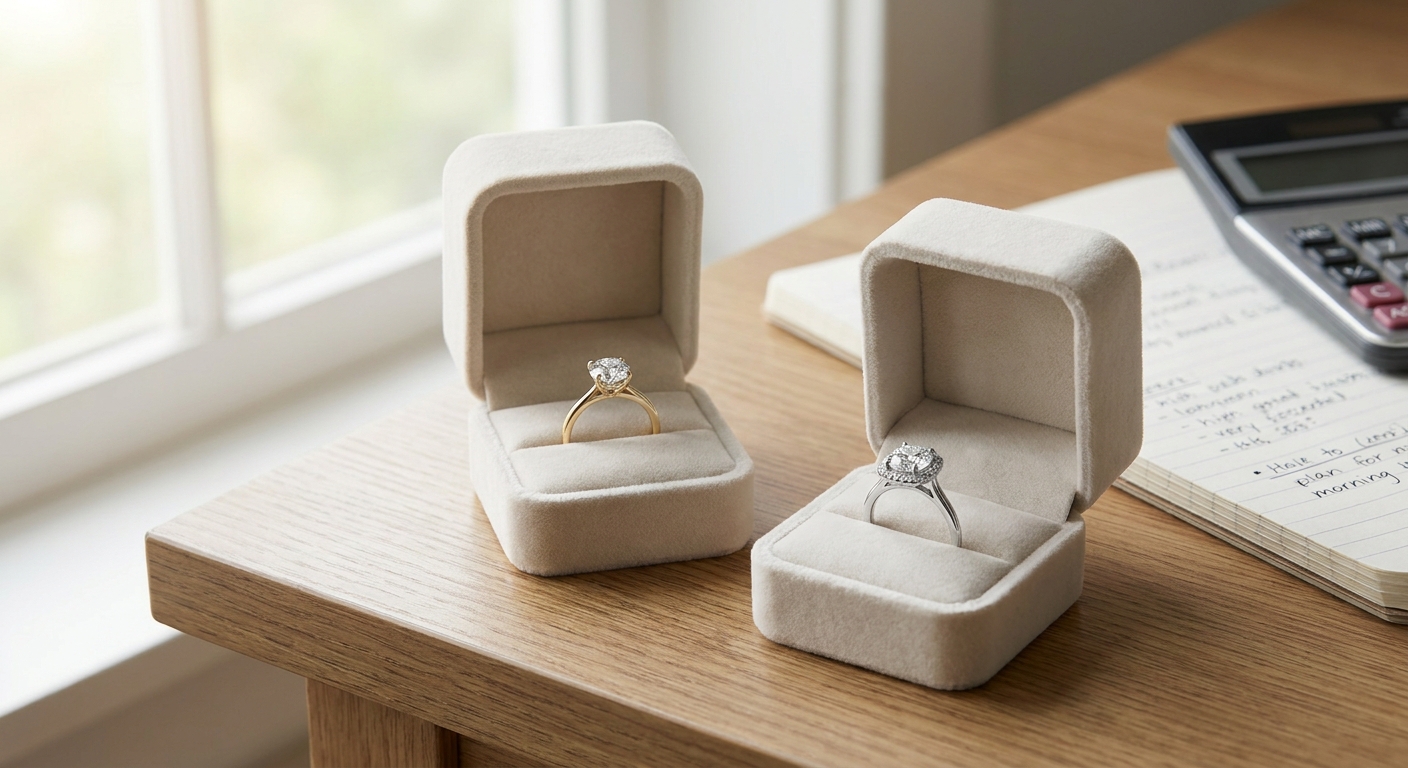
Platinum holds a lab-grown stone more securely over decades than 14k gold but costs more upfront; 18k gold splits the difference. This decision affects long-term maintenance more than it affects the initial price tag, so factor resizing and prong checks into the ownership cost, not just the sticker price.
Center stone shape and hand shape
Oval and emerald cuts read larger per carat than round brilliants, which matters when a modern budget caps carat weight. A round brilliant at 1.5 carats can look smaller on the hand than an oval at 1.3 carats — shape drives perceived size as much as weight does.
Flexibility to go custom
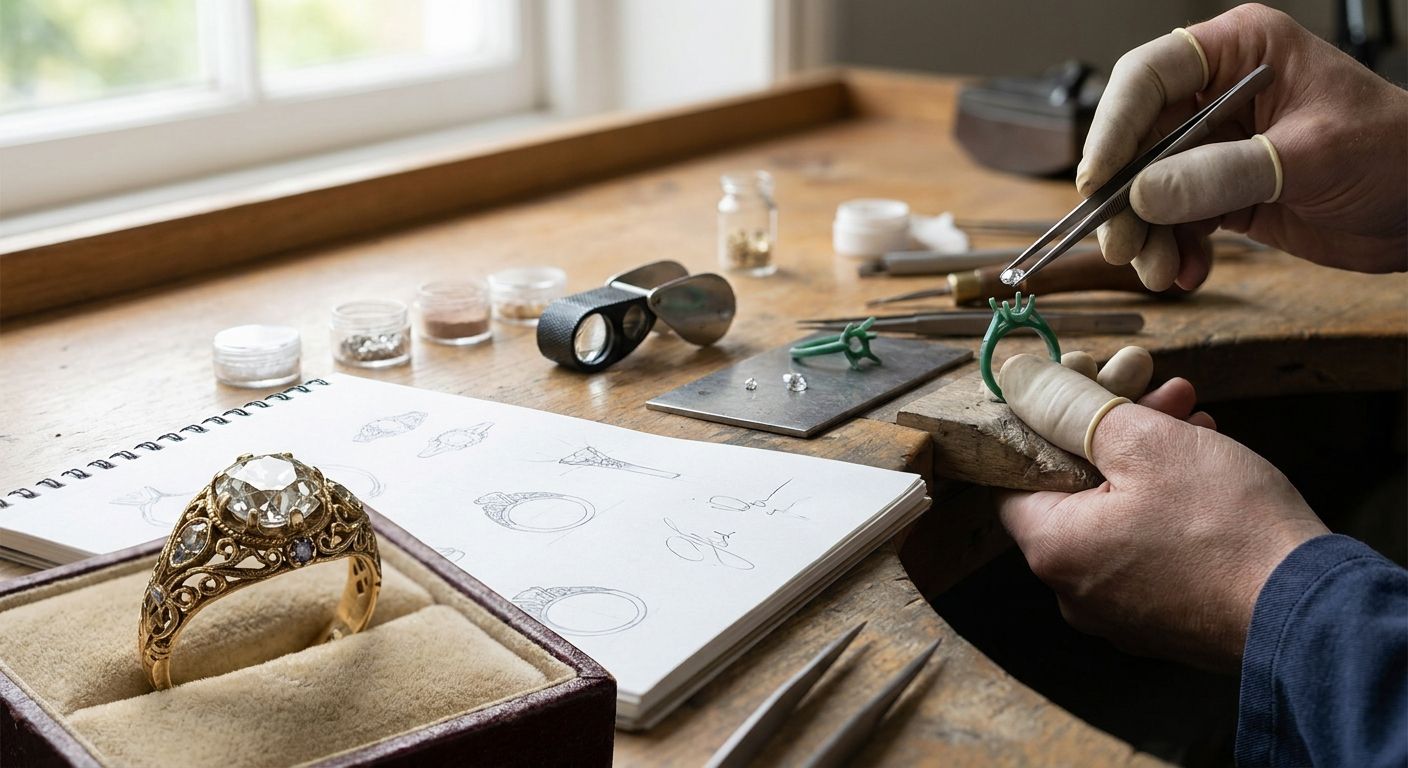
Off-the-shelf settings limit you to whatever carat and shape the retailer stocked. A custom build lets the stone and setting get chosen independently, which matters most when the budget is fixed and every carat needs to earn its place.
Start your custom ring design
Work through stone, setting, and metal with Element 79 before you commit.
Top picks for a modern budget
The Foundation Solitaire — the safe pick
A single lab-grown round or oval stone set solo on a solid shank. The spec that matters: a 1.5-carat lab-grown solitaire in a well-cut oval typically reads closer to a 1.8-carat round on the hand. Building this through a custom engagement ring design process means the shank width, prong count, and metal all get matched to the wearer's lifestyle instead of a factory default. Buy — this is the pick that ages well and resizes cleanly for decades.
The Modern Stack — the wildcard
Instead of one dominant stone, a lab-grown center ring gets layered with two or three slim contour bands. Spinelli Kilcollin's interlocking styles are built for exactly this kind of stacking, and the effect reads more architectural than traditional. The trade-off: stacked rings need periodic realignment so the bands don't twist against each other. Consider — great for a bride who wants texture over a single statement stone, less ideal if daily upkeep isn't appealing.
The Colorful Compromise — the budget stretcher
A smaller lab-grown center stone flanked by sapphire or emerald side stones cuts the diamond carat weight needed while keeping the ring visually rich. This works because colored side stones cost a fraction of an equivalent diamond accent and draw the eye outward, making the center stone look larger by contrast. Buy — this is the pick for buyers who want color and want their budget to go further per square millimeter of sparkle.
The Second Chance Ring — for a second engagement
For a second marriage, a lab-grown diamond in a fresh, non-traditional setting sidesteps the emotional weight of replicating a first ring. Vintage-inspired halos or asymmetrical settings signal a deliberate new chapter rather than a copy of what came before. Consider — the right call when the couple wants distance from convention, not a repeat of tradition.
What to avoid
- Ultra-thin pavé bands under $1,000 marketed as lab-grown deals — the diamond savings get eaten by prongs that wear out in 18-24 months of daily wear.
- Uncertified lab-grown stones sold below market rate — no IGI or GIA report means no way to verify carat, cut, or clarity claims after purchase.
- Oversized carat weight in a poor cut — a 2-carat stone with a shallow cut leaks light out the bottom and looks glassy instead of bright, no matter how the price tag reads.
Verdict comparison
| Pick | Best for | Carat sweet spot | Verdict |
|---|---|---|---|
| Foundation Solitaire | Traditional proposal, long-term resize flexibility | 1.3-1.8 ct | Buy |
| Modern Stack | Layered, architectural look | 0.8-1.2 ct center | Consider |
| Colorful Compromise | Stretching budget with color | 0.8-1.2 ct center | Buy |
| Second Chance Ring | Second engagement, non-traditional setting | 1.0-1.5 ct | Consider |
FAQ
What's the best lab-grown diamond engagement ring for a modern budget in 2026?
A custom-built solitaire with a 1.3 to 1.8 carat well-cut oval or round lab-grown stone offers the best balance of visible size and long-term durability in 2026. Pairing it with a solid platinum or 18k gold shank keeps resizing and prong maintenance manageable for decades.
Is a lab-grown diamond as good as a mined diamond?
Lab-grown diamonds are chemically, optically, and structurally identical to mined diamonds and are graded on the same 4Cs scale. The only real difference is origin, which shows up in price, not in how the stone looks or wears.
How much less do lab-grown diamond engagement rings cost in 2026?
Lab-grown diamond engagement rings typically cost 60 to 70% less than a mined diamond of the same carat, cut, and clarity in 2026. That gap has widened slightly year over year as lab-grown production has scaled.
Can Element 79 create a custom lab-grown diamond engagement ring?
Yes, Element 79's custom bridal process lets couples choose a lab-grown center stone and pair it with a designer setting from brands like Artemer, Orly Marcel, Spinelli Kilcollin, or Petra Class. The process works through stone selection, setting style, and metal together rather than starting from a fixed catalog piece.
Do lab-grown diamonds hold their value?
Lab-grown diamonds depreciate faster on resale than mined diamonds because production costs continue to fall, which pushes new-stone prices down over time. Most buyers treat this as a non-issue since engagement rings are rarely bought as resale investments.
What carat size is realistic on a modern budget?
1.5 to 2.0 carats is achievable for many modern budgets with a lab-grown stone, versus 0.5 to 0.75 carats at the same price point for a mined diamond. Shape choice matters here too — an oval or emerald cut reads larger per carat than a round brilliant.
How do I know a lab-grown diamond is certified?
Check for a laser-inscribed report number on the stone's girdle that matches an IGI or GIA grading report. Any lab-grown diamond sold without this documentation should be treated as a red flag, regardless of the price.
Are lab-grown diamonds ethical?
Lab-grown diamonds avoid the mining supply chain entirely, which sidesteps the sourcing concerns tied to some mined diamonds. Buyers still comparing origin should ask their jeweler for the stone's growth facility and certification details directly.
One last thing
The carat-versus-cut trade-off is where most modern-budget buyers get it backward in 2026 — a 1.4-carat stone with an excellent cut grade will out-sparkle a 1.8-carat stone with a good cut grade in almost every lighting condition, and it costs less. Ask for the cut grade before the carat weight next time you're stone shopping.