Diamond clarity grade decides whether the inclusions inside your stone stay invisible forever or show up the moment you catch sunlight from across the room — and getting the grade wrong means either overpaying for clarity nobody will notice or settling for a stone that reads cloudy under the chandelier at your own reception. This guide walks through the GIA clarity scale step by step, so you land on the grade that actually fits your shape, your setting, and your budget in 2026.
- VS1 and VS2 diamond clarity grades read eye-clean on round and cushion cuts at 2026 pricing — buy here first.
- SI1 works fine on brilliant cuts but skip it on emerald and asscher shapes, where inclusions hide less.
- FL and IF grades cost 20-40% more with zero visible difference to the naked eye unless resale value matters to you.
- A halo or pave setting from a brand like Artëmer hides more than a solitaire, so you can drop a full clarity grade and pocket the difference.
- Never buy above SI2 without a GIA or AGS certificate in hand — no cert, no purchase.
Why this matters
Clarity grade is the line item that swings a diamond's price the most without changing how it looks to anyone standing more than a foot away. Two stones at the same carat weight and color can differ by thousands of dollars purely on clarity, and most of that gap buys invisibility under a jeweler's 10x loupe — not visibility to your eye.
Get the grade wrong in the other direction, though, and you end up with a stone that shows a dark inclusion right under the table facet, visible in every engagement photo taken in 2026 and beyond. The goal isn't the highest grade. It's the lowest grade that still looks flawless to a normal human eye at arm's length.
What you'll need
- A decided diamond shape (round, oval, emerald, cushion, pear, etc.) — clarity tolerance changes by shape
- A GIA or AGS diamond grading report, not a store appraisal alone
- A rough budget ceiling before you start comparing grades
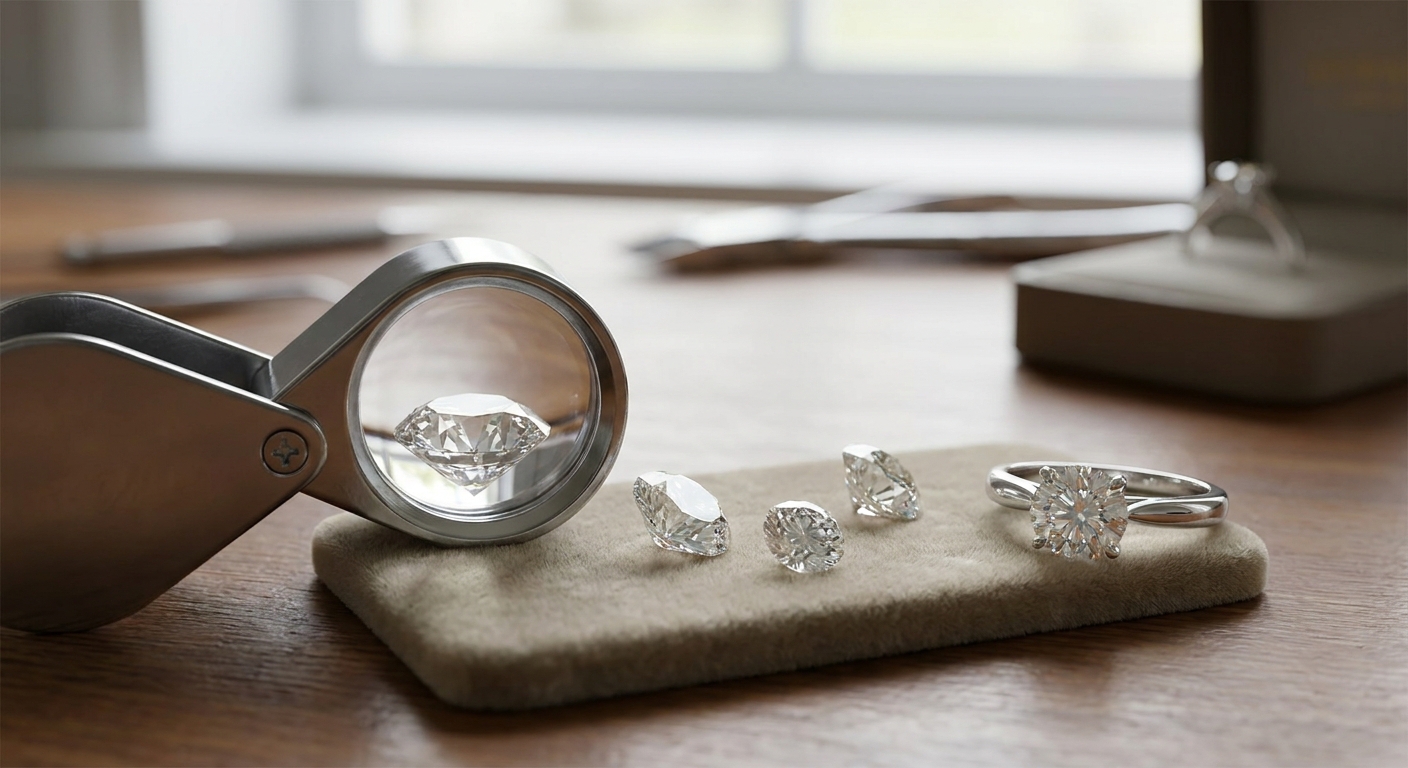
- Access to a jeweler's loupe or a trusted associate who can check the stone under magnification
- A sense of your setting style — halo, pave, and bezel settings hide more than a plain solitaire
- 20-30 minutes to compare two or three grade tiers side by side before deciding
The steps
1. Learn the clarity scale in order
GIA's scale runs FL (Flawless), IF (Internally Flawless), VVS1 and VVS2 (Very Very Slightly Included), VS1 and VS2 (Very Slightly Included), SI1 and SI2 (Slightly Included), and I1 through I3 (Included). Each step down means inclusions get larger or more numerous under 10x magnification — not necessarily visible to your naked eye.
Most buyers in 2026 never need anything above VS2. Above that grade you're paying for microscope-level perfection that a jeweler's loupe barely catches, let alone a dinner guest.
2. Match clarity to your diamond shape
Brilliant-cut shapes like round, cushion, and princess scatter light in a way that camouflages small inclusions — an SI1 in a round brilliant often reads perfectly clean. Step-cut shapes like emerald and asscher have long, flat facets that act like a window straight into the stone, so inclusions that would hide in a round cut become obvious.
If you're set on an emerald or asscher shape, budget for VS2 or higher. If you're going round, oval, or cushion, SI1 is often the sweet spot — read more on how gemstone shape shifts your buying priorities if you're still deciding between diamond and colored stone.
3. Set your eye-clean threshold and budget ceiling
Decide upfront what you're optimizing for: the largest carat weight your budget allows, or the cleanest possible stone. You usually can't max both. Dropping one clarity grade — say VS2 to SI1 — typically frees up 10-15% of your budget to put toward carat weight or a better color grade instead.
This is also where you should compare against your color grade decision, since diamond color grade and clarity grade trade off against the same budget pool.
4. Check the plot report for inclusion location
Every GIA report includes a plot diagram showing exactly where inclusions sit inside the stone. A small inclusion near the girdle, hidden under a prong once set, matters far less than the same size inclusion sitting dead-center under the table.
Ask to see the plot before you commit to a grade on paper alone. Two SI1 diamonds can look completely different once you know where the flaw actually lives.
5. Factor in the setting's hiding power
A halo setting surrounds the center stone with smaller diamonds, which visually distracts the eye from minor inclusions in the main stone. A bezel setting covers part of the stone's edge, which can hide inclusions near the girdle entirely. A plain four-prong solitaire, by contrast, puts the stone fully on display with nothing to soften it.
If you're leaning toward a design-forward setting from a brand like Artëmer or Spinelli Kilcollin, you can often drop a clarity grade without anyone noticing, because the design itself does some of the visual work.
6. Verify the certificate before you buy
GIA and AGS are the two labs with reputations for consistent, conservative grading. Reports from lesser-known labs run looser — a stone graded VS2 by an off-brand lab can look closer to SI1 or SI2 in person. Cross-check the report number on GIA's or AGS's own database before finalizing.
If the seller can't produce a certificate at all, walk away regardless of what grade they claim. This step matters more than any other on this list.
7. Compare price jumps between adjacent grades
Price differences between clarity grades aren't linear — the jump from SI2 to SI1 is usually smaller than the jump from VS2 to VS1, and the jump from VVS2 to VVS1 can be the smallest of all because so few buyers can tell the difference. Lay out three adjacent grades side by side with pricing before you decide, rather than picking a grade in isolation.
8. Make the final call and lock the grade
Once you've matched shape, setting, and budget, commit to the grade and stop second-guessing under different lighting. A stone that looks clean under your jeweler's loupe and clean to your naked eye in daylight is clean enough — full stop.
Compare clarity grades in person
See VS2 and SI1 diamonds side by side at the Cherry Creek boutique.
Troubleshooting
- The stone looks cloudy in daylight but clean indoors. This usually points to a milky or hazy inclusion type rather than a pinpoint — ask your jeweler specifically about clarity type, not just grade, since two SI1 stones can look different.
- A dark inclusion shows under the table facet. Check the plot report before buying — a table-facing inclusion at any grade below VS1 is a resale and everyday-wear risk. Move to a different stone.
- The seller won't provide a GIA or AGS certificate. Do not buy the stone regardless of the claimed grade. A report from an unrecognized lab is not a substitute.
- Your budget doesn't stretch to VS2 at the carat weight you want. Drop clarity one grade before dropping carat weight — an eye-clean SI1 in a bigger stone reads better than a smaller VS2 in most rooms.
- An inclusion sits directly under where a prong will sit. This is actually good news — ask your jeweler to orient the setting so the prong covers it, which is a common, legitimate move on stones in the SI range.
- Two stones with the same grade look different in person. Grades within SI1 or SI2 have a wide range — always view the actual stone or its plot, never buy on grade alone.
Tools and resources
- GIA report verification tool (check the report number directly on GIA's site)
- A 10x jeweler's loupe, either your own or one your jeweler provides during a viewing
- The stone's official plot diagram, requested before purchase
- How to get a jewelry appraisal for insurance once your stone is set and ready to wear
- Your jeweler's willingness to show you two or three grade tiers side by side, not just the one they're pushing
What to do next
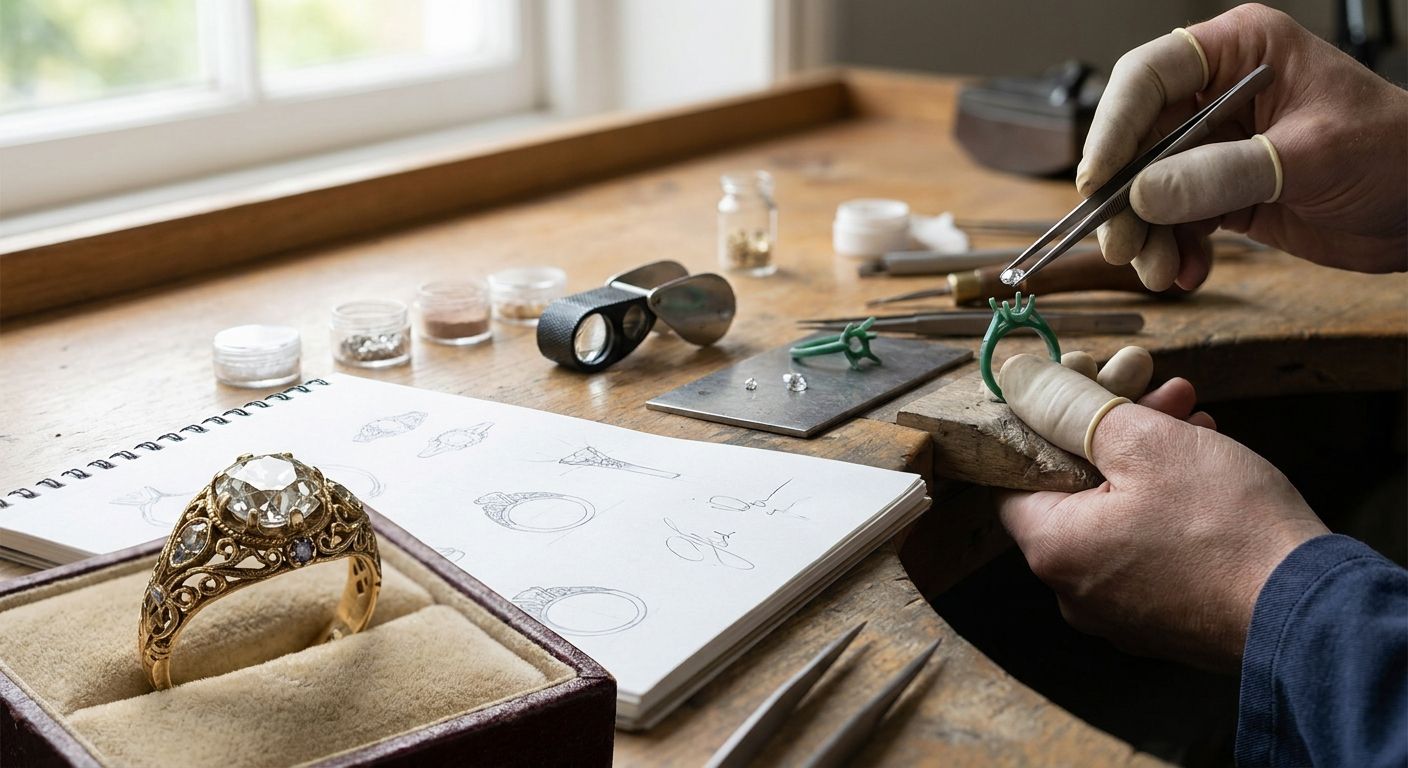
Once you've settled on a clarity grade, the next decision is how the stone gets set. If you're building the ring from scratch rather than buying off the case, walk through how to design a custom engagement ring to see how setting style, metal, and stone orientation come together around the clarity grade you've chosen.
FAQ
What is the best diamond clarity grade for an engagement ring?
VS1 or VS2 is the best diamond clarity grade for most engagement rings in 2026 — both read eye-clean on round, oval, and cushion cuts at a meaningfully lower price than VVS or FL grades.
Is SI1 clarity good enough for a diamond ring?
SI1 is good enough for brilliant-cut shapes like round and cushion, where the facet pattern hides small inclusions. Skip SI1 on emerald or asscher cuts, where the flat facets expose flaws more easily.
Can you see inclusions in an SI2 diamond with the naked eye?
Some SI2 diamonds show visible inclusions to the naked eye, especially in step cuts or under close inspection. Always view the plot report and the actual stone before buying at this grade.
Does clarity grade matter more than color grade?
Neither matters more universally — clarity affects whether flaws are visible, while color affects whether the stone looks warm or icy white. Most buyers balance both against a shared budget rather than maximizing one.
What's the difference between VVS1 and VVS2 clarity?
VVS1 inclusions are harder to find under 10x magnification than VVS2 inclusions, but both are invisible to the naked eye. The price difference between the two rarely justifies the upgrade for most buyers.
Should you buy a diamond without a GIA certificate?
No — buy only diamonds with a GIA or AGS certificate for any purchase above SI2 clarity. Uncertified stones or reports from unrecognized labs often grade looser than the stone actually deserves.
Does the setting affect what clarity grade I need?
Yes — halo, pave, and bezel settings distract the eye or physically cover parts of the stone, letting you drop a clarity grade without a visible difference. A plain solitaire shows the stone fully, so it needs a cleaner grade.
How much does clarity grade affect diamond price in 2026?
Clarity grade can shift price by 10-40% between adjacent tiers depending on carat weight and shape, with the FL-to-IF and VVS1-to-VVS2 jumps typically smallest since so few buyers can tell the difference.
One last thing
Most jewelers won't tell you this outright, but the plot report matters more than the letter grade printed at the top of the certificate. Two stones graded SI1 can differ enormously depending on whether the inclusion sits under the table or hides near the girdle where a prong will cover it in 2026 as much as any year before it — ask to see the plot before you ask about the price.
If the inclusion sits where a prong can cover it, the grade on paper stops being the whole story.