Moissanite reads brighter under light than a mined diamond of the same size, and it costs a fraction as much per carat — which is why more engaged couples ask about it before they ever book a bridal appointment in 2026. This guide covers who should actually buy moissanite engagement rings, what separates a sharp-cut stone from a flat one, and why Element 79's custom design process is often the better path than a stock ring.
- Moissanite hits 9.25 on the Mohs scale, tough enough for daily engagement ring wear in 2026.
- Its dispersion rating of 0.104 beats a diamond's 0.044 — that extra fire is the whole selling point.
- Round brilliant and cushion cuts hide moissanite's rainbow flash best; oversized step cuts show it.
- Custom bridal design, not a stock ring, is the smarter path to a moissanite center stone done right.
- Skip stones sold as colorless with no lab certificate — tint often shows up outdoors, not indoors.
Why this matters
Diamond prices held stubborn through most of the last decade, and moissanite closed the brilliance gap without closing the price gap. Its refractive index of 2.65 to 2.69 beats a diamond's 2.42, and a dispersion rating of 0.104 against diamond's 0.044 is the technical reason moissanite throws more rainbow "fire" in direct light. Start with how to choose a gemstone for an engagement ring if you're still weighing moissanite against a colored stone or a mined diamond.
The tradeoff is real. Moissanite isn't a diamond, it photographs differently under mixed lighting, and a badly cut stone can look obviously synthetic under fluorescent light. Know both sides before you shop in 2026.
Who moissanite engagement rings are actually for
Moissanite fits three buyer profiles well: budget-conscious couples who want a bigger-looking center stone without the diamond price tag, style-conscious brides who care more about sparkle than brand-name provenance, and second-marriage or non-traditional couples who never wanted a conventional diamond in the first place.
If resale value or formal diamond certification matters more to you than size or fire, moissanite is the wrong stone. Couples chasing color instead of colorless brilliance should look at a gemstone route entirely rather than a diamond substitute.
What to look for in a moissanite engagement ring
Cut quality over carat size
Moissanite's extra fire is a strength until the cut is wrong. A round brilliant or cushion cut disperses that rainbow flash evenly across the surface, while a step-cut emerald or asscher shows it in flat, distracting flashes that can read cheap under bright light. For a ring worn every day, cut quality matters more than chasing an extra half-carat.
Color grade under real light
Modern moissanite is graded on a near-colorless scale similar to diamonds, but even top-grade stones can pick up a faint green or yellow cast outdoors under direct sun. Ask to see the exact stone under both indoor LED lighting and daylight before buying — tint that's invisible in a store shows up on an engagement photo shoot.
Setting metal and prong style
Moissanite's warmth pairs better with yellow or rose gold than with the coolest white metals, where any faint tint becomes more visible by contrast. A six-prong setting protects the girdle on a stone worn daily far better than a thin bezel, which chips more easily at the edges after years of wear.
Everyday durability
At 9.25 on the Mohs hardness scale, moissanite sits just below diamond's 10 and above sapphire's 9 — hard enough for daily wear without babying it. It resists scratching from normal contact with countertops or gym equipment, though a hard direct hit can still chip any faceted stone, moissanite included.
Certification and stone sourcing
Lab-grown moissanite should come with a grading document the same way a diamond does. GIA doesn't grade moissanite, so look for a Charles & Colvard certificate or an equivalent report stating cut, color, and clarity. A seller who can't produce paperwork on a stone's origin is a red flag regardless of price.
Design your own center stone
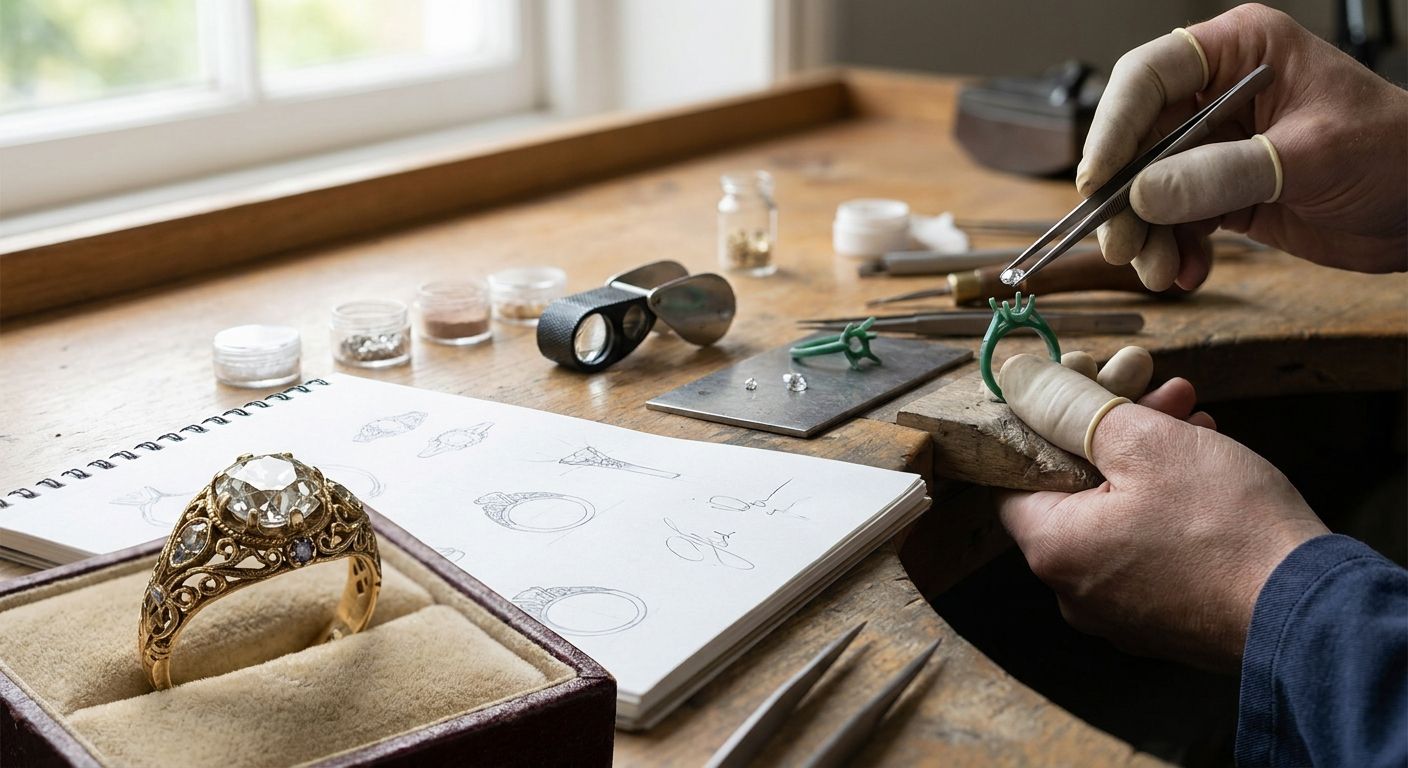
Element 79's bridal team builds custom settings around the stone you choose.
Top picks for a moissanite engagement ring in 2026
Element 79 doesn't stock loose moissanite off a shelf — its bridal work runs through custom design, which is actually the better path for a stone this dependent on cut and setting. Here's how the options break down.
The Budget Stretch pick
This is the pick for couples chasing size over brand name. A round brilliant moissanite cut to a diamond-equivalent look runs well under a comparable mined diamond's price per carat, and the extra dispersion reads as more sparkle, not less. Built into a custom setting through Element 79's custom engagement ring process, you control the metal and prong style instead of settling for a stock mount. Buy if size and daily sparkle matter more to you than resale value.
The Colorful Statement pick
For couples who never wanted a plain white stone at all. Pairing a moissanite center with a colored gemstone halo — sapphire blue or emerald green — cuts the visible-tint risk because the eye reads the halo color first. Gemstone engagement rings built for a colorful proposal follow the same design logic without a moissanite center at all, worth comparing before you decide. Consider if color matters as much as sparkle to you.
The Vintage-Inspired pick
The pick that hides tint best. A cushion-cut moissanite set in a milgrain, hand-engraved band mutes any faint yellow cast because vintage settings lean on warmer metal tones by design. It's a slower custom build than a plain solitaire, so budget extra weeks for engraving and hand-finishing. Consider if you're not racing a tight proposal deadline.
The Classic Solitaire pick
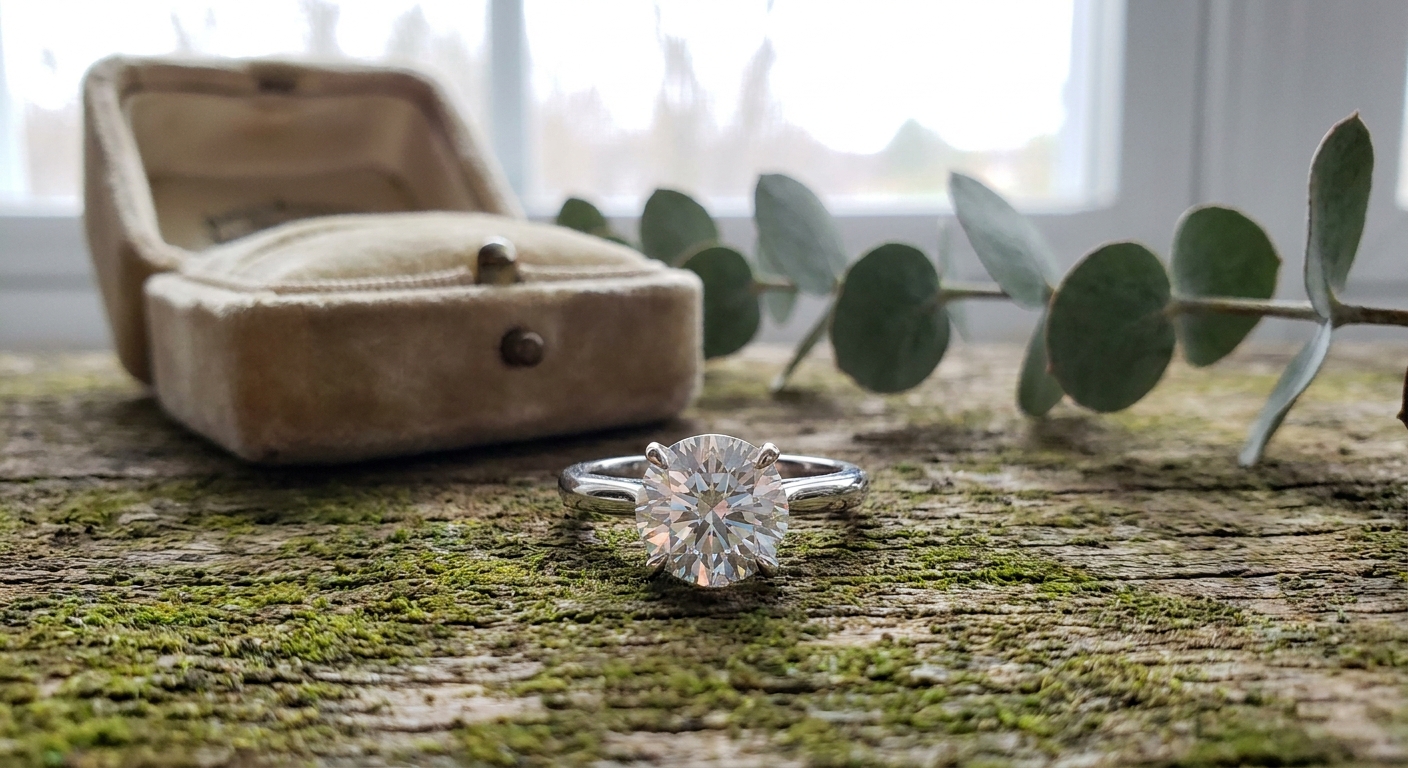
The safest, most diamond-like option on this list. A round brilliant moissanite solitaire in a simple six-prong setting is the closest visual match to a traditional diamond ring, and it's the easiest to resize later without disturbing a halo or side stones. Compare it against a non-traditional colored stone like sapphire before finalizing — the two sit close in price but read completely differently on the hand. Buy for couples who want the diamond look without the diamond bill.
What to avoid
- "Colorless" claims with no lab report. A seller who calls a stone colorless without a Charles & Colvard or equivalent certificate is guessing, and you're the one who finds out under daylight.
- Oversized step cuts. Emerald and asscher cuts above roughly 2 carats show moissanite's extra fire as distracting flashes instead of clean sparkle — round and cushion cuts age better.
- Ultra-thin pave bands. A band built for a diamond's lower dispersion can look busy competing with moissanite's extra fire, and thin metal wears down faster under daily 2026-level use.
The verdict, side by side
| Pick | Cut | Best Metal | Daily Durability | Verdict |
|---|---|---|---|---|
| Budget Stretch | Round brilliant | Yellow or rose gold | High | Buy |
| Colorful Statement | Round brilliant + halo | White or rose gold | High | Consider |
| Vintage-Inspired | Cushion | Rose or yellow gold | High | Consider |
| Classic Solitaire | Round brilliant | Any, six-prong | High | Buy |
FAQ
What's the best cut for a moissanite engagement ring?
Round brilliant and cushion cuts are the best choice for moissanite in 2026 because they spread the stone's extra fire evenly instead of flashing in flat blocks. Step cuts like emerald or asscher tend to expose that fire in distracting patches once the stone passes about 2 carats.
Is moissanite cheaper than a diamond engagement ring?
Yes, moissanite costs significantly less per carat than a comparable mined diamond, which is the main reason couples choose it in 2026. The savings come from moissanite being lab-created rather than mined, not from lower durability.
Does moissanite look fake next to a diamond?
A well-cut, properly graded moissanite does not look obviously fake next to a diamond, though it throws more rainbow fire under direct light. Poorly cut or low-grade stones are the ones that read synthetic, which is why cut and certification matter more than size.
How hard is moissanite compared to a diamond?
Moissanite rates 9.25 on the Mohs hardness scale, just below a diamond's 10 and above sapphire's 9. That makes it hard enough for daily engagement ring wear without special care beyond normal cleaning.
Can Element 79 build a custom moissanite engagement ring?
Element 79's custom bridal design process starts with choosing a center stone, and that conversation can include moissanite alongside colored gemstones and diamonds. Book a consultation to discuss sourcing and setting options directly with the design team.
Does moissanite turn yellow over time?
A properly graded moissanite does not change color with wear, but lower-grade stones can show a faint yellow or green tint outdoors that wasn't visible under indoor lighting at purchase. Checking the stone in daylight before buying avoids this surprise.
Is moissanite better than cubic zirconia?
Moissanite outperforms cubic zirconia on both hardness and brilliance — it rates 9.25 on the Mohs scale versus cubic zirconia's roughly 8, and it holds its polish far longer under daily wear. Cubic zirconia is a lower-cost alternative, but it clouds and scratches faster over years of use.
How much does a moissanite engagement ring cost?
Moissanite engagement rings cost a fraction of a comparable mined diamond ring per carat, with the exact price depending on cut, size, and setting metal. Custom settings add to the base stone cost, so get a specific quote once you've chosen a design.
One last thing
Henri Moissan first identified silicon carbide crystals in a meteorite from Arizona's Canyon Diablo crater in 1893, decades before anyone figured out how to grow it in a lab for jewelry. Every moissanite stone sold in 2026 is lab-created, not mined, which is exactly why it costs so much less than a diamond of comparable size while still outperforming it on fire.