Picking a durable engagement ring setting for daily wear comes down to three decisions: metal, setting style, and stone shape — get those right and the ring survives a decade of dishes, gym sessions, and typing without needing constant repair.
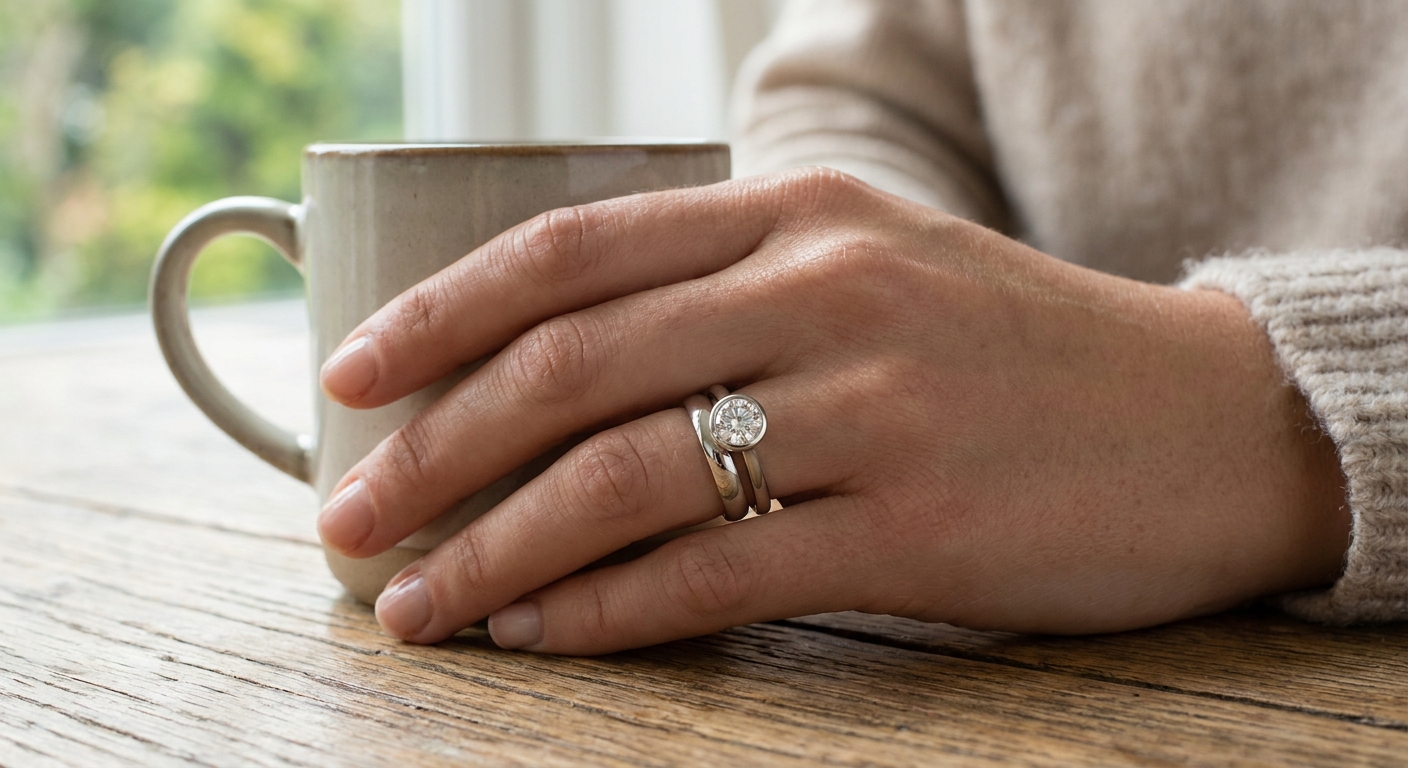
- A durable engagement ring setting for daily wear favors bezel or six-prong styles over high four-prong heads.
- Platinum holds a stone tighter over 10+ years than 18k white gold, even though gold shows less wear-patina initially.
- Round and oval stones chip less than pear or marquise shapes because they have no exposed pointed tips.
- Recessed halo settings shield the girdle of the center stone from daily knocks — buy this over an exposed solitaire if you work with your hands.
Why this matters
A ring worn 8 to 10 hours a day for years takes more abuse than any other piece of jewelry you own. Diamonds rank a 10 on the Mohs hardness scale, sapphires and rubies sit at 9, and emeralds drop to 7.5-8 — meaning an emerald center stone chips against a granite countertop far sooner than a diamond will. If you haven't settled on a stone yet, how to choose a gemstone for an engagement ring walks through hardness and durability trade-offs before you commit to a setting.
The setting matters as much as the stone. A high prong head looks brilliant in photos but catches on sweaters, gloves, and gym equipment. A flush or bezel setting sits lower against the finger and takes the daily hits the metal was built for instead of the stone. Element 79 sees this trade-off constantly with engaged couples choosing between showpiece rings and rings meant to live on the hand every day of 2026 and beyond.
What you'll need
- Your finger size, measured at the end of the day when fingers are slightly swollen
- A clear read on your daily hand use — manual work, gym, frequent hand-washing, an office desk
- A metal preference: platinum, 18k white gold, 18k yellow gold, or 14k gold
- A stone or stone type already chosen, or a willingness to let setting durability guide the stone choice
- 30-45 minutes with a jeweler who can show you setting samples in person, not just photos
The steps
1. Audit how your hands actually work
This step accomplishes the whole ring decision before you look at a single setting. Write down every activity your dominant hand does in a normal week: typing, lifting weights, gardening, cooking, playing an instrument. A surgeon or potter needs a completely different setting than someone at a desk job. Common mistake: buying the ring you saw on Instagram before checking whether it survives your actual Tuesday.
2. Match the metal to how long you want between repolishing
Platinum is 95% pure metal (typically alloyed with ruthenium), which means it doesn't lose material the way gold does — it displaces under impact instead of shaving off. Because prongs bend and worn edges dull over years of daily wear, platinum's density holds a stone tighter for longer stretches between jeweler visits. 18k gold is only 75% pure gold and wears down faster at the prong tips, though it costs less to maintain per visit and takes replating well if you choose white gold. Read how to choose platinum for an engagement ring band before deciding between the two. Expected outcome: you walk into a jeweler already knowing which metal fits your maintenance tolerance.
3. Choose a low-profile setting over a high one
Bezel, flush, and channel settings sit closer to the finger and expose less metal to snag on fabric or door handles. High four-prong solitaires look dramatic but are the first setting style to bend or catch daily. Common mistake: choosing a setting for how it photographs rather than how it survives a gym bag or a diaper bag for a decade.
4. Pick a stone shape without exposed points
Round, oval, and cushion cuts have no sharp corners, so they resist chipping far better than pear, marquise, or princess cuts, which carry vulnerable pointed tips. If you already love a pointed shape, a protective setting (bezel-tipped or V-prong) is non-negotiable, not optional. This decision pairs directly with your metal choice from step 2 — a softer stone in a low-durability setting is the combination that fails fastest.
5. Check prong count and thickness, not just style
Six prongs distribute pressure across more contact points than four, which matters most for softer stones like sapphire or emerald. Ask the jeweler to show you the actual prong gauge — thin, decorative prongs on a display ring often aren't the same thickness used in the everyday-wear version of that same design. A prong under roughly 1mm in width bends faster under repeated impact than a 1.3-1.5mm prong.
6. Confirm the shank thickness at the base
The bottom of the ring, opposite the stone, thins out first because it hits desks, steering wheels, and doorframes all day. A shank under 1.5mm at its thinnest point is a common failure spot within 3-5 years of daily wear. Ask specifically about shank thickness — it's rarely mentioned unless you bring it up.
7. Test-wear before final sizing
Wear a sample ring in the correct metal and setting style for a few days before committing to a final size and resize. Fingers change size seasonally, and a ring sized too tight rubs and stresses the setting; too loose, it spins and grinds the stone against the finger. When it's time to resize, how to resize a designer ring safely covers what a proper resize job should and shouldn't touch on a designer setting.
8. Schedule an annual prong check
Book a jeweler inspection once a year, ideally around the same month, so loose prongs and thinning shanks get caught before a stone is lost. This is the single habit that prevents the most expensive repair: a missing center stone. Expected outcome — a ring that stays structurally sound through 2026, 2027, and well past its tenth anniversary.
Talk through your setting options
Book time with Element 79 to compare durability across designer settings in person.
Troubleshooting
- Prongs snag on gloves and sweaters constantly — the head sits too high; ask about lowering the setting or switching to a bezel on the next resize.
- Stone feels loose after 6-12 months — schedule a prong tightening immediately; a loose stone falls out within weeks of first noticing movement.
- Ring spins so the stone faces your palm — the band is sized too large; get it sized down half a size rather than living with it.
- Metal looks scratched and dull after a year — white gold rhodium plating wears off faster than platinum's natural patina; a replate restores the finish in most cases.
- Stone chips at the tip after a gym session — a pointed shape (pear, marquise) in an unprotected setting is the likely cause; a protective bezel tip on the next design prevents repeat damage.
- Shank feels thin or flexes when you press it — this is the early warning sign of a shank that needs reinforcing before it cracks.
Tools and resources
- A jeweler's loupe or your phone camera zoomed in, to check prong wear yourself between professional visits
- A soft-bristle brush and mild soap for at-home cleaning between appointments
- Annual professional inspection, ideally timed to your engagement anniversary
- A written record of your ring's metal purity and setting style for insurance purposes
What to do next
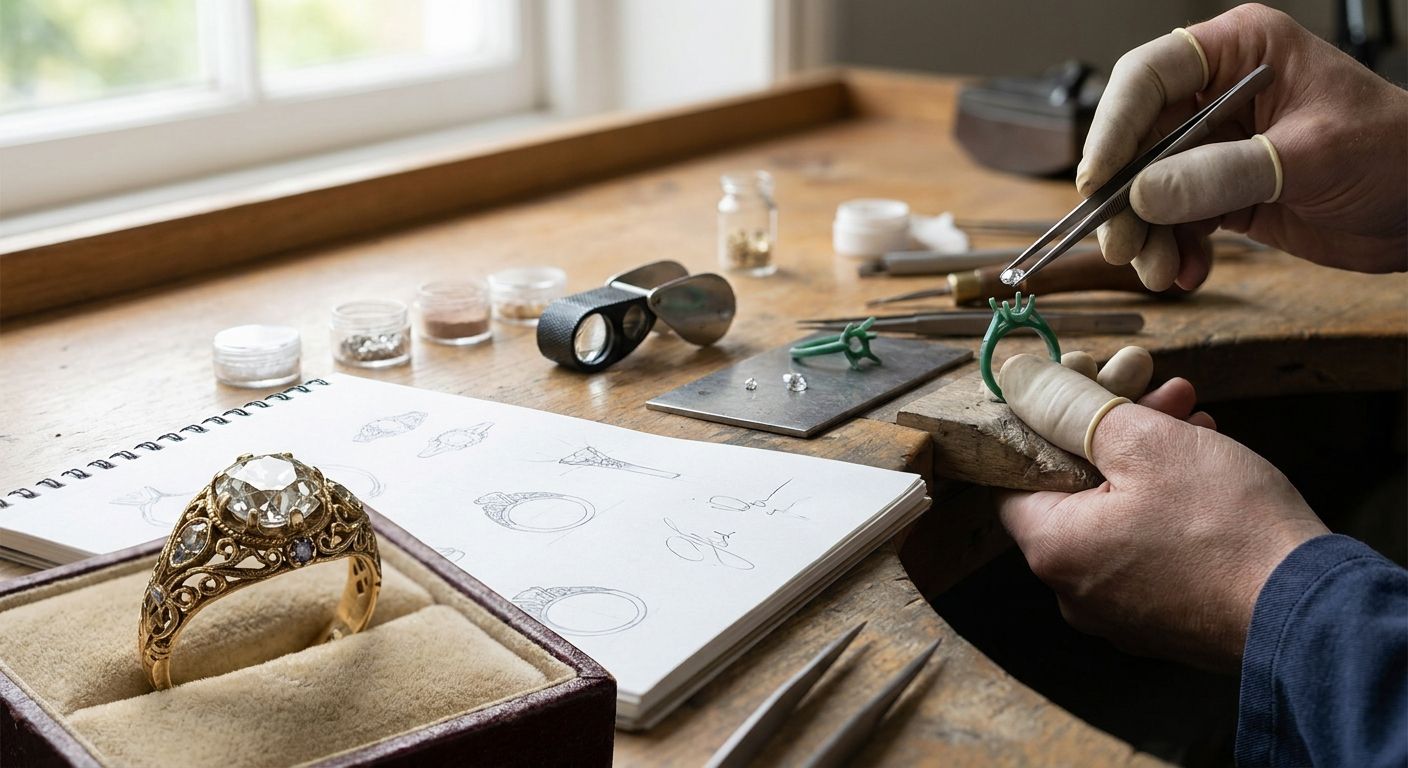
Once you've settled on a durable structure, the design conversation gets more interesting. How to design a custom engagement ring covers how to combine the durable setting fundamentals above with the aesthetic you actually want, working from artisan design houses rather than mass-market catalog settings.
FAQ
What is the most durable engagement ring setting for daily wear?
A bezel or low six-prong setting in platinum is the most durable engagement ring setting for daily wear in 2026. It sits close to the finger, resists snagging, and distributes pressure across more contact points than a high four-prong head.
Is platinum or gold more durable for an everyday ring?
Platinum is more durable over the long term because it's 95% pure and displaces rather than wears away under impact. 18k gold is only 75% pure and wears at the prong tips faster, though it costs less to maintain per visit.
Which stone shapes chip the least in daily wear?
Round, oval, and cushion cuts chip the least because they have no exposed pointed corners. Pear, marquise, and princess cuts carry vulnerable tips that need a protective bezel or V-prong to hold up long-term.
How often should a daily-wear engagement ring be checked by a jeweler?
Once a year is standard, ideally timed to an anniversary so it becomes a habit. Annual checks catch loose prongs and thinning shanks before a stone is lost.
Do bezel settings look less sparkly than prong settings?
A bezel setting shows slightly less light through the sides of the stone compared to an open prong setting, but modern bezel designs from artisan houses balance protection with brilliance rather than sacrificing sparkle entirely.
Can a soft gemstone like emerald work in an everyday ring?
Yes, but only in a protective low-profile setting with a bezel or thick prong guard. An emerald at 7.5-8 on the Mohs scale chips more easily than a diamond or sapphire without that protection.
How thick should the ring shank be for daily wear?
Look for a shank at least 1.5mm thick at its thinnest point, typically the bottom of the ring. Thinner shanks are the most common failure point within 3-5 years of daily wear.
Does resizing weaken a designer ring setting?
Resizing done correctly by a jeweler experienced with designer settings shouldn't weaken the structure, but the wrong technique on an intricate band can distort stone alignment or thin the metal further.
One last thing
The detail most couples skip: ask whether the setting's prongs were cast as part of the mold or hand-set afterward. Hand-set prongs on a well-made piece typically hold tighter over years of daily wear because the jeweler adjusts pressure to the exact stone, rather than relying on a standardized cast head. It's a five-second question at the counter that tells you more about long-term durability than any spec sheet.