Radiant cut engagement rings pack more light-return than almost any other fancy shape, which is exactly why they keep showing up on the hands of brides who want sparkle without the classic round silhouette. This guide breaks down who the radiant cut suits, what actually matters when you're choosing one, and where it falls short.
- Radiant cut engagement rings carry roughly 70 facets, more than emerald or Asscher cuts, for maximum brilliance in 2026.
- Square radiant cuts run a 1.00-1.05 length-to-width ratio; rectangular radiants run 1.30-1.50 for an elongated look.
- A four-prong or double-claw solitaire setting is the safest pick for protecting cropped corners day to day.
- Halo settings add the most visible sparkle but hide 10-15% of the center stone's edge under pave.
- Custom settings solve corner protection and finger-length issues that off-the-shelf radiant mountings can't.
Why this matters
The radiant cut was patented in the 1970s as a hybrid: the faceting structure of a brilliant round layered onto the rectangular or square outline of an emerald cut. That combination is why it reads brighter than a step-cut stone but looks more architectural than a round solitaire. If you've been comparing radiant cut engagement rings against emerald or cushion cuts and can't decide, the faceting is the tell: radiant cuts hide inclusions better than emerald cuts and throw more fire than cushion cuts of the same carat weight.
Element 79 sources designer bridal pieces for exactly this kind of decision, where the shape matters as much as the metal or the setting style.
Who this is for
This guide is for the buyer choosing between a radiant cut and another fancy shape for an engagement ring, or the partner shopping without a strong preference who wants a stone that photographs bright and wears well daily. It's also for anyone comparing radiant cut engagement rings against round brilliants because they want a shape with more personality but still crave heavy sparkle. If your priority is subtlety over brilliance, this isn't the cut for you — skip ahead to a step-cut guide instead.
What to look for in radiant cut engagement rings
Facet count and cut quality
A well-cut radiant cut engagement ring shows even color distribution across roughly 70 facets, with no dark "bowtie" shadow running through the center. GIA doesn't issue a formal cut grade for fancy shapes the way it does for round brilliants, so you're relying on face-up brilliance and a jeweler's eye rather than a printed number on the certificate.
Length-to-width ratio
Square radiants sit around a 1.00-1.05 ratio; rectangular radiants stretch to 1.30-1.50. The ratio you pick changes how the stone reads on the hand — square looks bolder and more compact, rectangular elongates the finger. Try both in person before committing, because photos flatten the difference.
Corner protection
Radiant cuts have cropped corners, not sharp points like an emerald cut, which already makes them more chip-resistant. Even so, a setting with prongs directly over each corner matters more here than on a round stone, since the corners are the weakest point of the whole shape.
Color and clarity tolerance
Because radiant cuts scatter light aggressively, they mask minor inclusions and slight color tint better than step cuts do. That means you can often drop a color grade or clarity grade below what you'd need in an emerald cut and still get a stone that looks clean and white face-up — a real cost lever if budget matters.
Setting style compatibility
Solitaires, halos, and three-stone layouts all work with radiant cuts, but each changes the perceived size and sparkle differently. A halo adds visible brilliance around the perimeter; a three-stone layout uses smaller side stones to reinforce the elongated shape.
Metal choice
White metals — platinum or white gold — sharpen the radiant cut's brightness by not competing with warm-toned reflections. Yellow gold works too, but it softens the stone's icy sparkle in favor of a warmer overall look. Neither is wrong; it's a style call, not a quality one.
Top picks for radiant cut engagement rings
The purist pick: solitaire setting. A four-prong or double-claw solitaire puts the entire visual weight on the stone itself, with nothing competing for attention. This works best when the radiant cut has strong cut quality on its own, since there's no halo or side stones to disguise weak brilliance. If you want the shape to speak for itself, a solitaire engagement ring in this cut is the classic move. Buy.
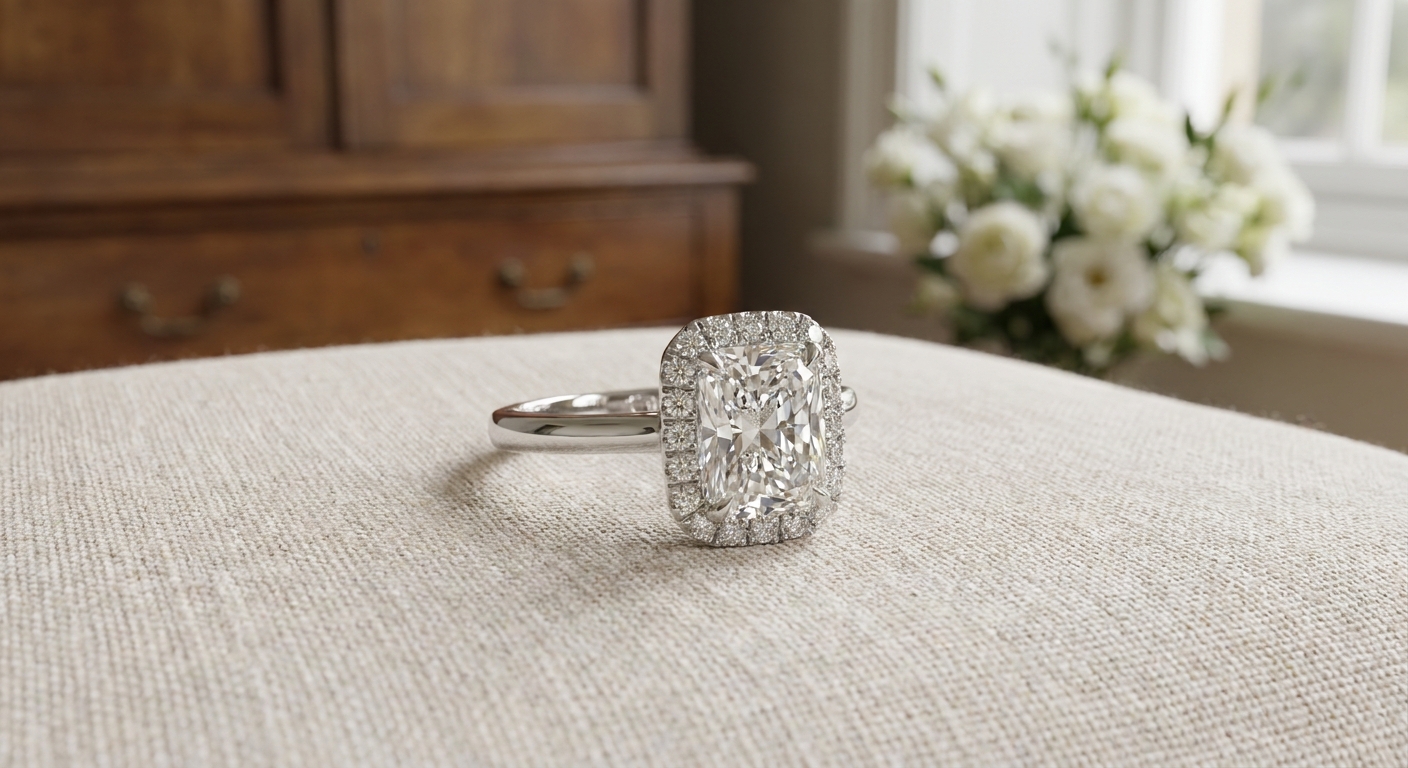
The sparkle multiplier: halo setting. Surrounding a radiant cut center stone with a pave halo increases perceived size and brightness, which matters if the center stone runs under a carat. The tradeoff is that a halo covers 10-15% of the stone's outer edge, so a lower-clarity stone with edge inclusions actually benefits from the coverage. A halo engagement ring built around a radiant center is the pick for anyone chasing maximum visual impact per carat. Buy.
The symbolic pick: three-stone setting. Flanking a radiant cut with two smaller side stones — trapezoids or tapered baguettes are common pairings — reinforces the elongated silhouette and adds meaning for couples who like the past-present-future symbolism. It reads more formal than a solitaire and suits a rectangular radiant better than a square one. A three-stone engagement ring is worth considering if you want more stone real estate without going full halo. Consider.
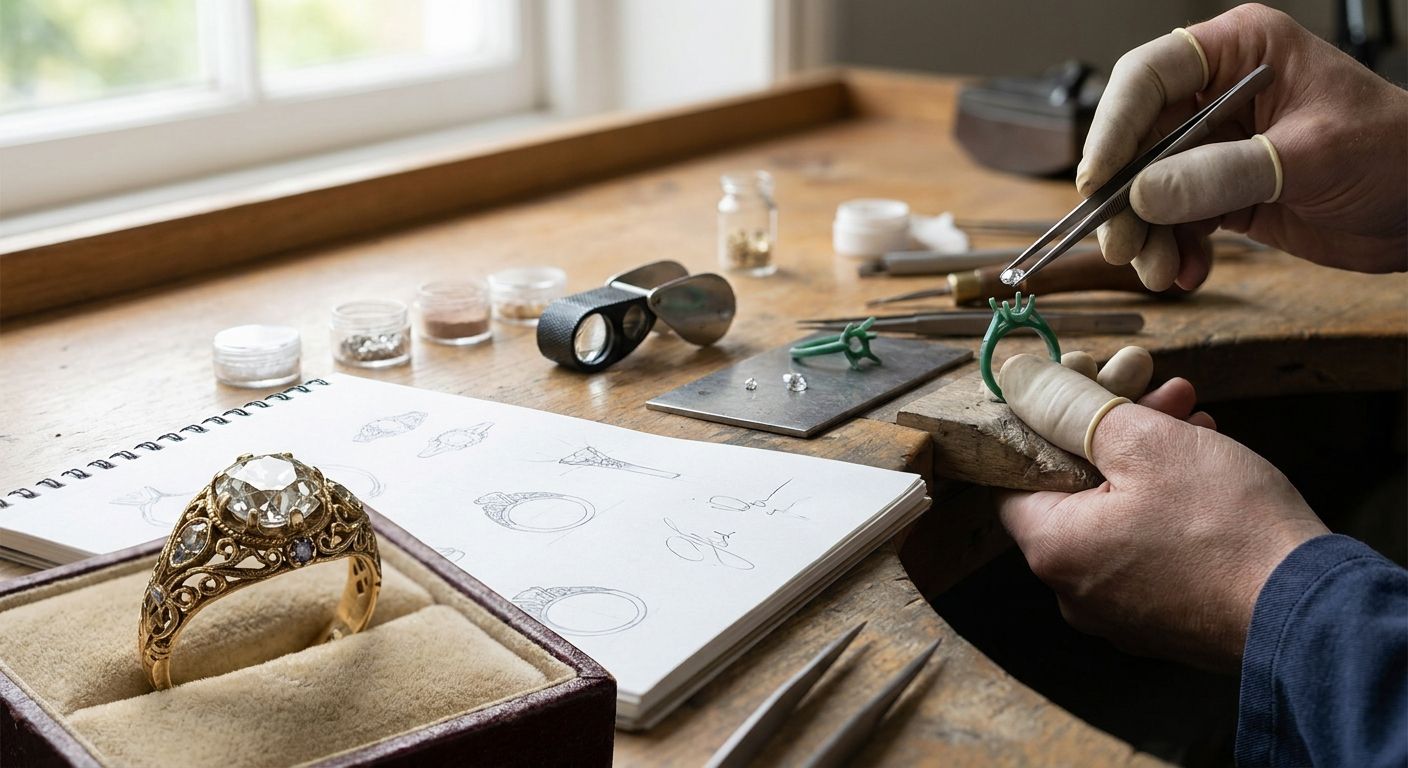
The tailored pick: custom setting. Off-the-shelf mountings are built around standard radiant proportions, so if your stone runs an unusual ratio or you want corner protection dialed in exactly right, a custom build solves both. It takes longer and costs more than a pre-set ring, so it's not for buyers on a tight timeline. Anyone who wants full control over how the radiant cut engagement ring is built should start there. Consider.
The budget-stretcher: lower clarity grade. Because radiant cuts mask inclusions well, dropping to an SI1 or SI2 clarity grade often looks identical face-up to a VS1 stone at a lower cost. This only works if the inclusions sit away from the table and corners — ask to see the stone under 10x magnification before deciding. Consider.
Design your own radiant cut ring
Work with Element 79 on a custom radiant cut engagement ring built around your proportions.
What to avoid
- Thin-band settings with radiant cuts over 1.5 carats. The visual weight of a large radiant stone needs a band with enough metal to support it long-term — thin pave bands under a heavy stone bend faster than most buyers expect.
- Ultra-elongated ratios above 1.50. Past that point, a rectangular radiant starts looking narrow and fragile rather than elegant, and it becomes harder to resize without disturbing the proportions.
- Prong placement that skips a corner. Any setting that doesn't anchor a prong at each cropped corner leaves the weakest point of the stone unsupported — this is the single most common flaw in cheap radiant cut mountings.
“The radiant cut is the only fancy shape built purely to maximize fire, not soften it.”
Verdict comparison
| Setting Style | Best For | Sparkle Level | Verdict |
|---|---|---|---|
| Solitaire | Strong cut-quality stones | High | Buy |
| Halo | Stones under 1 carat | Highest | Buy |
| Three-stone | Symbolic, formal look | Medium-high | Consider |
| Custom | Unusual ratios, full control | Depends on build | Consider |
| Thin pave band | Nothing over 1.5 carats | Medium | Skip |
If you're still deciding between the radiant cut and a related shape, the gemstone selection guide walks through how cut interacts with stone type before you commit to a setting.
FAQ
What is the best setting for a radiant cut engagement ring?
A four-prong solitaire is the safest setting for a radiant cut engagement ring because it anchors each cropped corner directly. Halo settings add more sparkle but cover 10-15% of the stone's outer edge.
Is a radiant cut better than an emerald cut?
A radiant cut throws more brilliance than an emerald cut because it carries roughly 70 facets versus the emerald cut's step-cut faceting. Emerald cuts show more of the stone's clarity, so radiant cuts are the better pick if sparkle matters more than transparency to you.
How many facets does a radiant cut diamond have?
A radiant cut typically has around 70 facets, compared to 58 on a round brilliant. That higher facet count is what gives the shape its signature brightness.
What length-to-width ratio should a radiant cut engagement ring have?
Square radiant cuts run a 1.00 to 1.05 ratio, while rectangular radiant cuts run 1.30 to 1.50. Choose square for a bolder, compact look and rectangular for an elongated finger appearance.
Do radiant cut diamonds hide inclusions well?
Yes, radiant cuts mask minor inclusions better than step cuts like emerald or Asscher because of their aggressive light scatter. This means a lower clarity grade can still look clean face-up, which helps stretch a budget.
Can a radiant cut engagement ring be resized later?
Radiant cut rings can typically be resized within a couple of sizes without disturbing the stone, though heavily elongated ratios and pave-set bands need a jeweler familiar with the setting. Ask before buying if resizing down the line is a concern.
What metal looks best with a radiant cut diamond?
Platinum or white gold sharpens a radiant cut's brightness because the cool tone doesn't compete with the stone's reflections. Yellow gold gives a warmer, softer overall look and is a style choice rather than a quality tradeoff.
One last thing
Most buyers assume a bigger halo always means more sparkle, but a poorly cut radiant center stone under a halo just looks like a bright frame around a dull middle. Cut quality on the center stone matters more than any setting decision you'll make around it — get that right first, in 2026 or any year.